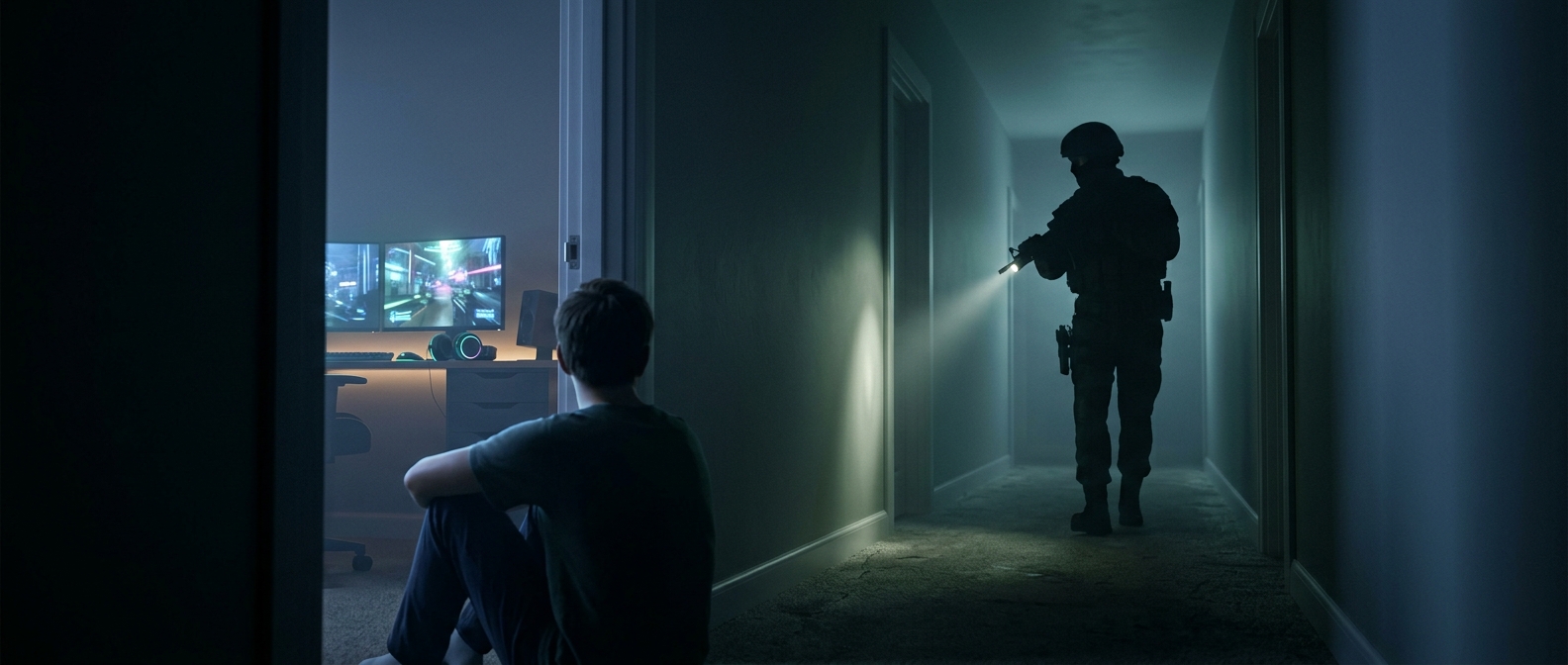
Why a large audience can feel like no audience
When people witness harassment together, each person may feel less personally responsible for responding. Psychologists call this diffusion of responsibility: the perceived duty to act gets divided among the witnesses, even though no one has explicitly agreed to take it on.
Online, the crowd is often visible as a number—views, likes, or replies—but its members are not necessarily visible to one another. A reader may not know whether anyone else has noticed the post, whether someone has already reported it, or whether stepping in would make the situation worse. The apparent audience therefore does not automatically become a group ready to act.
Silence can look like a signal
A second mechanism can reinforce the hesitation. When people are unsure how serious a situation is or what response is appropriate, they look to others for clues. If everyone appears silent, each witness may read that silence as evidence that intervention is unnecessary or unwelcome. Yet the other viewers may be making the same calculation.
That creates a feedback loop: people wait for someone else to respond, and the lack of a response makes waiting seem safer. The result is not necessarily approval of the harassment; it can be uncertainty repeated across many individual viewers.
Making responsibility more concrete
A direct appeal can change the decision by giving a person a clear role: report the post, support the target, or ask another trusted person to help. It does not guarantee a response, but it replaces the vague question “Will somebody do something?” with a specific action someone can take.
In a busy feed, the decisive difference may be whether any witness sees the moment as a shared problem—or as a task that belongs to them.