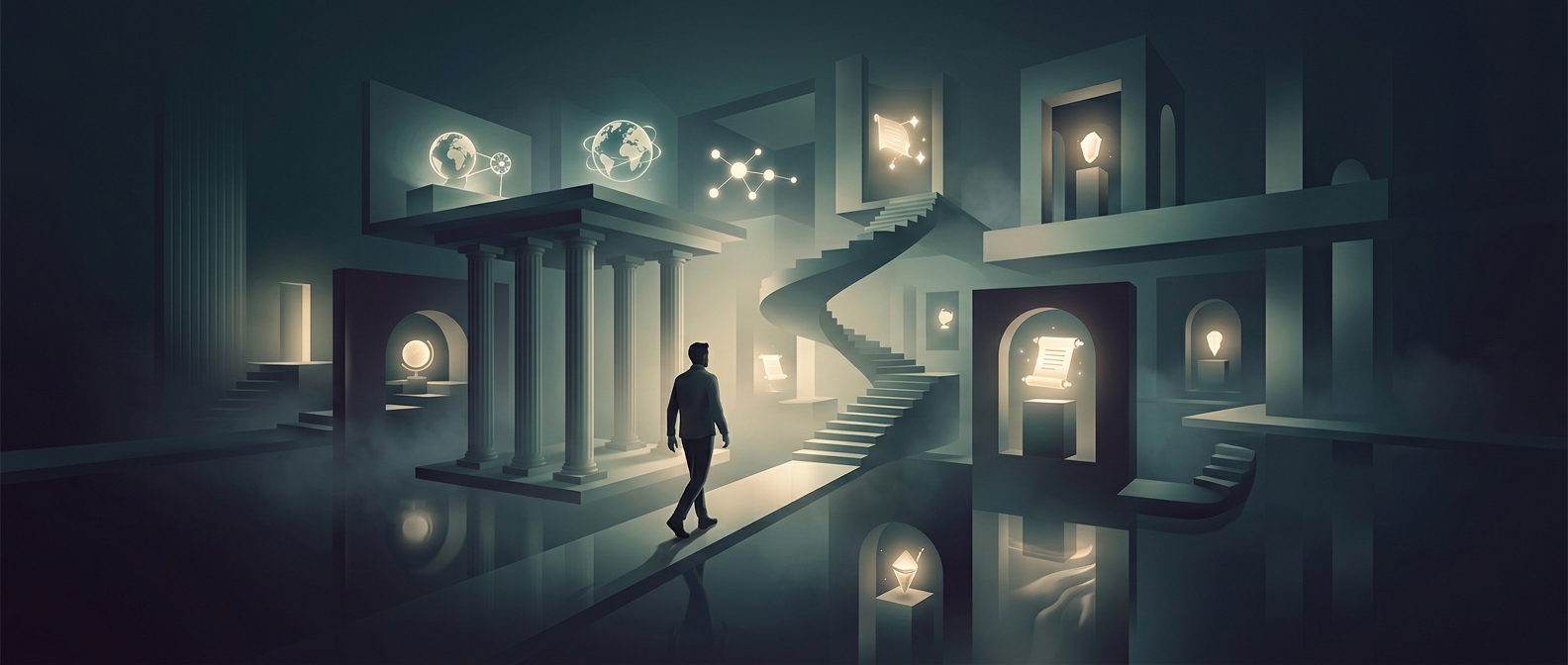
Why a route can hold a list
A memory palace works by linking two kinds of information that are easier to remember together than apart: a familiar sequence of places and the new items you want to recall. Instead of trying to keep a string of unrelated words active, you attach each one to a particular landmark along a route you know well.
That route supplies retrieval cues—details that help bring a memory back. Mentally arriving at the coat rack can prompt one item; moving on to the stairs can prompt the next. The familiar setting also gives the list an order, so you have a way to notice when an item is missing rather than relying on a vague feeling that you have forgotten something.
Making the connections stick
The placement works best when the imagined encounter is vivid and specific. A carton of milk balanced on a lampshade is easier to picture than “milk” merely sitting in a living room. The unusual image gives the item a distinct hook, while the familiar room makes that hook easier to find later.
This technique draws on the brain’s capacity to remember places and scenes, but it does not mean a memory is stored like an object in a literal mental building. The palace is a practical structure for organizing attention and recall. You choose the route, create the associations, and use the same sequence to retrieve them.
When the palace gets crowded
A route can become less useful if its locations blur together or if too many items compete for the same spot. Clear landmarks and one memorable image per location help keep the associations separate. For a short list, a familiar home may be enough; longer material may call for additional routes or a carefully chosen sequence.
The useful trick is not simply picturing a house. It is converting an unordered list into a series of distinct encounters—so recalling the information becomes a walk with recognizable stops.