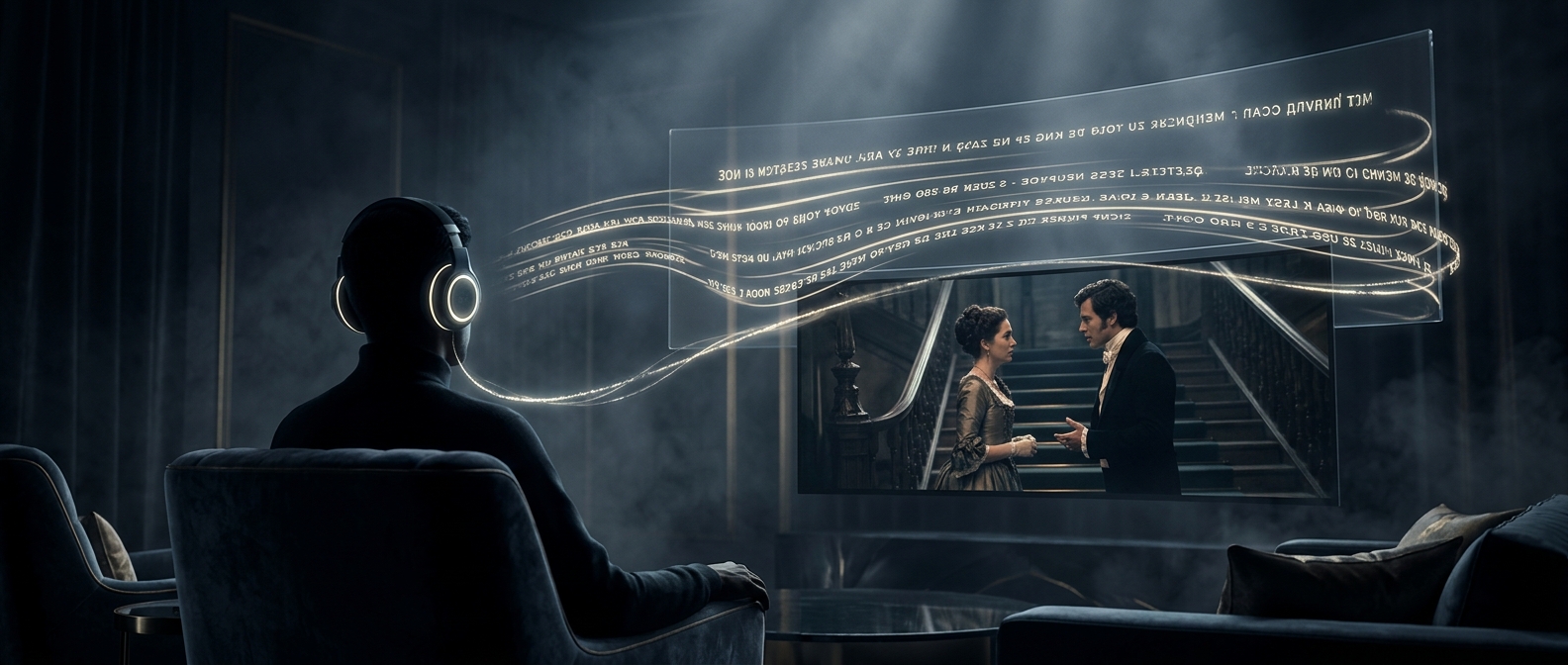
Why the words can beat the performance
A subtitle is not usually revealed one word at a time as an actor speaks. It appears as a readable phrase or sentence, giving the viewer a chance to take in the whole line while the voice delivers it at a more natural pace. Because many people can scan written language faster than they can listen to spoken dialogue, their eyes may finish before the actor does.
That small gap changes how a scene unfolds. Once viewers have read the line, they know what is coming; they may hear the rest of the delivery while already reacting to its meaning. A joke can lose some of its surprise, and a threatening or revealing line can feel less like a discovery and more like a countdown.
Timing is a tradeoff
Subtitle timing has to balance reading comfort with synchronization. If words appear too late, viewers may miss them before the next line arrives. If a complete line appears early, it is easier to read—but it can disclose a punchline, answer, or twist ahead of the performance. The effect is especially noticeable when a scene depends on suspense or on an actor’s pause before a key word.
This is not a fixed delay built into every subtitle. Timing varies with the dialogue, the translation, and how the text is divided across the screen. Still, the basic mismatch between reading speed and speaking speed can make a viewer experience a scene in two stages: first as text, then as performance.