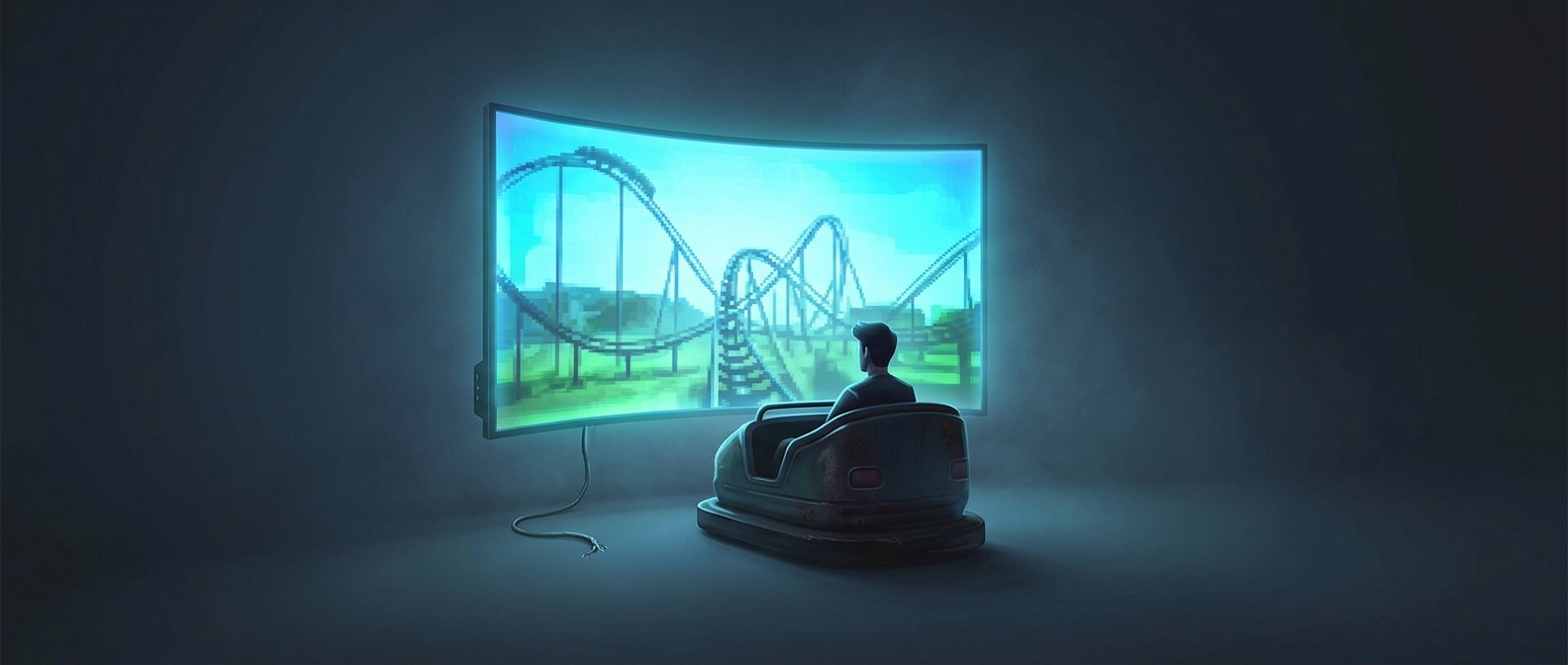
How a screen ride turns a chair into a vehicle
A screen ride creates the sensation of traveling without moving riders through a built landscape. The seat tilts, pitches, or vibrates while a film shows a matching flight, plunge, or turn. When the motion and image arrive together, the brain treats the chair’s brief movements as clues about a much larger journey.
That match is the essential engineering problem. If the screen shows a sharp bank but the seat stays level, the ride can feel flat; if the chair moves at the wrong moment, the illusion can break. Designers choreograph the animation and motion platform as one experience, often using sound and airflow to make the imagined environment feel more present.
What the screen saves—and what it cannot
A physical set must be built, maintained, and reset around the ride’s path. A screen can depict a soaring route, a distant landscape, or a sudden drop without constructing those places at full scale. Changing the scene may mean changing the digital footage rather than rebuilding scenery, which can make this format a less expensive way to stage a dramatic adventure.
But the savings are a tradeoff, not magic. The attraction still needs a motion system, screens and projection or display equipment, seating, and carefully synchronized content. And because riders remain in roughly the same place, the design has less freedom to create sensations through real acceleration, changing scenery, or physical objects passing close by.
The design choice riders can feel
Screen rides work best when the imagined trip is the attraction: flying, diving, or racing through a world that would be difficult to build physically. They also let designers revise the journey without replacing an entire set. The compromise is visible in the experience itself: the scenery can go anywhere, but the rider’s body knows it is still strapped into a chair.