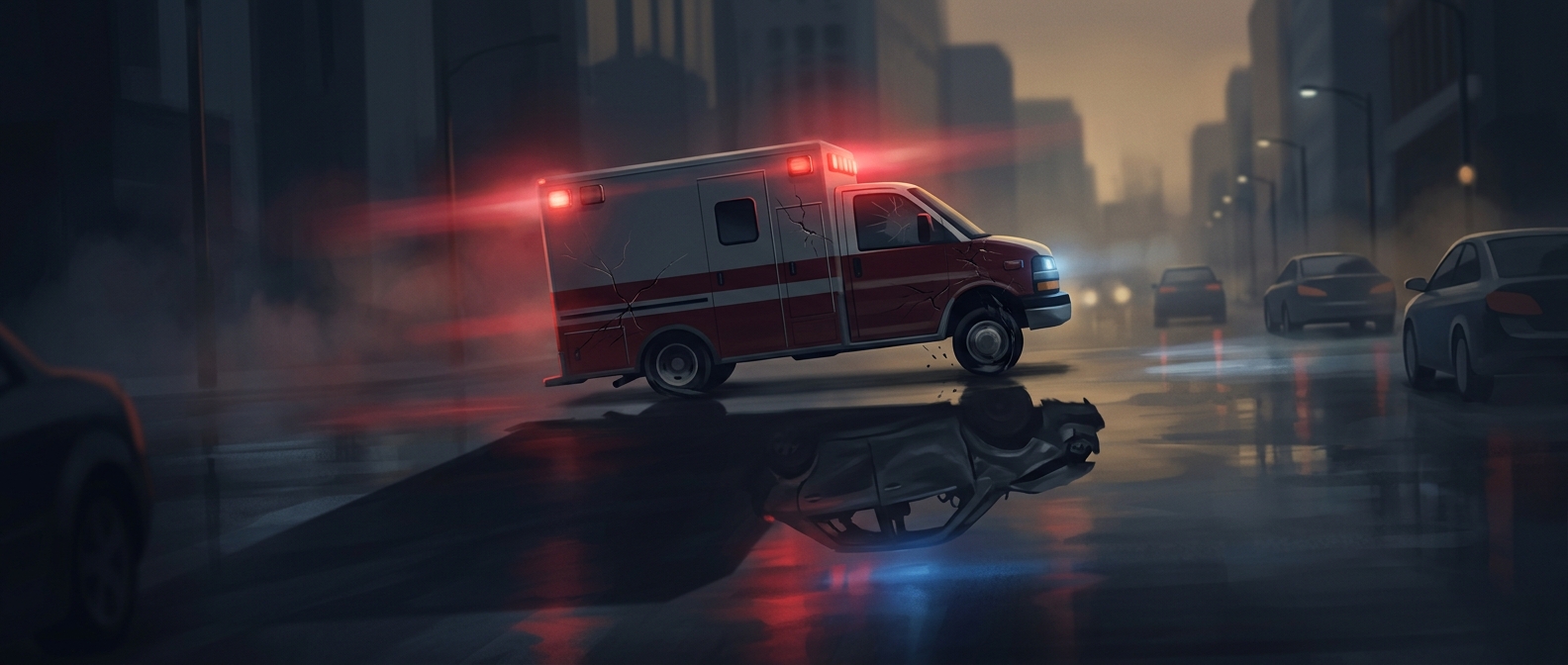
Why a disabled emergency vehicle can defeat a tow truck
An ambulance or fire engine may be much heavier than an ordinary car, especially when it carries a large body, equipment, water, or other supplies. A standard tow truck’s winch and frame are designed for lighter loads. Trying to pull a heavy emergency vehicle with undersized gear can strain the winch, destabilize the truck, or leave both vehicles stuck.
Recovery takes more than a strong winch
Heavy-vehicle recovery depends on the whole setup: the truck’s chassis, winch capacity, cables, anchors, and the direction of the pull. A specialist recovery truck is built to manage those forces. On soft ground, a steep slope, or a cramped roadway, even a properly rated truck may need careful positioning and additional equipment to keep the pull controlled.
If the recovery vehicle itself becomes disabled, the problem changes scale. A second, heavier recovery vehicle may be needed to extract it. That’s not simply because the first truck is “stuck”; it may be carrying a heavy load, braced against the ground, or positioned where a safe pull requires greater capacity.
The backup plan has to be bigger
Recovery crews therefore match equipment to the combined weight and conditions, rather than relying on the label “tow truck.” The rescue can involve a chain of vehicles, each capable of handling the one ahead of it. In the end, a fire engine or ambulance may be waiting for service—but first, the specialized truck sent to retrieve it may need retrieving too.