How a hollow nose helps a dart fly straight
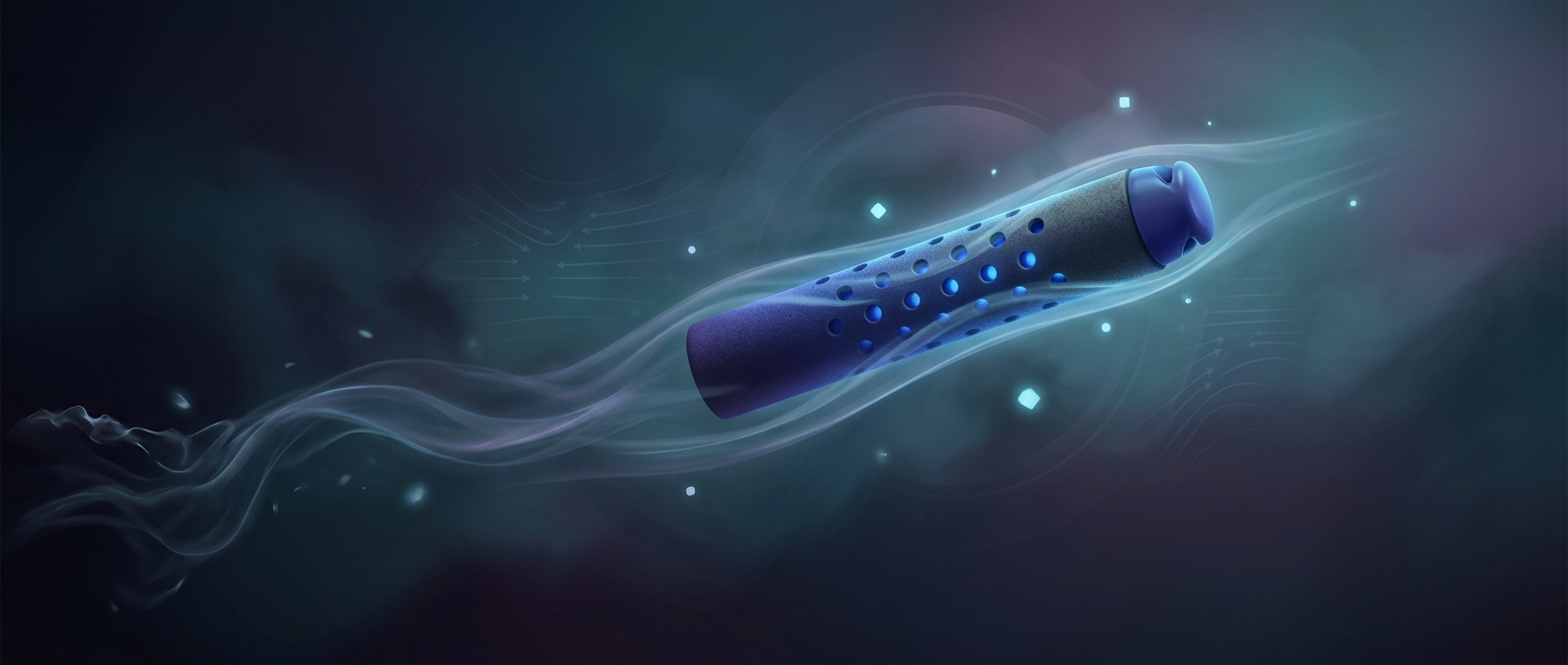
A foam dart is light enough that small forces from the air can change its direction. Its shape and weight distribution help it keep its nose pointed forward: when the dart starts to yaw or wobble, airflow pushes more strongly on the rear portion, tending to bring the nose back into line. The hollow nose is part of that design, rather than simply extra material at the front.
That stability matters because a dart that tumbles presents more of its side to the air. The resulting drag slows it and makes its path less predictable. A dart flying nose-first cuts through the air more consistently.
The hollow tip also softens impact
On impact, the hollow foam nose can compress. That deformation spreads the dart’s change in motion over a little more time and distance. In general, spreading a stop this way reduces the peak force compared with an equally abrupt stop. The soft foam also gives slightly instead of behaving like a rigid point.
So the cavity is not just an empty space: it helps make room for a tip that can compress, while the dart’s overall shape and mass distribution support nose-first flight. The same small feature contributes to a dart that travels more steadily and lands with a softer bonk.