A deadline hidden inside the cave
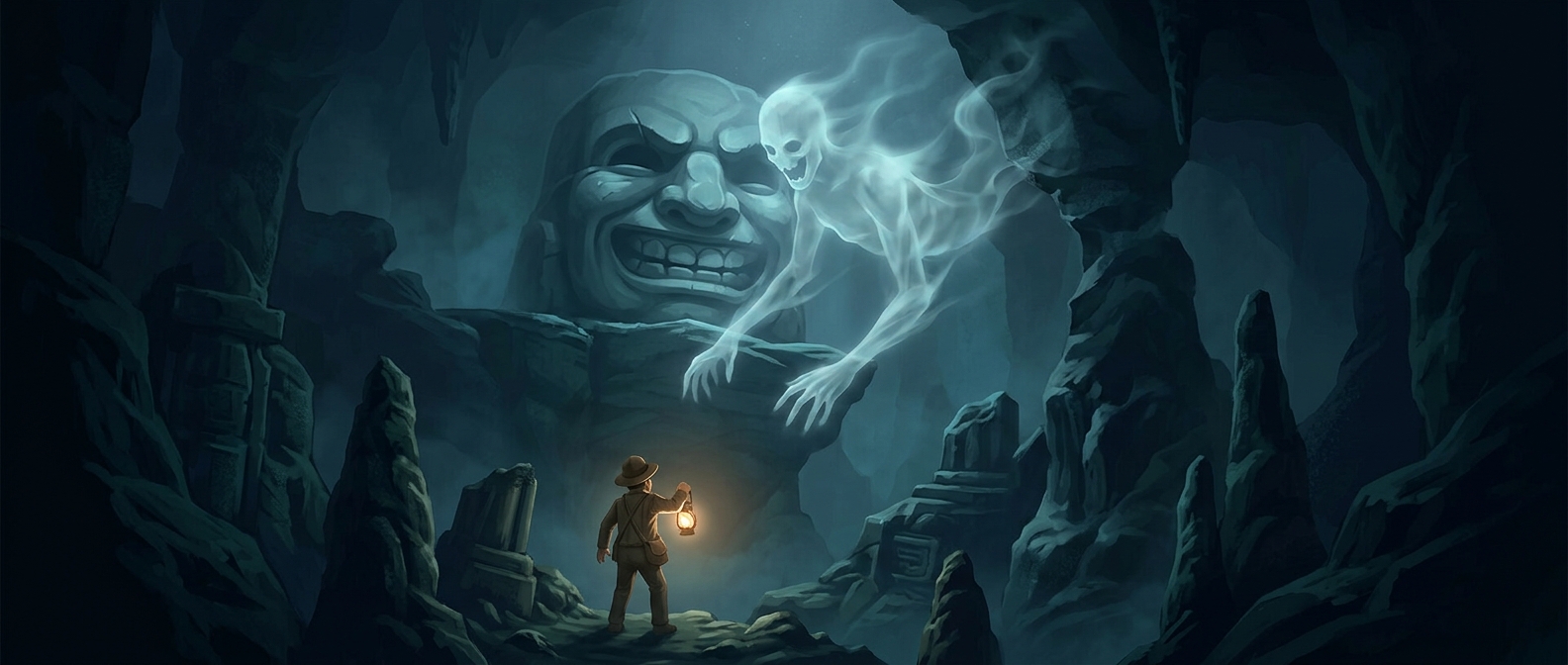
Spelunky’s caverns invite the player to search: treasure may be tucked into side passages, while crates and enemies can reward a detour. But every extra sweep spends the same resource—time. The ghost turns that quiet cost into an immediate threat, changing the question from “What might I find?” to “Is it worth staying?”
The warning cue matters because the deadline is audible before the ghost arrives. A player who recognizes it can abandon a search, retrace a route, or use a bomb or rope to escape a blocked path. Those tools are limited, so the decision is not simply whether to hurry; it is whether the potential reward justifies spending time or equipment.
Why make the threat unstoppable?
The ghost is not another enemy to defeat. Because it passes through terrain and cannot be killed, hiding behind a wall or fighting back does not solve the problem. That removes the usual option of turning danger into a combat encounter and makes movement the only lasting answer.
This constraint gives exploration a shape. Players can still take risks, but they must keep the exit—and the route back to it—in mind. A cavern can feel open without allowing a player to inspect every corner indefinitely. The musical warning is therefore more than atmosphere: it marks the moment when curiosity becomes a gamble, and the treasure left behind may be the price of getting out alive.