The small parts that make a switch sound hollow
A mechanical keyboard switch is a compact moving assembly: pressing a key pushes a stem down, compresses a spring, and brings electrical contacts together. As the key moves, its plastic parts slide against one another, while the spring can vibrate or rattle. Those tiny motions contribute to the sharp, thin sound some typists hear as a hollow clack.
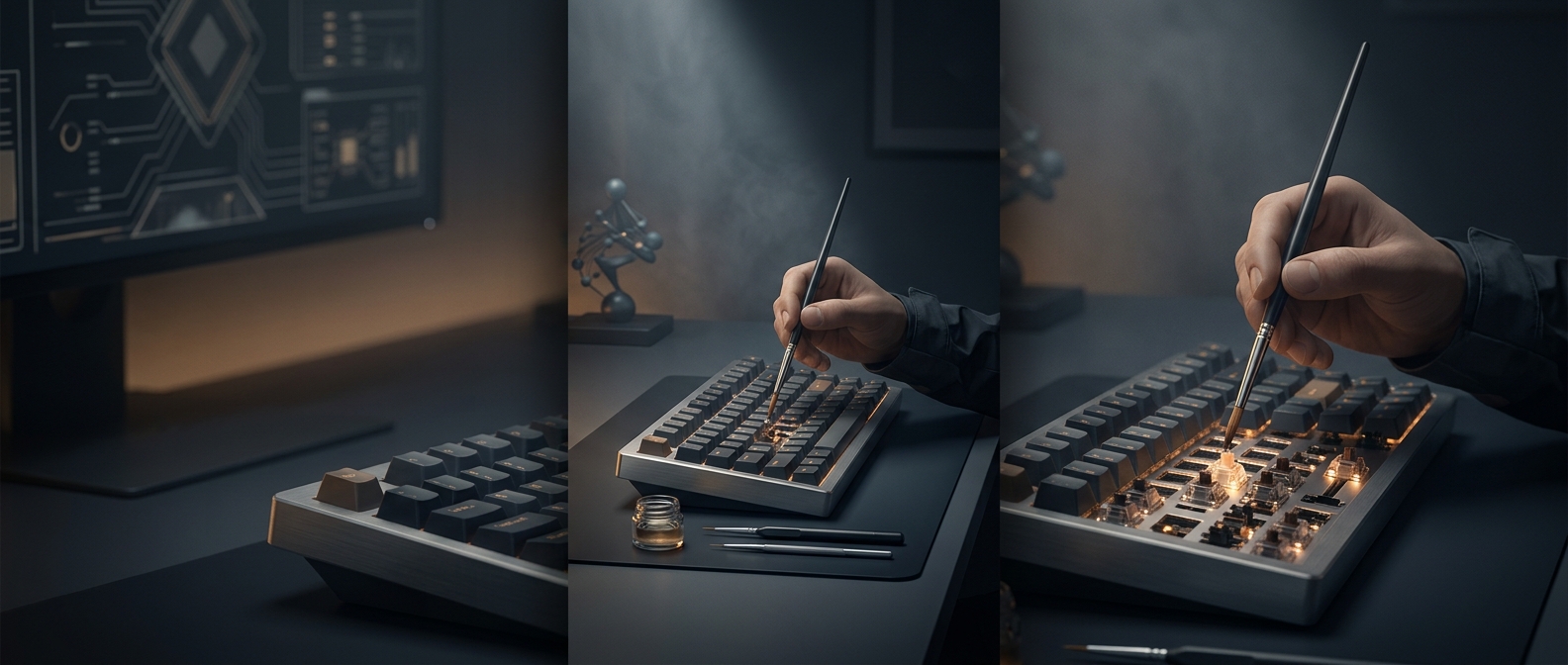
Enthusiasts open switches and apply a very small amount of lubricant to moving surfaces, including the spring. Lubricant reduces friction between parts and can damp some of their vibration. Instead of parts scraping or bouncing freely, their movement becomes smoother and quieter, often giving the keystroke a lower, more controlled sound.
Why the result depends on the application
Lubing is a tuning choice, not a universal upgrade. The switch has several surfaces that move differently, and the lubricant’s placement and amount matter. Too much can make a switch feel sluggish or dull; uneven application can leave some keys sounding or feeling different from others. Some users also prefer an unlubricated switch’s sharper feedback.
Because the lubricant goes inside the switch, the job usually means removing the switches from the keyboard—or opening them individually if they are designed to come apart. That makes it slow, hands-on work, especially across a full keyboard. The payoff is not simply “less noise”: it is a deliberately altered combination of sound and feel, achieved by changing how each key’s small parts move.