Why the N64 controller split into three grips
The Nintendo 64 arrived as games were moving from flat, screen-by-screen stages into worlds players could explore in every direction. A traditional directional pad offered only fixed digital inputs: up, down, left, or right. The new analog stick could register both which way it was pushed and how far, giving a character more than a simple on-or-off response.
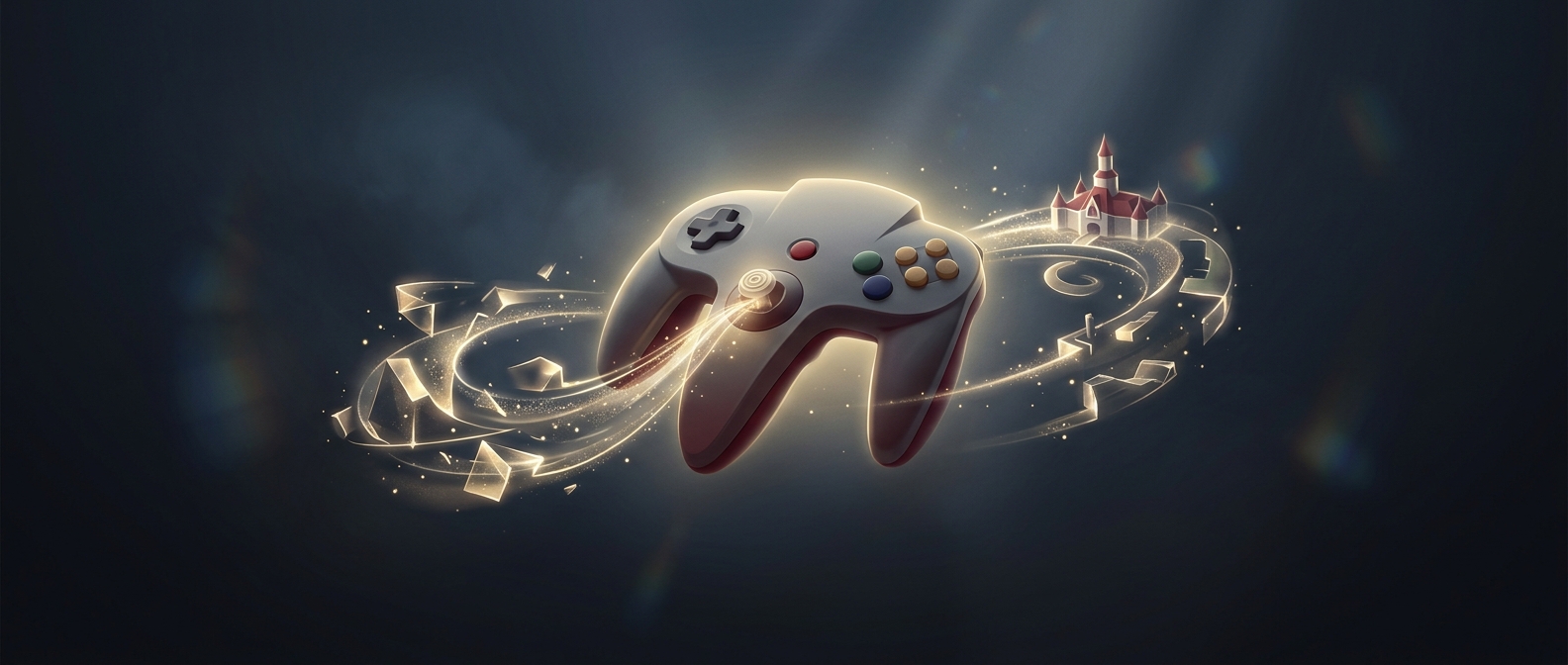
That created a practical problem: the controller had to serve two different styles of play. Its left prong placed the D-pad within reach; the center prong put the analog stick under the thumb; and the right prong grouped the main action buttons. Players could hold the center and right grips to move with the stick and act with the buttons, or use the left and right grips for games built around the D-pad.
A shape organized around the controls
The three-pronged shape was less like a conventional gamepad with an extra handle and more like two possible hand positions built into one controller. The analog stick needed a prominent, accessible spot, while the familiar D-pad remained available for games that used it. The design gave developers room to support both approaches as players and game makers adjusted to 3D movement.
In a game such as Super Mario 64, the stick’s graded input let a player make Mario walk with a slight tilt or run with a stronger one. That made movement feel less like choosing among four directions and more like steering through space. The unusual grip arrangement was the physical tradeoff: to make that new kind of control practical, Nintendo asked players to change how they held the controller depending on the game.