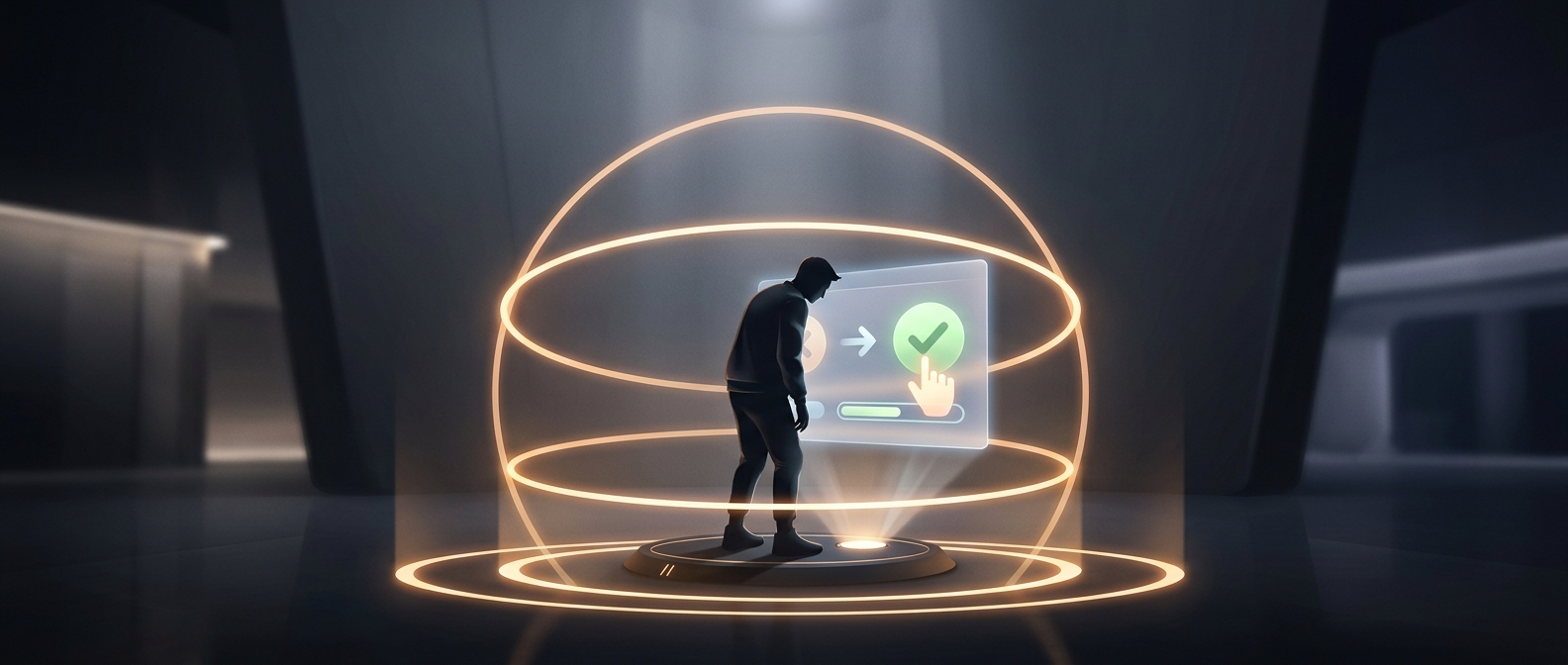
Why a New Game Starts With the Basics
A player may know how to use a controller and still not know what a particular game expects. One title might use a button to jump; another might assign it to interacting, dodging, or attacking. Camera controls vary too: a stick may rotate the view, steer a character, or do both depending on the game’s perspective and design.
A brief opening lesson establishes the game’s own vocabulary: which input produces which action, and what the player should watch for in response. That matters because controls are not just button labels. They are the link between an intention—move around, look behind, climb—and what happens on screen.
Teaching Without Stopping the Action
Games often introduce these inputs in a safe, simple space before asking players to use them under pressure. A player can try moving, turning the camera, or interacting while the consequences are small. The game can then build on those actions rather than interrupting a difficult encounter to explain them.
This is also a design constraint: a tutorial has to teach enough to make the next task legible without turning the opening into a manual. When instructions appear alongside the action, players can connect a control to its effect immediately. If the game later adds a new movement ability or changes how an input works, it may need to teach that too.
The result is a useful reset, even for experienced players: familiarity with games helps, but each title still has to show what its particular world considers “move.”