The dive changes the iguana’s oxygen budget
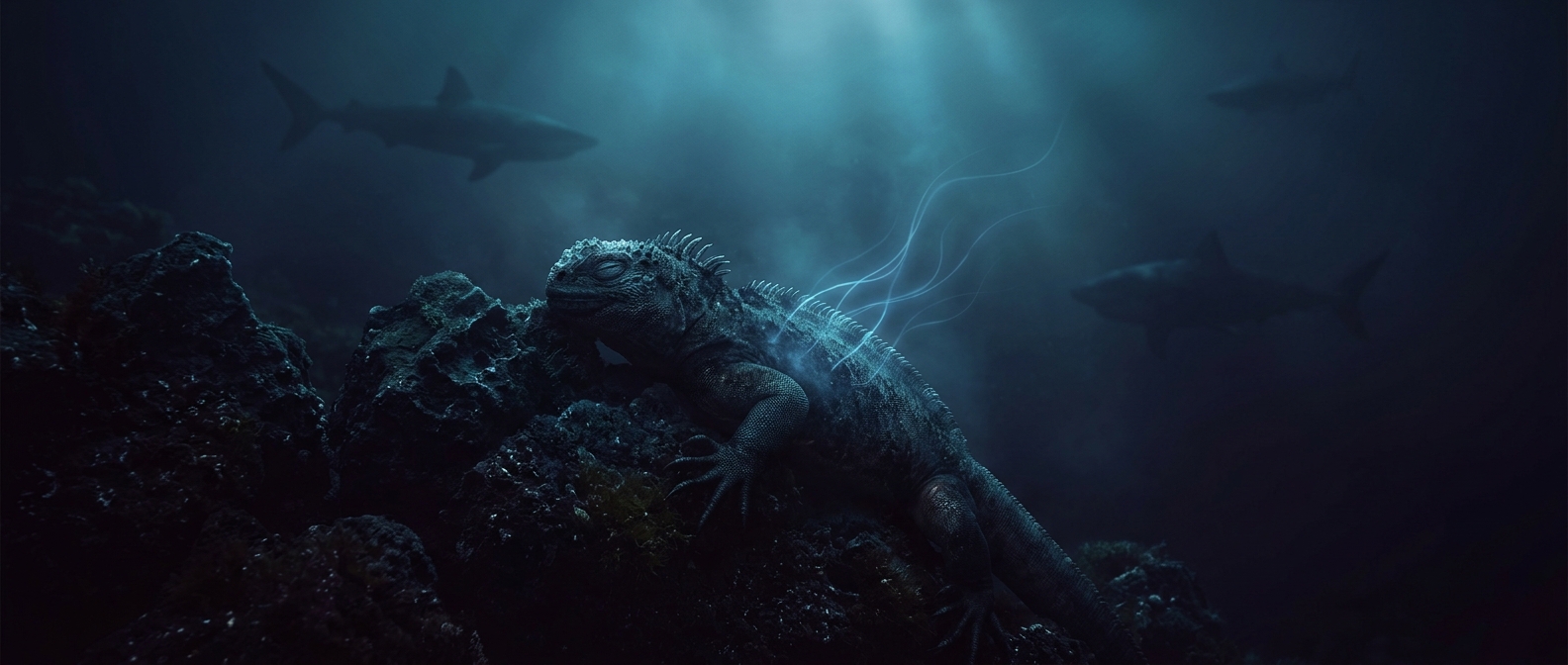
A marine iguana feeding underwater cannot take a breath until it surfaces. Its answer is to slow its heartbeat—a response called diving bradycardia. With the heart pumping less often, the animal uses oxygen more slowly, stretching the supply already stored in its blood and tissues.
The striking claim that an iguana can “stop” its heart is best understood as a dramatic description of this extreme slowdown, not as a heart left motionless for the whole dive. The reduced pace helps the lizard stay submerged, but it does not create more oxygen. It rations what is available.
Saving oxygen underwater costs time afterward
Marine iguanas forage in cold water, then return to land to warm themselves in the sun. A long dive draws down more of their oxygen reserve. After surfacing, the animal must restore that reserve while also warming its body, so recovery can take longer after an extended underwater trip.
That is the tradeoff behind the slowdown: oxygen spent more gradually can support a longer dive, but a longer dive leaves less in reserve for the return to normal activity. The heart’s reduced pace shifts the cost rather than erasing it.
The dive continues on shore
For an iguana, surfacing is not necessarily the end of the effort. It may need to bask before it is ready to forage or move as usual again. The time bought underwater can become recovery time on land—a hidden part of the dive that begins only after the animal reaches shore.