How a Komodo dragon’s bite keeps doing damage
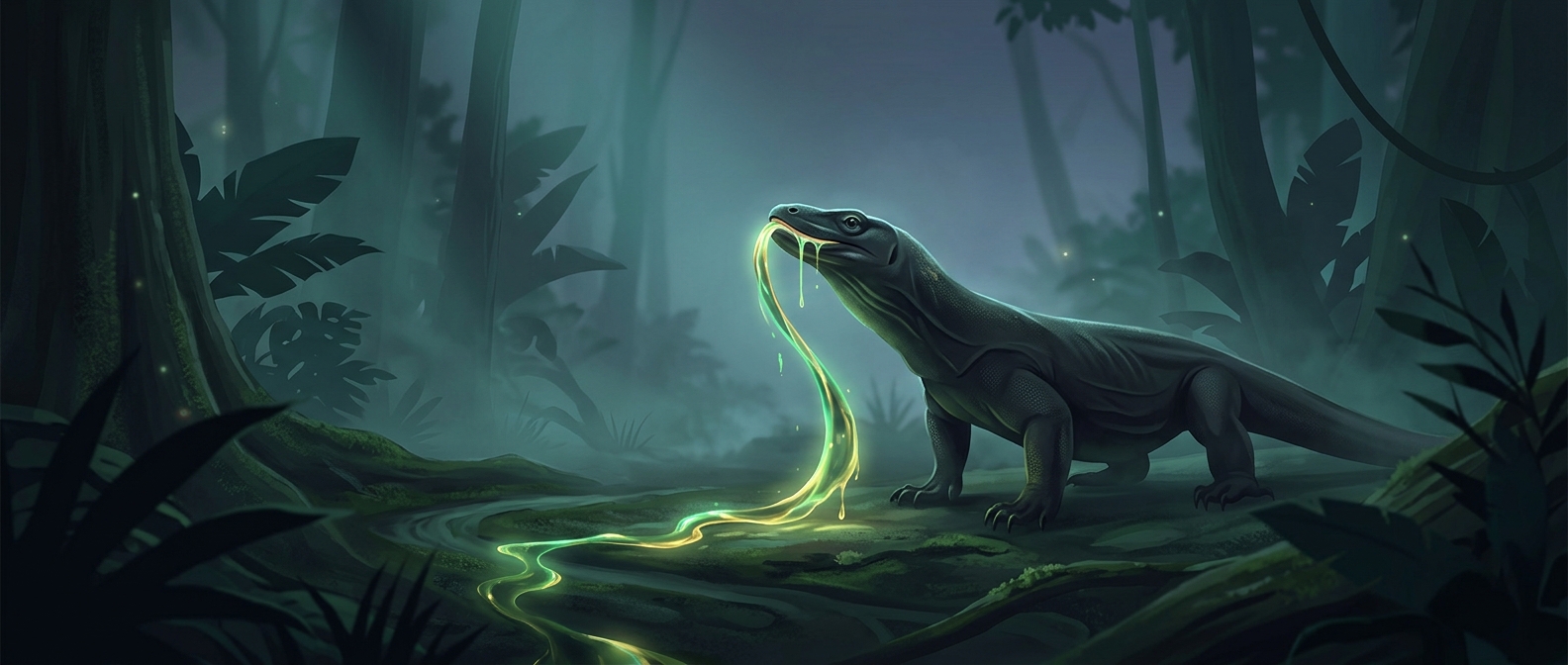
A Komodo dragon does not rely on bacteria-laden saliva to bring down prey. Its lower jaw contains venom glands, and a bite can deliver venom along with deep wounds from its sharp, tearing teeth. The two parts of the attack work differently: the teeth injure tissue, while the venom disrupts the body’s ability to respond to that injury.
Venom changes the body’s response to blood loss
The venom interferes with blood clotting, the process that normally plugs damaged blood vessels. It can also lower blood pressure, making it harder for the body to keep blood circulating effectively. Together, those effects can make bleeding more dangerous than the visible wounds alone would suggest.
That distinction matters because the old “dirty mouth” story focused on infection: the idea was that bacteria in the dragon’s saliva would make a bite deadly later. Infection can complicate wounds, but it does not explain the immediate physiological effects of the venom. The danger starts with the bite and continues as the venom alters clotting and circulation.
A bite built from two forms of attack
The dragon’s teeth create the opening; venom makes the resulting injury harder for the prey’s body to contain. That combination helps explain why a Komodo dragon’s bite is more than a mechanical wound—and why blaming a mouthful of germs misses the mechanism that makes the bite especially hazardous.