A reserve built for unpredictable meals
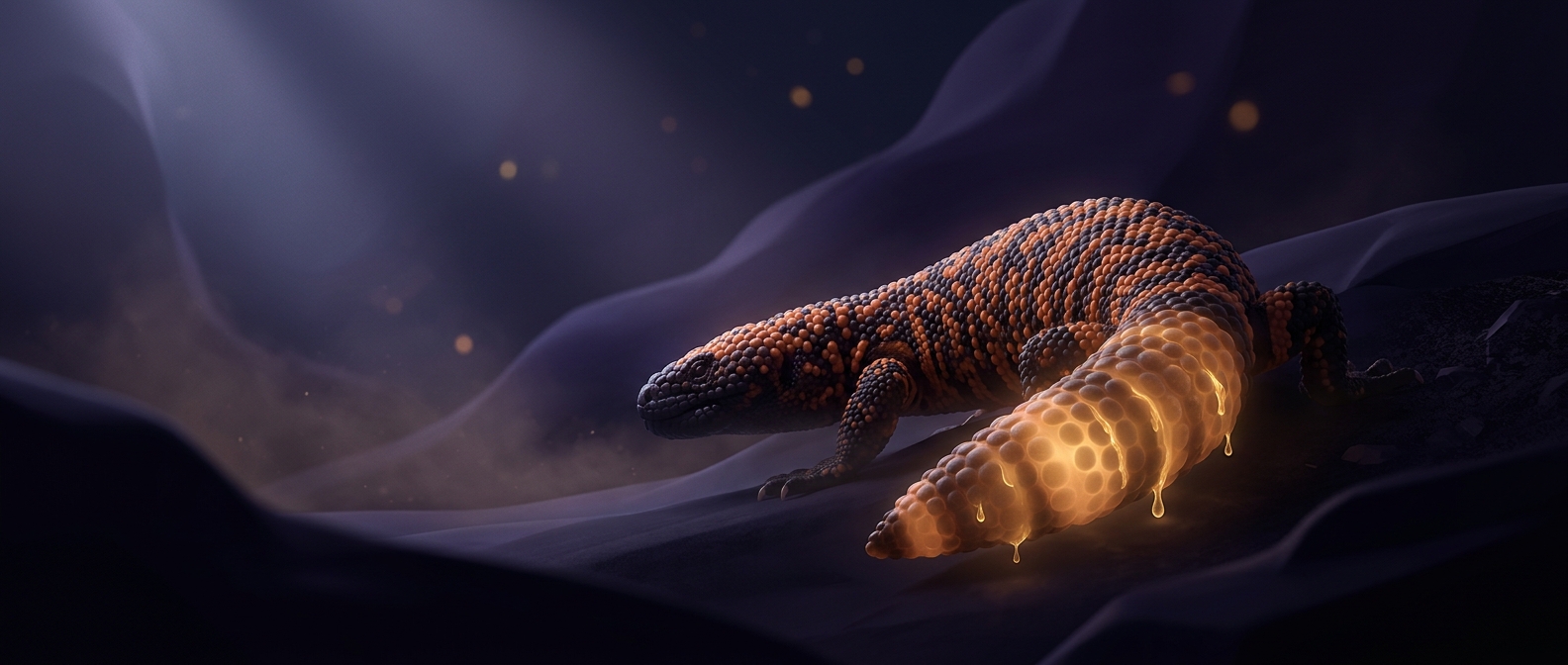
Gila monsters are large, venomous lizards native to the drylands of the southwestern United States and northwestern Mexico. In habitats where prey can be scarce or seasonal, they may go long stretches between meals. Their thick tails help them manage that irregular schedule: fat stored there provides energy when food is unavailable.
How the tail fuels a fast
After eating, a Gila monster can convert some of its surplus energy into fat and store it in the tail. Later, the body draws on that reserve to keep essential processes going. As the stored fat is depleted, the tail can become noticeably slimmer; after feeding resumes, reserves can build again.
This arrangement keeps energy available without requiring the lizard to find food every day. It is especially useful for an animal that can eat a substantial meal and then wait, rather than relying on frequent small meals.
More than a distinctive shape
The tail is part of the lizard’s energy budget, not simply an oversized ornament. Its changing thickness can reflect whether the animal has been able to replenish its reserves, though appearance alone does not reveal exactly how long it has gone without food. The next time a Gila monster’s tail catches the eye, its bulk is a visible record of energy saved for a later lean stretch.