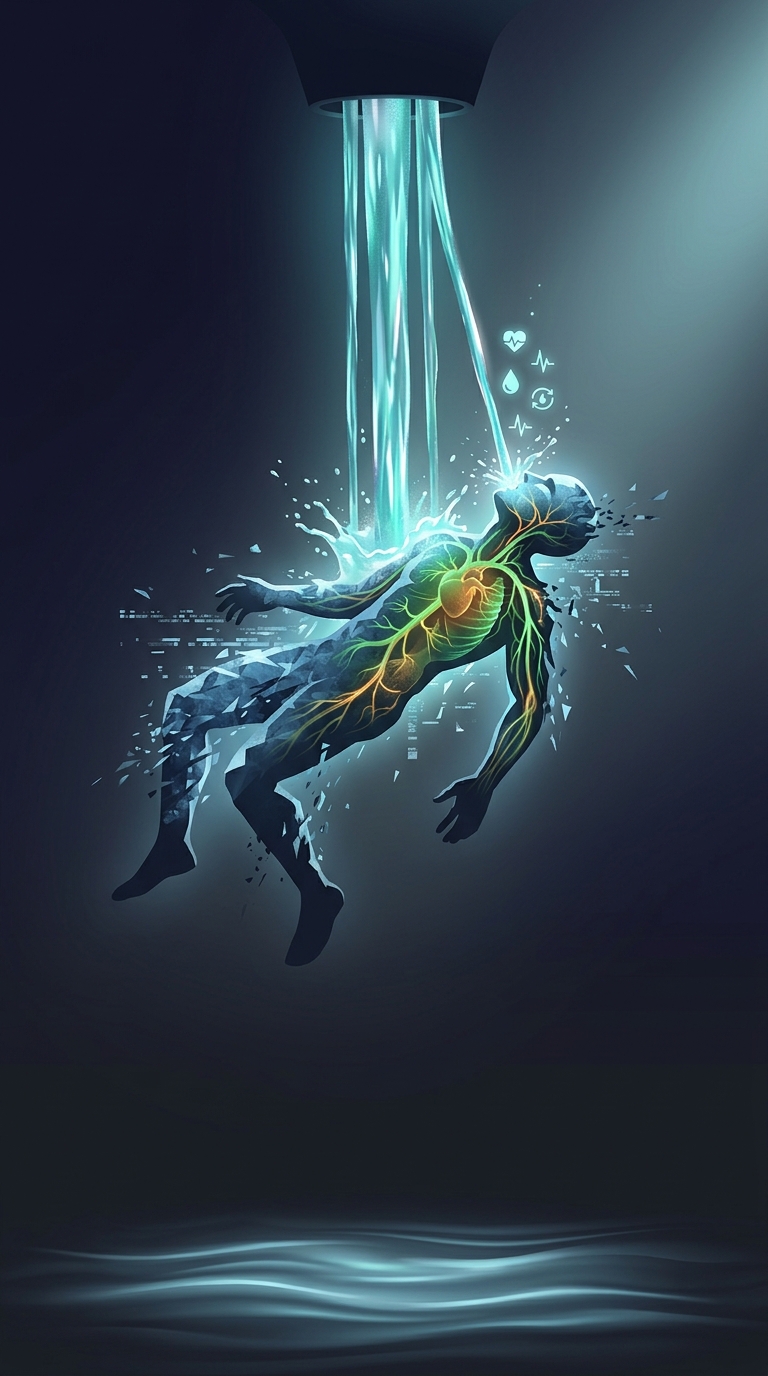
Why severe hypothermia can feel like sudden heat
In advanced hypothermia, the body’s temperature has fallen far enough to disrupt the brain and nerves that regulate sensation and behavior. Some people then experience paradoxical undressing: despite being dangerously cold, they feel hot and remove clothing. It is an observed but uncommon effect—not a predictable final stage, and not something that happens to everyone who is freezing.
When the body’s defenses fail
At first, the body tries to conserve heat by narrowing blood vessels near the skin, reducing the flow of warm blood to the surface. As cooling becomes severe, the systems coordinating temperature control can malfunction. Nerve signals and judgment become unreliable, so a person may misread what their body is feeling or act in ways that no longer protect them.
One proposed explanation is that blood vessels near the skin suddenly widen after prolonged constriction. More warm blood then reaches the skin, creating a misleading sensation of warmth even while the body as a whole remains dangerously cold. The precise mechanism is not fully settled, and the sensation may involve brain dysfunction as well as changes in blood flow. What matters is that feeling hot does not mean the person is recovering.
A warning sign, not a reliable timeline
Paradoxical undressing is associated with severe hypothermia and can occur alongside confusion, poor coordination, and declining awareness. It does not establish that death is imminent, nor does it let an observer judge how much time someone has left. Removing clothing can accelerate heat loss, making an already dangerous situation worse.
That contradiction is what makes the behavior so striking: the person may shed insulation because their failing temperature-control system is sending a false signal of heat. Anyone exposed to cold who becomes confused or behaves unexpectedly needs urgent help and careful warming.