The fig’s hidden flower chamber
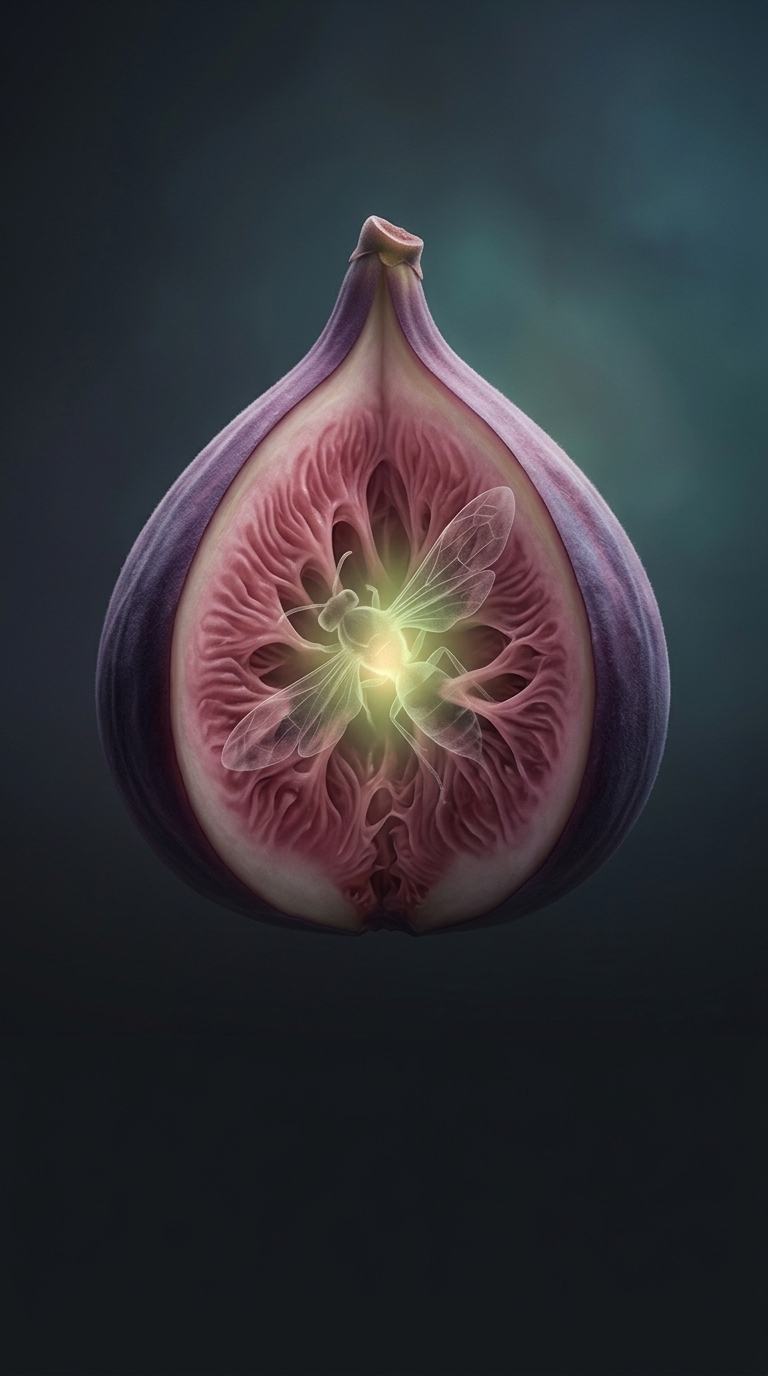
A fig is not a single fruit with flowers inside. It is a syconium: a cluster of tiny flowers turned inward, enclosed by a fleshy, hollow structure. In many wild fig species, a tiny female fig wasp squeezes through a narrow opening to reach those flowers. The opening can scrape off her wings and antennae, and she usually cannot leave again.
Inside, she pollinates some flowers while laying eggs in others. The wasp’s young develop within certain flowers; the pollinated flowers develop seeds. The adult wasp dies inside the fig, while a new generation eventually emerges. This is a tightly matched partnership: many fig species depend on their own particular wasp species for pollination, and the wasps depend on figs to reproduce.
Why an edible fig may not need a wasp
That life cycle does not mean every edible fig contains a dead wasp—or that a wasp sacrifice is required to grow every fig. Many commonly grown figs can develop and ripen without pollination, a process called parthenocarpy. Their fruit can form without seeds being fertilized and without a wasp entering.
Other fig varieties do rely on pollination, so their cultivation involves the fig-wasp cycle. The familiar warning that every fig hides a wasp turns a real, remarkable relationship into a universal claim it is not. The striking detail is more specific: in some fig species, the fruit’s sealed flower chamber is both a nursery for the wasp and a place where the fig’s seeds can form.