How a Fungus Turns an Ant Into a Launch Point
Some fungi do more than infect an insect: they change where it goes before it dies. The best-known example is Ophiocordyceps unilateralis, a group of fungi that infects certain carpenter ants. The fungus does not simply take over every ant it encounters. Its effects depend on a close match between the fungus and its host.
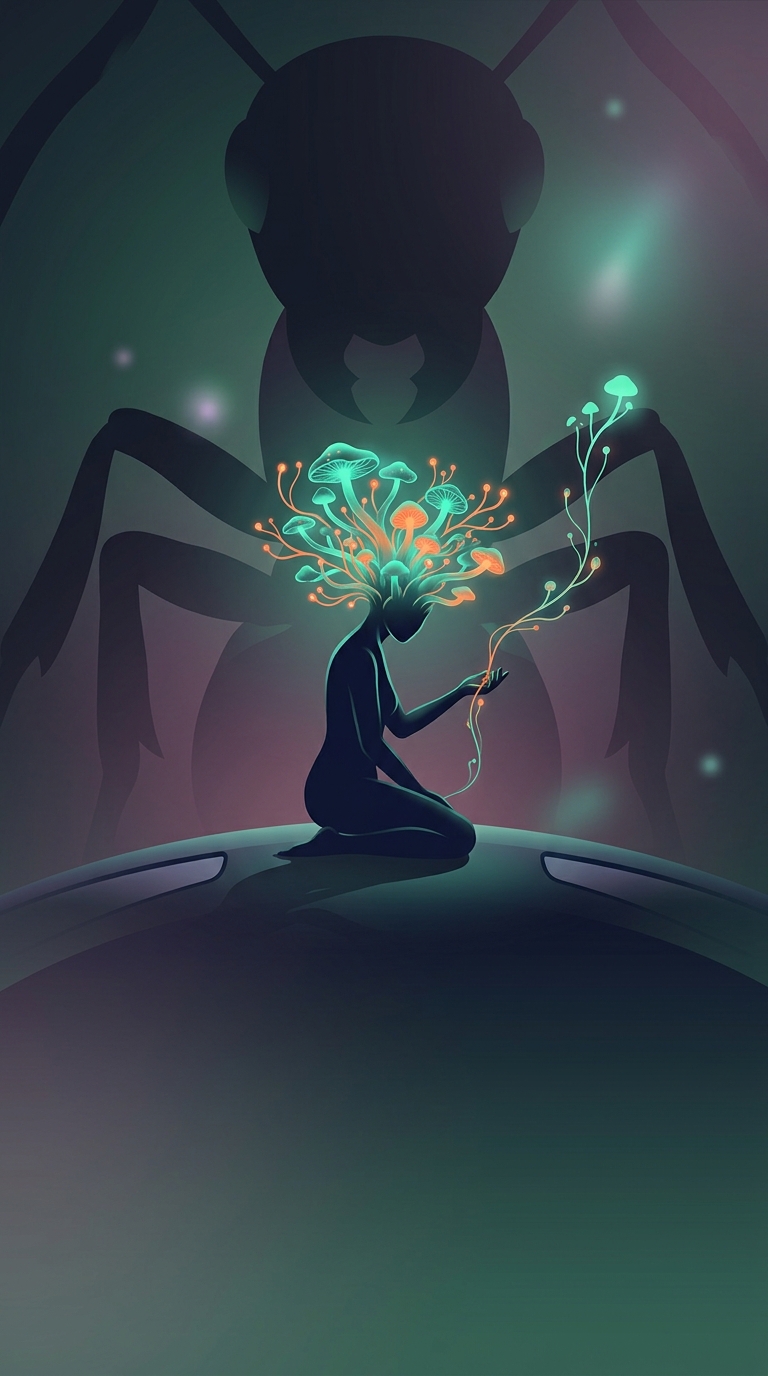
After spores land on an ant, they can penetrate its outer body and grow inside. As the infection develops, the ant may leave its usual routes and climb vegetation. It then clamps its jaws onto a leaf or stem—a behavior often called a “death grip”—and dies in place.
Why the Ant Climbs
The elevated perch gives the fungus a useful place to finish its life cycle. After the ant dies, the fungus grows out of its body and produces spores that can fall or spread onto ants moving below. The ant’s final position can therefore help the fungus reach its next host.
Scientists have not reduced this behavior to a simple story of the fungus entering the ant’s brain and steering it like a puppet. In some studied ant-fungus systems, fungal cells spread through the body and around muscles, while the brain itself is not invaded. The exact signals that produce the altered behavior are still not fully understood.
A Partnership With Unequal Stakes
The fungus benefits from the ant’s movement and final grip; the ant does not. But the outcome is not a universal fate for ants, and different fungi infect different insect hosts. What makes the relationship unsettling is also what makes it effective: the fungus can use its host’s behavior to place its spores where another host is likely to pass.