Fungi Share a More Recent Branch With Animals
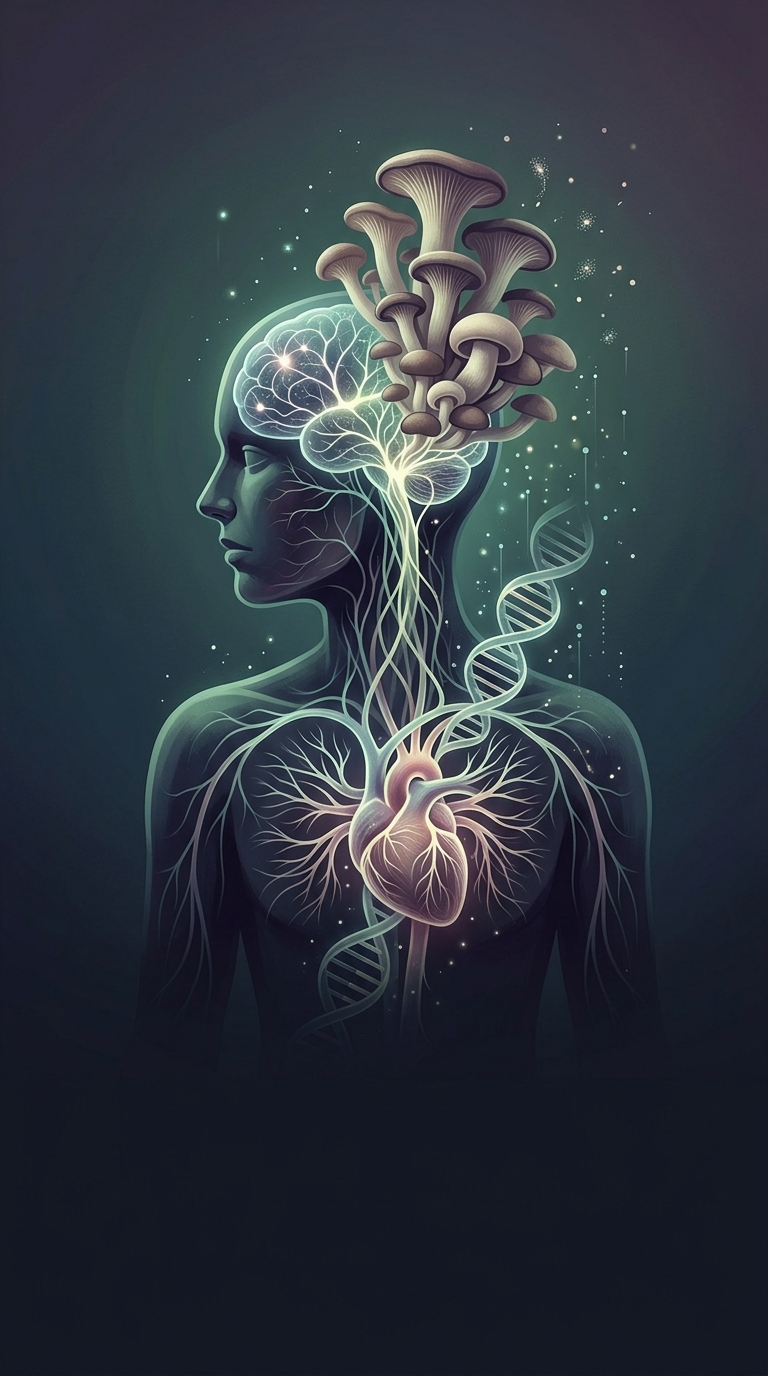
The answer is animals. Mushrooms may look like plants and often sit beside them in grocery stores, but appearance and food-aisle categories do not show evolutionary kinship. When scientists compare DNA and other inherited cellular features, fungi group more closely with animals than with plants.
That does not mean fungi descended from animals, or that animals descended from fungi. The groups share an ancient common ancestor, and each followed its own evolutionary path. Plants branched off earlier from the lineage that later gave rise to fungi and animals.
What the Cells Have in Common
One clue is how fungi and animals get energy: neither makes its own food from sunlight. Plants generally use photosynthesis, while fungi absorb nutrients from their surroundings and animals take in food and digest it. Their strategies differ, but both fungi and animals rely on organic material made by other organisms.
Their cell structures offer another clue. Fungal cell walls contain chitin, a tough material also found in the outer coverings of insects and other arthropods. Plant cell walls, by contrast, are built mainly from cellulose. Chitin is not proof by itself that fungi are animals; it is one feature among many that fits the broader genetic picture.
Why a Mushroom Looks Like a Plant
A mushroom is only the visible, spore-producing part of many fungi. Much of the organism may be a network of fine threads called hyphae, spreading through soil, wood, or another food source. Because fungi often stay rooted in one place and grow outward, they can resemble plants in everyday settings—even though their ancestry and way of feeding tell a different story.
So the vegetable aisle reflects how people use and sell mushrooms, not where fungi belong on the tree of life.