How a Brainless Slime Mold Finds Its Way Through a Maze
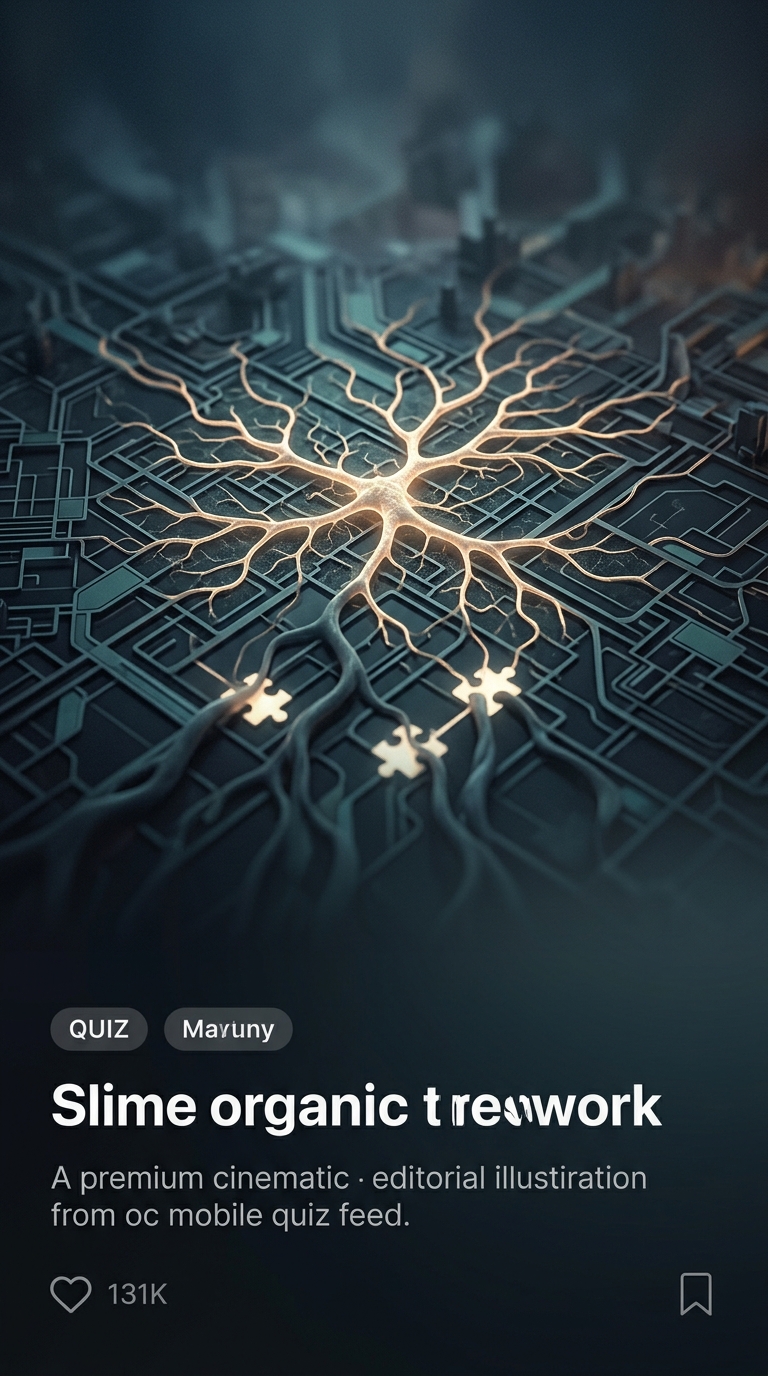
A slime mold can solve a maze—not by picturing a route, but by physically testing paths. The organism spreads as a thin, branching network of living material. When food is placed at two points in a maze, it sends out extensions through available passages. Some branches reach food; others lead nowhere.
As it explores, the mold shifts resources through its network. Paths that help connect food sources tend to grow stronger, while less useful branches shrink. Over time, the sprawling search can become a more direct connection between the food, tracing a route through the maze.
A Network That Edits Itself
The process is a form of distributed problem-solving: no central part makes a plan, and there is no brain issuing instructions. Instead, local changes across the organism—growth, contraction, and movement of internal resources—reshape the whole network. A route emerges from repeated interactions with the environment.
That does not mean the slime mold understands a maze as a human does. It responds to conditions such as food and physical barriers, and its body changes accordingly. The striking part is that a useful route can emerge without any single cell—or any central controller—having an overview. Its living network searches many possible paths at once, then tends to retain the connections that pay off.