How an Iguana Turns a Dive Into a Swim
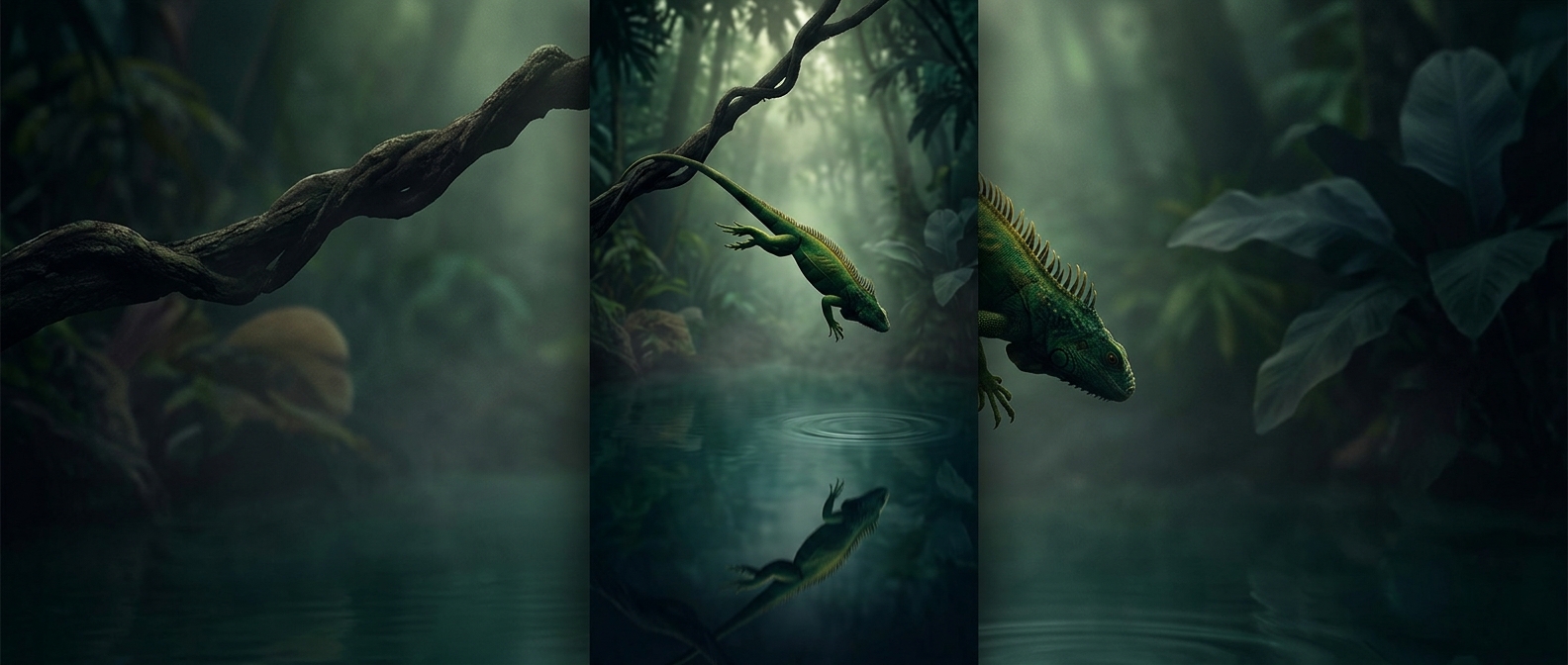
A branch gives an iguana a quick route out of reach, but the water only helps if it can leave fast. After dropping in, the animal’s long, muscular tail swings from side to side. Each sweep pushes water sideways; the water pushes back, driving the iguana forward. As the body bends with the tail, the motion travels down its length like a swimming wave.
The tail is doing more than steering. It supplies much of the thrust, while the iguana’s limbs can help guide its direction. That lets it move through the water without relying on a running start or a powerful kick from its feet.
A Change of Escape Route
The getaway works because the iguana switches environments in a single move. Above the surface, a predator has to catch it among branches. Below, the iguana can use its tail to put distance between itself and danger, while the predator must follow into the water to continue the chase.
The striking part is how little time separates the two strategies: the same animal that clings to a branch can turn a fall into forward motion as soon as its tail meets the water.