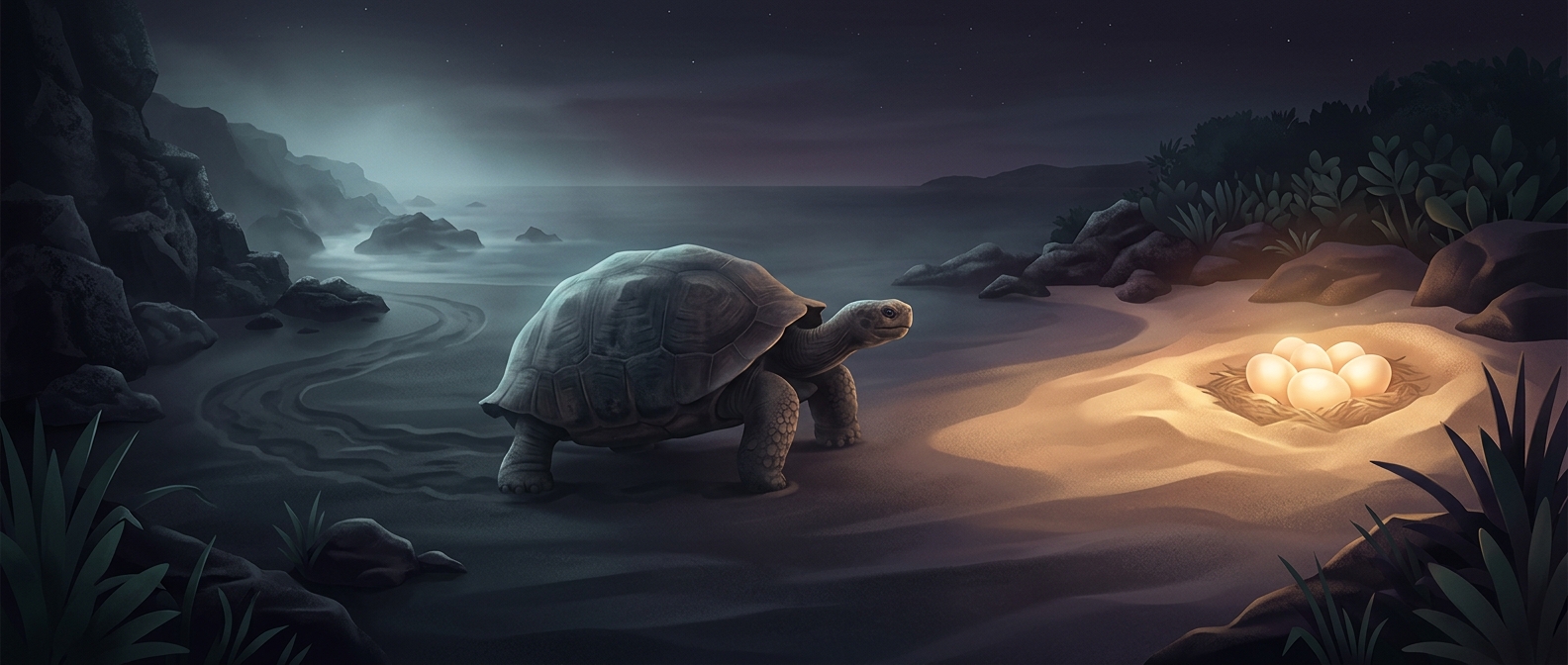
Why the long route is worth taking
For a giant Galápagos tortoise, reaching a feeding area is not a race against the clock. The animal’s pace reflects a different energy budget: as a reptile, it relies on heat from its surroundings to regulate body temperature, and it generally uses energy more slowly than a similarly sized mammal. Moving at a measured pace helps it avoid spending energy it does not need to spend.
That matters on volcanic ground. Uneven slopes and rocky surfaces make each step a small physical task, and rushing would add effort without making the food arrive sooner. A tortoise can keep moving steadily, pause when conditions call for it, and continue toward the next area where plants are available.
A journey tied to food
Seasonal movement connects places that offer different feeding opportunities at different times. The landscape may be close in human terms, but the tortoise experiences it as a sequence of traversable ground and places to eat. Its large body and slow pace make gradual progress a practical way to cover that distance.
The weeks-long crossing is therefore not simply a short trip performed badly. It is travel shaped around conserving energy while reaching food. For the tortoise, the sensible route is the one it can keep making, one deliberate step at a time.