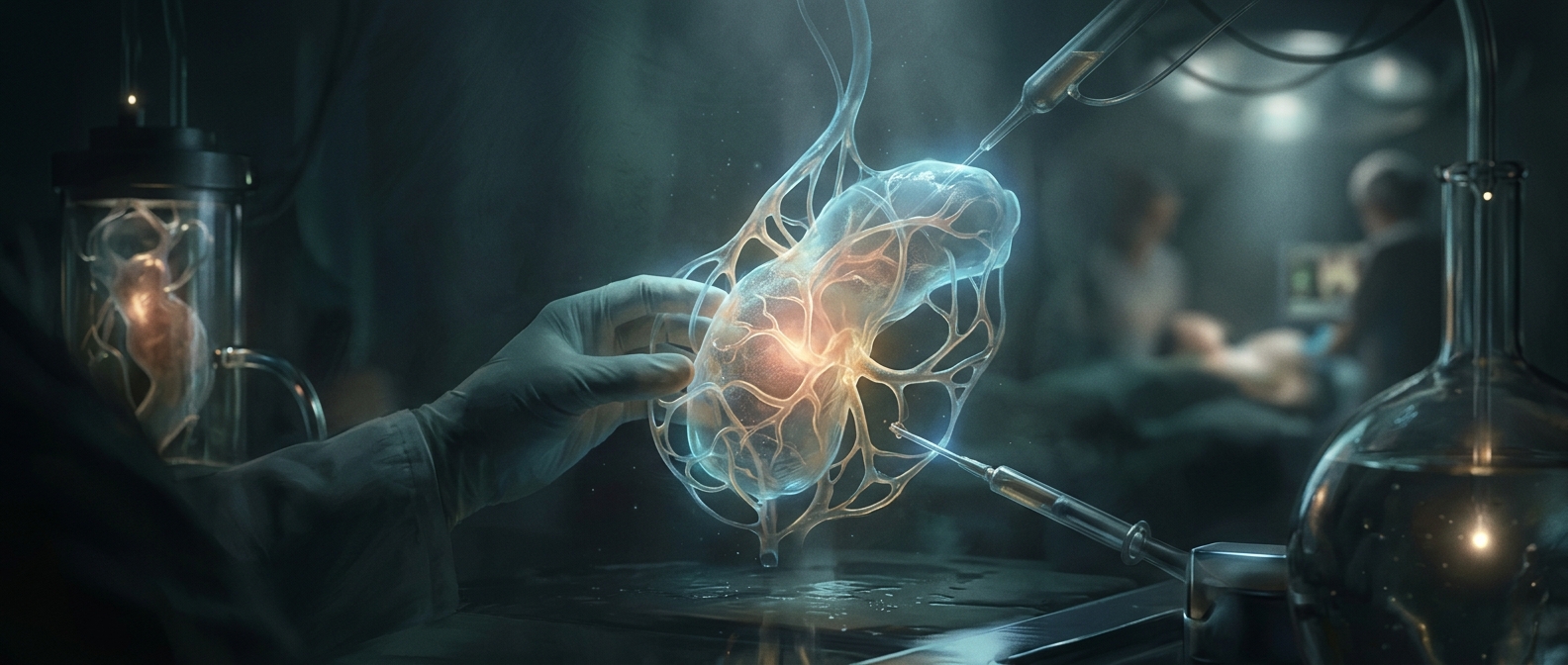
Why an organoid is not a spare organ
An organoid is a small, three-dimensional cluster of cells grown to resemble some features of an organ. It can model how particular cells behave, but it does not reproduce all the structures and connections that make a full organ work. A kidney, for example, needs many kinds of cells arranged in filtering units and linked to blood vessels and drainage pathways. A cluster that imitates kidney tissue is not a transplantable kidney.
That distinction matters when researchers describe work as reaching patient trials. The treatment being tested may be lab-grown cells or a piece of tissue intended to perform a limited job—not a complete organ grown in a dish. The trial asks whether that specific living material can be delivered safely and produce a useful effect in people.
The hardest part is making the parts cooperate
A whole organ is more than a mass of the right cells. Its cells must take on different roles, form the right shapes, receive oxygen and nutrients, and connect to the body’s circulation and other systems. Without those links, tissue deep inside a large structure can be starved of oxygen; even surviving cells may not coordinate well enough to do the organ’s work.
Researchers can therefore move toward treatment in stages: first learn to grow and control relevant cells, then test whether those cells or smaller tissues can function in a patient. Each step addresses a different problem. Evidence that one cell-based treatment is feasible does not show that a complete replacement organ is ready.
A trial tests a treatment, not the whole promise
Patient testing is an important transition from laboratory work, but it is not proof that a treatment works or will become widely available. The practical goal may be to repair or supplement a limited function rather than replace an organ outright. For now, a lab-grown cell cluster can be a meaningful experimental tool—and potentially part of a therapy—without being a spare heart or kidney waiting for transplant.