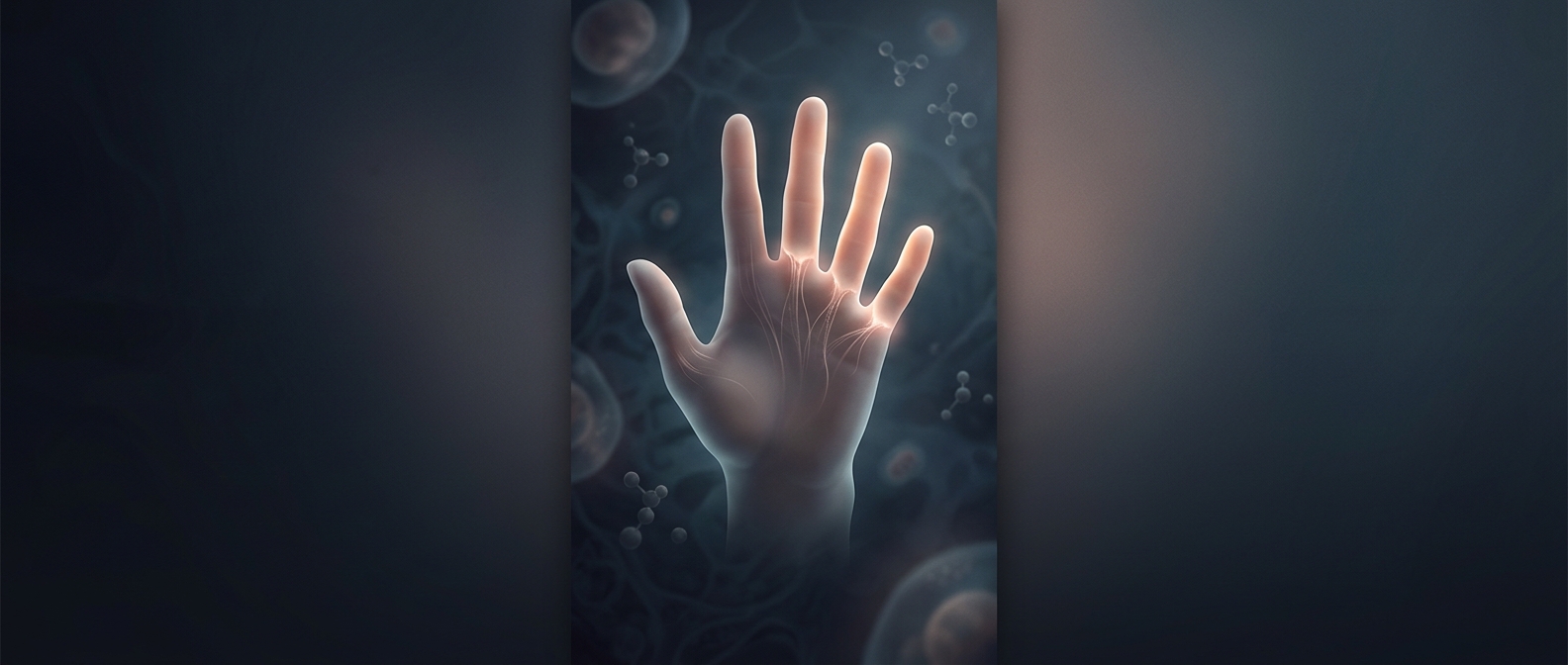
How a developing hand separates into fingers
Early in development, the hand begins as a paddle-shaped structure. The digits form within it, while tissue remains in the spaces between them. To separate the fingers, the embryo must remove much of that intervening tissue without damaging the growing digits.
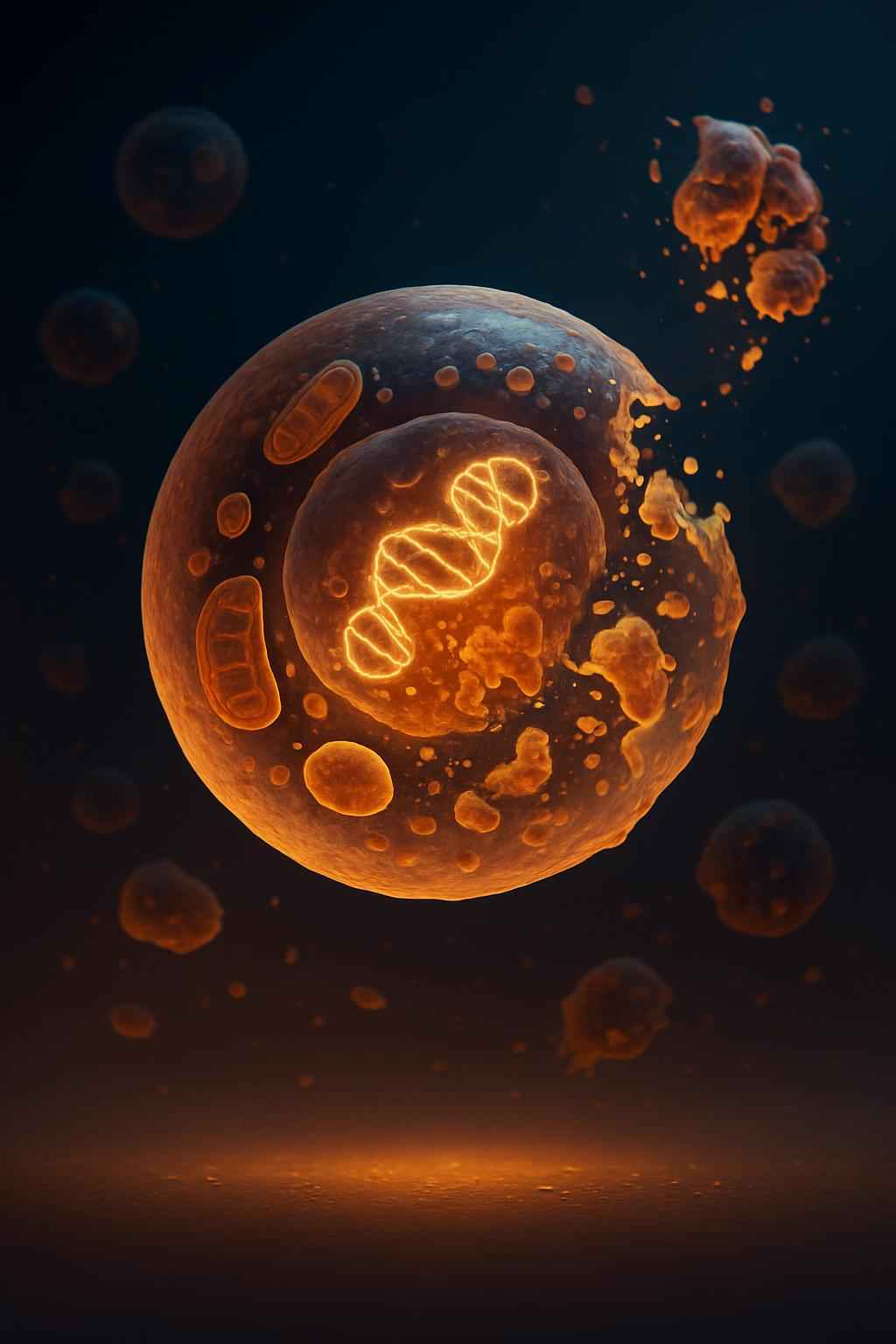
Some cells in those spaces activate apoptosis, a controlled process of cellular self-destruction. Rather than bursting and spilling their contents, they dismantle themselves into small pieces. Nearby cells, including immune cells that patrol developing tissue, take up and dispose of the debris. This orderly cleanup helps keep the process from provoking the kind of inflammation associated with an injury.
A sculpting process, not a miniature wound
Cell death is only one part of the job. It happens in particular places and at particular stages, as the digits grow and the tissue around them changes. The result is a gradual reshaping of the hand: tissue between the digits recedes, leaving separate fingers with the bones, skin, and other structures that continue developing around them.
If separation is incomplete, some of the tissue can remain between neighboring digits, producing webbing or partial fusion. That outcome shows why timing and location matter: the body is not simply removing excess material at random. It is coordinating cell removal with the construction of the hand.
The striking implication is that a recognizable feature of the body emerges through both growth and subtraction. The developing hand takes shape not only by building fingers, but also by selectively clearing away the tissue that would otherwise join them.