How a cell carries out an orderly shutdown
Apoptosis is not a cell simply breaking apart at random. It is a controlled sequence of events that helps an organism remove cells that are no longer needed or have become dangerous. Signals inside the cell—or messages from other cells—can set the process in motion. The cell then activates enzymes called caspases, which cut particular proteins and dismantle key structures in a coordinated way.
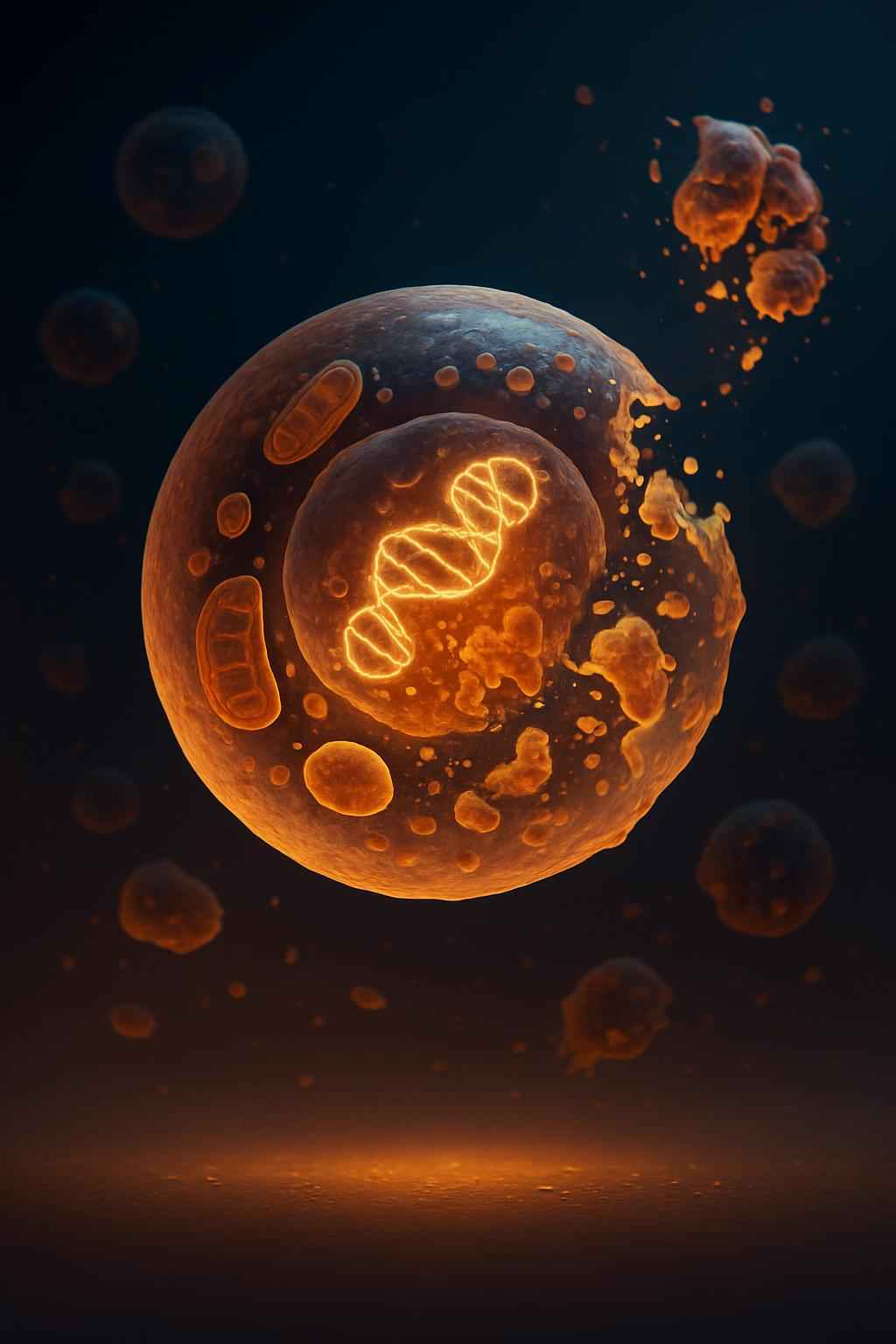
As the cell shrinks and its surface forms small blebs, it packages material into fragments. The fragments display chemical signals that attract nearby immune cells and other cleanup cells. Those cells engulf and digest the debris, generally limiting the spill of cellular contents that can provoke inflammation.
Why the balance matters
Apoptosis is essential during development and throughout adult life. It helps shape tissues, renews cells that naturally wear out, and removes some cells with severe DNA damage or infection. In this way, cell death can protect the larger organism even though it ends the life of an individual cell.
The process must be tightly regulated. If too many cells undergo apoptosis, healthy tissue can be lost; excessive cell death is involved in some diseases. If apoptosis is blocked or fails to respond to damage, abnormal cells may survive and multiply. That failure can contribute to cancer, though cancer can arise through many different changes and is not simply a matter of one faulty “suicide switch.”
A death process that leaves neighbors a job
Apoptosis is distinct from uncontrolled cell rupture, in which contents spill into surrounding tissue and can trigger inflammation. Its orderly packaging makes removal more manageable. A cell’s exit, then, is not just an internal event: it is coordinated with the surrounding tissue, which must recognize, collect, and recycle what remains.