How a worker ant turns its body into a defense
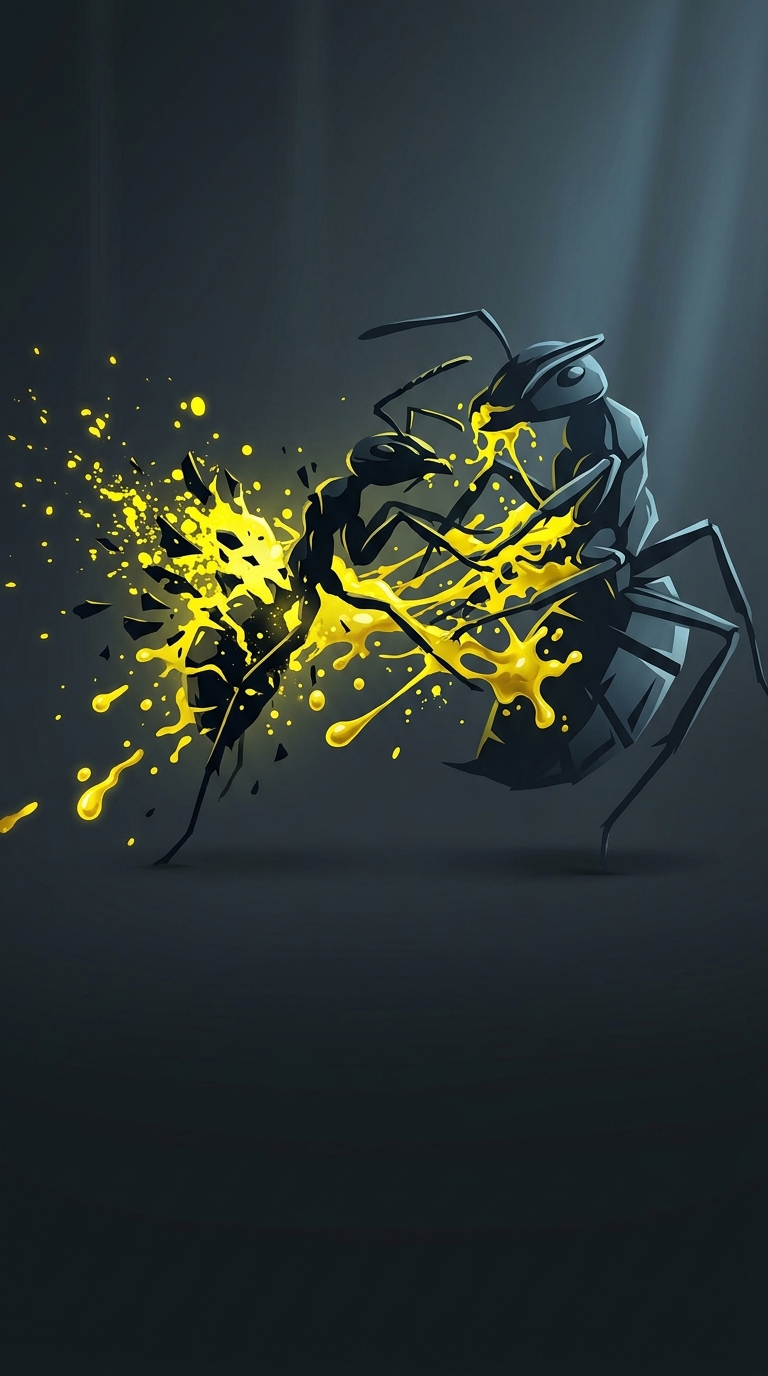
When a threat reaches a colony of Colobopsis explodens, some of its small, so-called minor workers can respond with a defense that costs them their lives. Their enlarged glands hold a sticky, toxic secretion. By contracting their abdomen with great force, a worker ruptures its body and splashes the material onto the attacker.
This is autothysis, a form of self-sacrifice in which an animal’s body breaks open to release a defensive substance. The sticky secretion can hinder an enemy while exposing it to the toxin, buying protection for nestmates nearby.
Why the colony benefits
The worker does not escape after deploying the defense; its body is destroyed in the process. The colony’s advantage is collective: one ant is lost, but a predator or other threat may be slowed or deterred before it can reach more workers or the nest.
That tradeoff makes the behavior a last line of defense, not a routine way for an individual ant to fight. It is striking because the ant’s specialized anatomy turns a small worker into a one-use chemical weapon—one whose most important effect may be the time it gives the colony to respond.