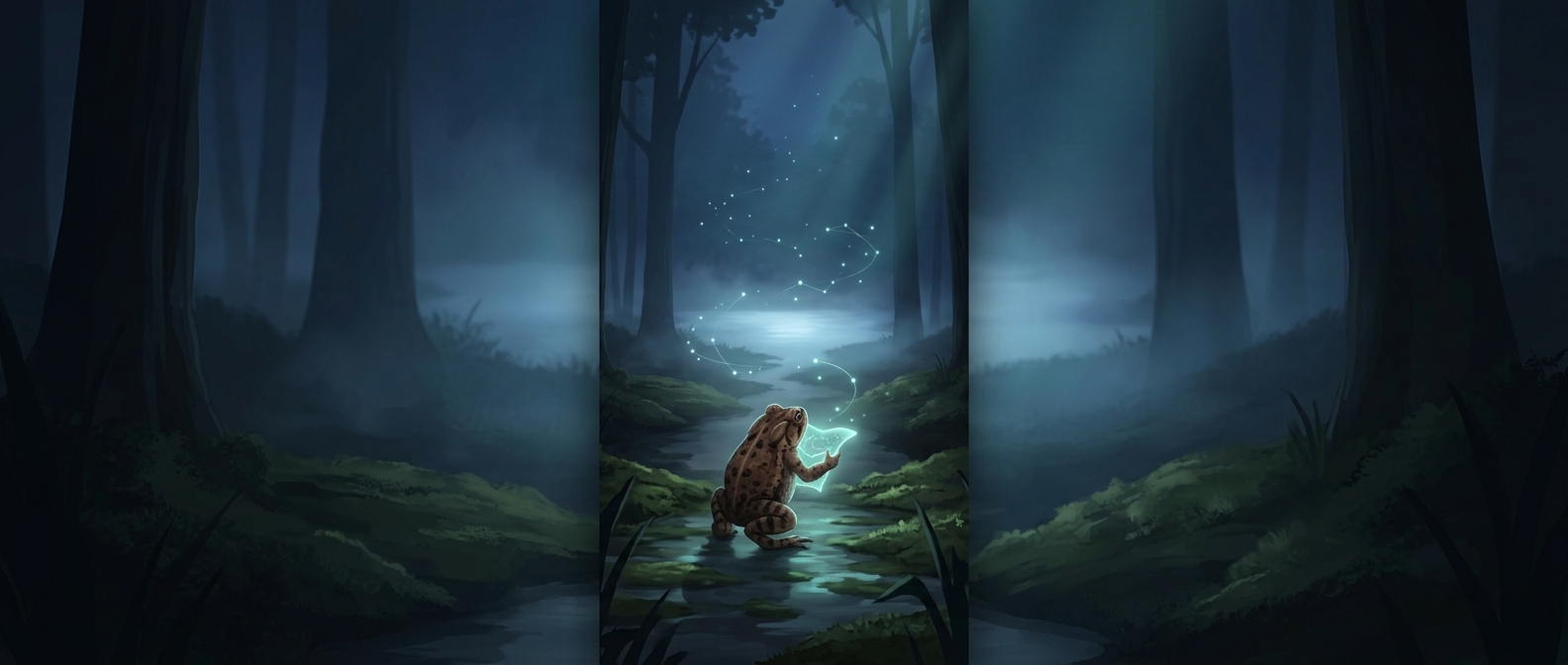
How a toad finds its way back
For many toads, breeding begins with a seasonal journey from the places where they spend much of the year to the ponds where they developed as young. The return is called natal homing: an animal tends to breed at its birthplace rather than simply choosing any nearby water.
The route is not a remembered map in the human sense. Toads can use familiar features of the landscape and sensory cues along the way; amphibians may also respond to chemical traces and other environmental signals. Together, these cues help guide an animal toward a known breeding area. The exact mix varies, and a toad does not need to understand what the pond is for to return to it.
A reliable destination can become a trap
Returning to a familiar pond can be advantageous. If it has supported breeding before, it is a known destination in a landscape that may otherwise offer many possible routes and water sources. But homing depends on the site still being there and suitable. Paving, drainage, pollution, or changes to surrounding land can alter the route or eliminate the water itself.
That creates a conservation challenge: protecting adult toads alone may not preserve the places their life cycle depends on. A breeding pond is part of a population’s inherited geography—a destination shaped by experience across generations. Keeping ponds intact, and maintaining safe connections between them and nearby habitat, gives returning toads somewhere to complete the journey.