How a Glass Frog Makes Its Belly Hard to See
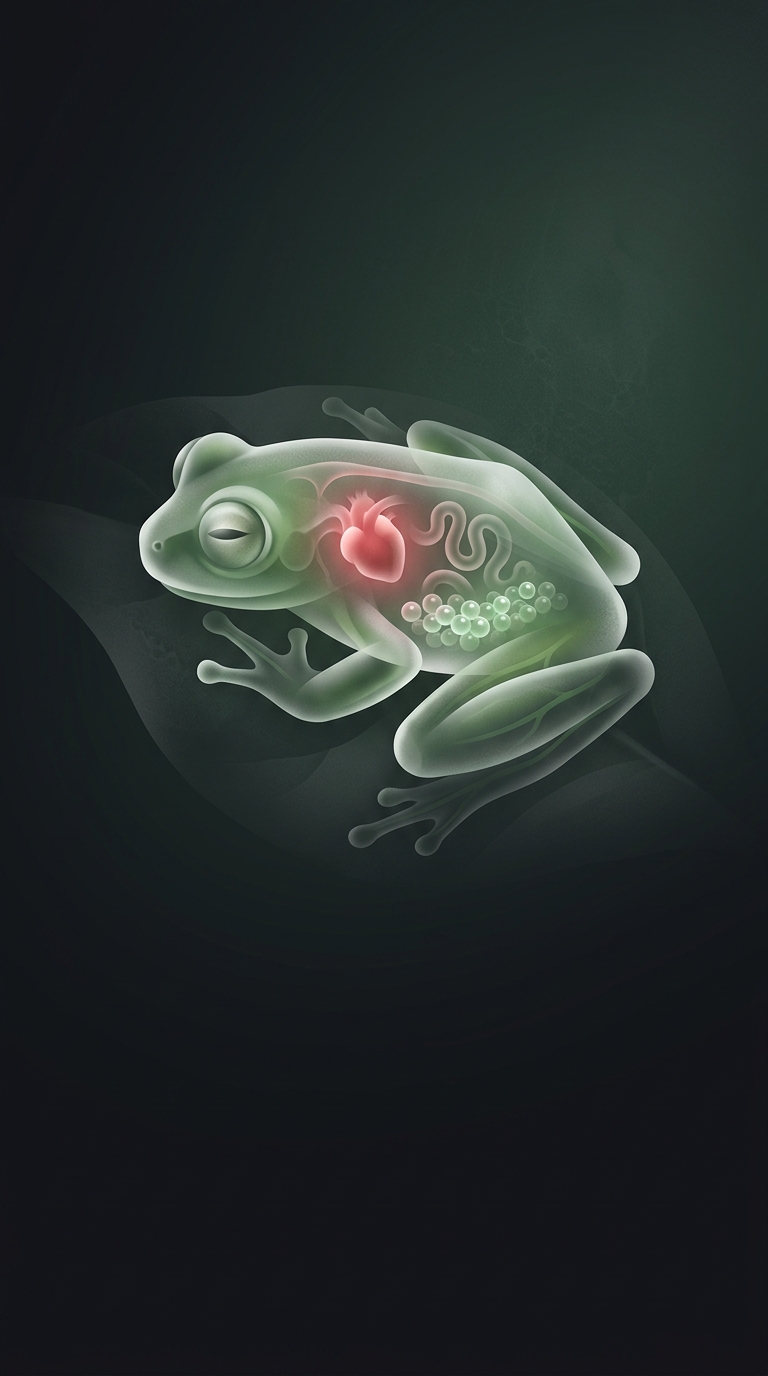
A glass frog’s underside is unusually transparent, but blood can spoil the effect. Red blood cells absorb and scatter light, making vessels and organs stand out against the pale background. When the frog is resting, it gathers much of its red blood-cell supply inside its liver. With fewer cells visible in the bloodstream near the belly, the animal’s outline becomes less conspicuous.
This is not the same as switching off circulation. The cells are concentrated in the liver rather than removed from the body, and the frog’s blood continues to move. When the animal becomes active, the cells can return to circulation, restoring the blood’s usual red appearance.
Transparency as Camouflage
Being see-through can help an animal avoid detection, but it does not make it vanish. Glass frogs’ translucent undersides let light pass through, while their green backs blend with leaves. Reducing the visible blood beneath the belly further softens a feature that might otherwise reveal the frog’s shape to a predator looking up from below.
The trick depends on timing: a resting frog benefits from a less conspicuous underside, while a moving frog needs blood circulating through its body. Its liver serves as temporary storage for blood cells, helping balance those demands. The result is camouflage that changes with what the frog is doing—not a permanently invisible animal, but one whose belly can become much harder to pick out while it sleeps.