Why a river makes a useful night roost
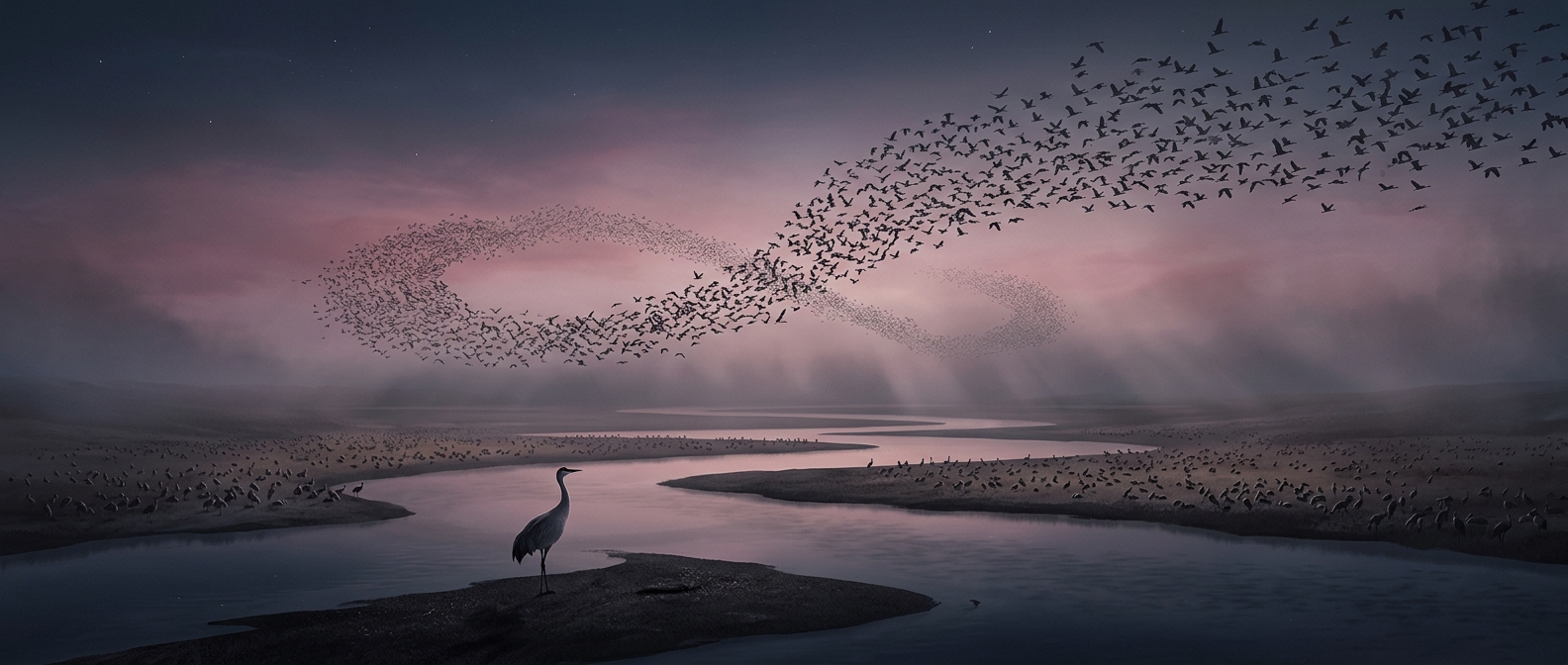
For a crane, shallow water is less a bed than a place where an approaching predator is hard to hide. A coyote or other ground hunter must cross exposed banks or wade into the roost, giving nearby birds a chance to notice movement before it reaches them. The water does not make the flock invulnerable; it makes a quiet, concealed approach more difficult.
Thousands of birds also create many watchful eyes. A crane that spots danger can call or take off, alerting others. That shared vigilance is especially useful at night, when any one bird may miss a threat. The flock can settle in water deep enough to discourage some land predators but shallow enough for the long-legged birds to stand and rest.
The landscape links safety with feeding
The cranes do not need to stay beside the river all day. At first light, they can fly to nearby fields and feed, then return to the water to roost. Nebraska’s river corridors and surrounding agricultural land put these two resources close together: an exposed nighttime refuge and accessible daytime feeding grounds.
That short commute matters for a bird that must spend much of the day eating. Instead of choosing between a safer resting place and productive feeding areas, the cranes can use both. From the ground, the pattern looks like a daily commute; ecologically, it is a way to make one landscape serve two different needs.