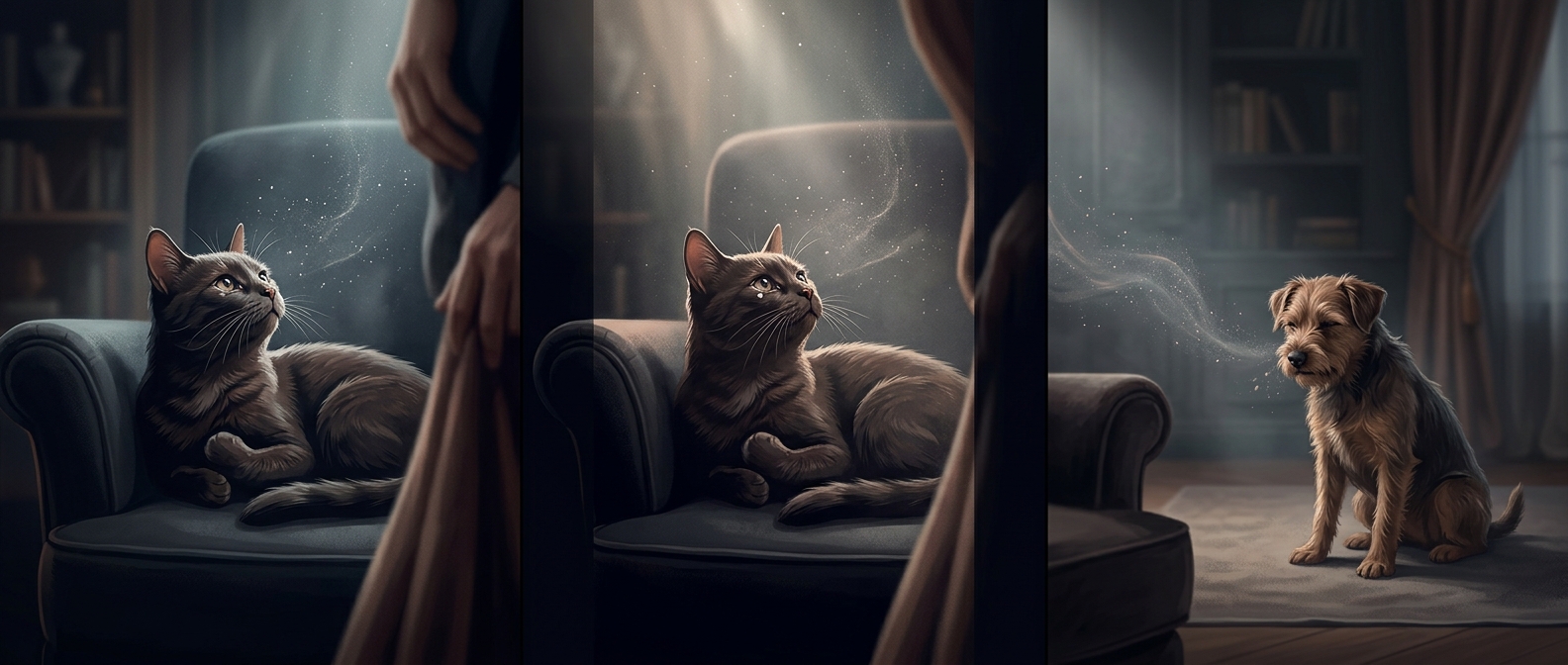
How a person can become an allergen
People constantly shed tiny flakes of skin. These flakes, often called dander, carry proteins that can provoke an allergic response in a susceptible animal. A pet may breathe them in or encounter them on surfaces and clothing; the immune system mistakes a harmless protein for a threat and sets off inflammation.
That inflammation can show up as persistent itching, irritated skin, licking, or ear trouble. The reaction is not to a person’s presence or personality—it is to particular proteins the person sheds. As with other allergies, only some animals are sensitive, and exposure does not guarantee symptoms.
Why the suspected person may not be the cause
Itchiness alone cannot identify the allergen. Flea bites and environmental triggers such as pollen or dust mites can produce similar signs, and flea allergy can be especially intense even when few fleas are visible. A pet may also encounter several possible triggers at once, making the apparent connection to one person misleading.
Veterinarians therefore look beyond who was nearby. They may assess the pet’s skin and history, check for parasites, and consider other common causes before concluding that human dander is involved. The useful clue is a repeatable pattern of symptoms alongside a careful search for more frequent explanations—not simply that the pet scratches after cuddling.