How a Chameleon Loads Its Tongue Like a Spring
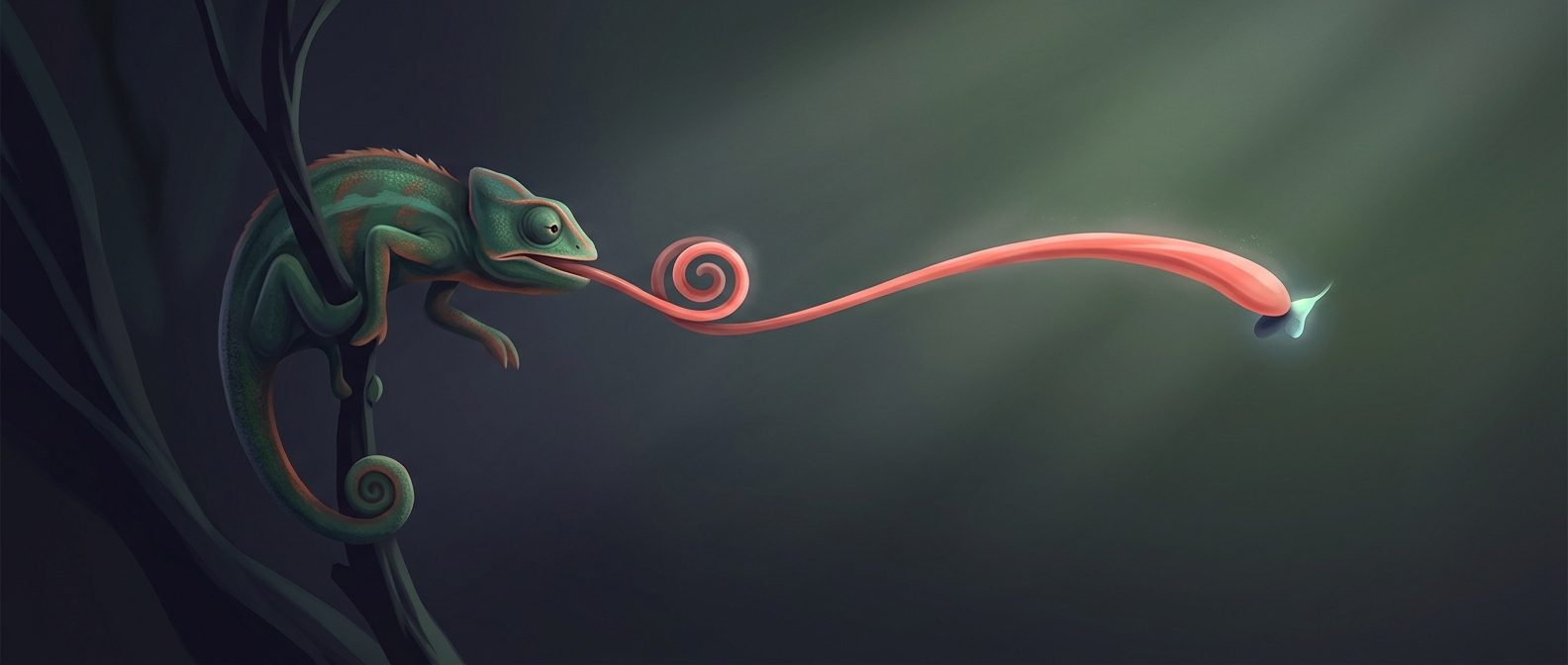
A chameleon does not extend its tongue by simply contracting a muscle along its full length. Instead, muscles around the tongue’s base pull back on a specialized structure, loading elastic tissue much like drawing back a spring. When the chameleon releases that stored energy, the tongue shoots forward in a rapid burst.
This arrangement lets the tongue travel farther and faster than a direct muscle movement could manage. The launch is especially useful for catching insects: a chameleon can stay still, aim, and send its tongue across the gap before the prey has much chance to escape.
A Sticky Tip Makes the Launch Count
At the end of the tongue is a fleshy tip that helps seize the insect on impact. Once the prey is caught, muscles pull the tongue back into the mouth. The cycle turns stored energy into a quick sequence: load, launch, grab, retrieve.
The remarkable reach is therefore not a muscle stretching to twice the chameleon’s body length. It is the result of elastic tissue releasing energy in a sudden burst—a design that lets a patient hunter capture food without first closing the distance.