Why zebras and wildebeests share the same grasslands
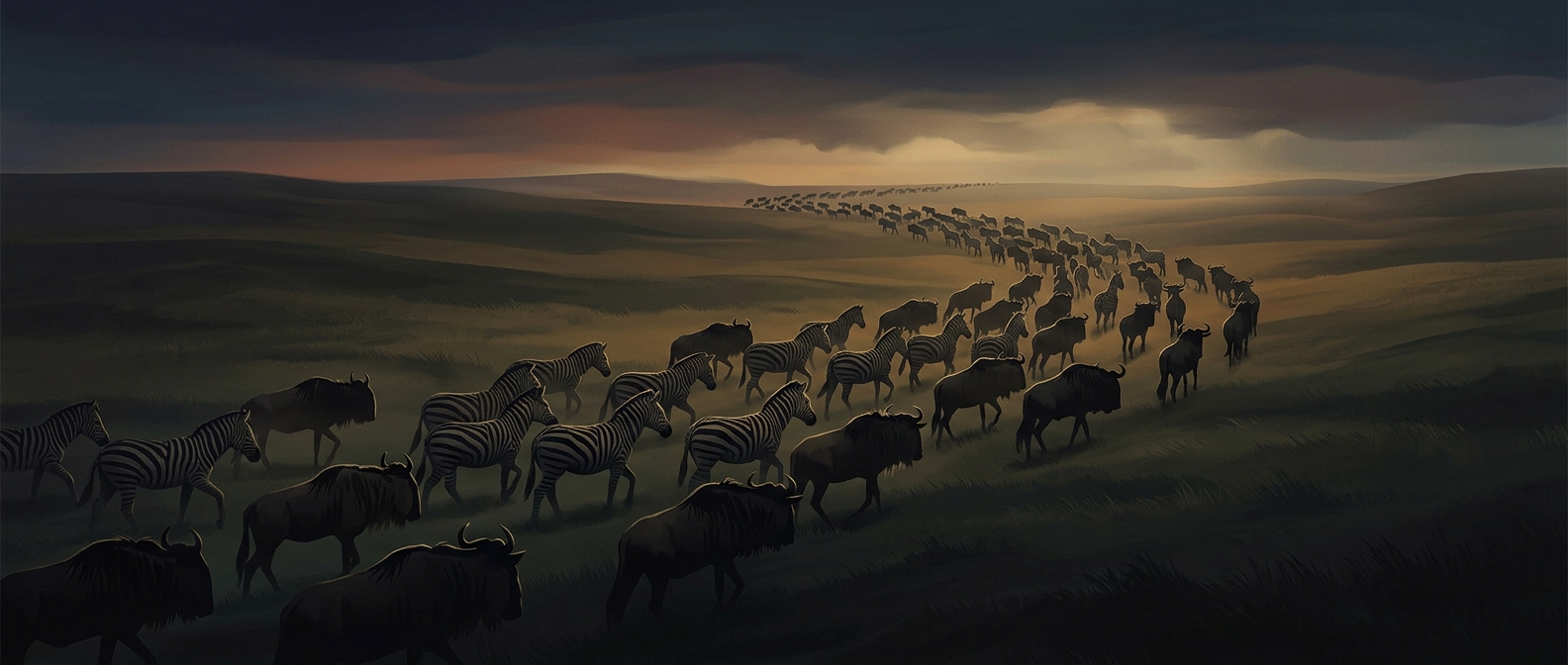
Mixed herds are not simply a crowd assembled for protection. Zebras and wildebeests can feed in the same area without relying on exactly the same forage: zebras can crop taller, coarser grasses, while wildebeests tend to favor shorter, fresher growth. As animals move across the grasslands, one species’ feeding can leave conditions better suited to the other. That overlap in habitat and food helps bring them together, especially during seasonal movements in search of grazing and water.
What a mixed herd changes for a predator
A predator approaching a large group faces many possible targets, and the animals’ movement can make it harder to keep attention on one individual. The crowd also spreads risk: even when a predator attacks, any particular animal is less likely to be the one chosen than it would be if isolated. This is called the dilution effect—risk is shared among many animals, rather than removed.
The herd’s benefit depends on what is happening around it. A predator can still focus on an animal that is young, injured, or separated from the group, and a stampede can leave individuals behind. The striking sight of two species moving together, then, reflects both practical advantages—shared habitat and reduced individual exposure—and a limit: safety comes from being among many, not from being unreachable.