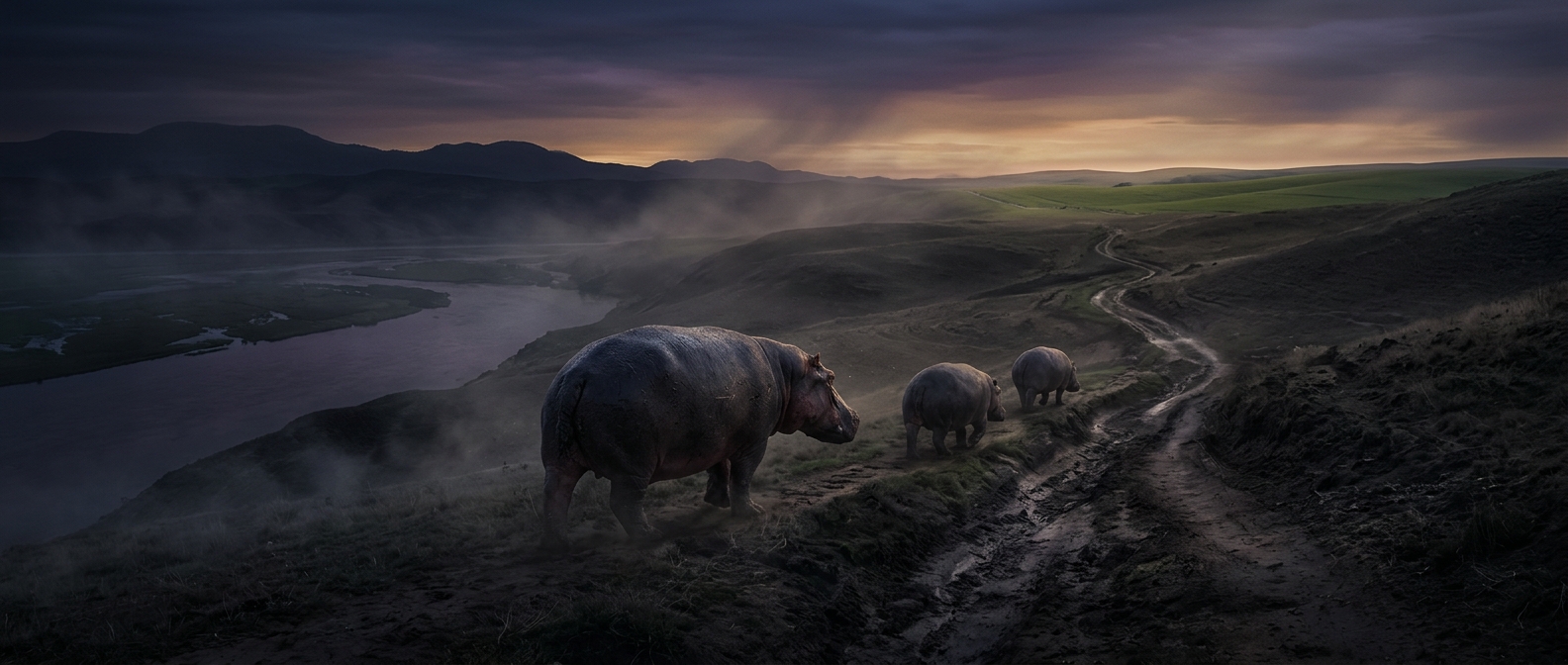
A grazing route shaped by appetite
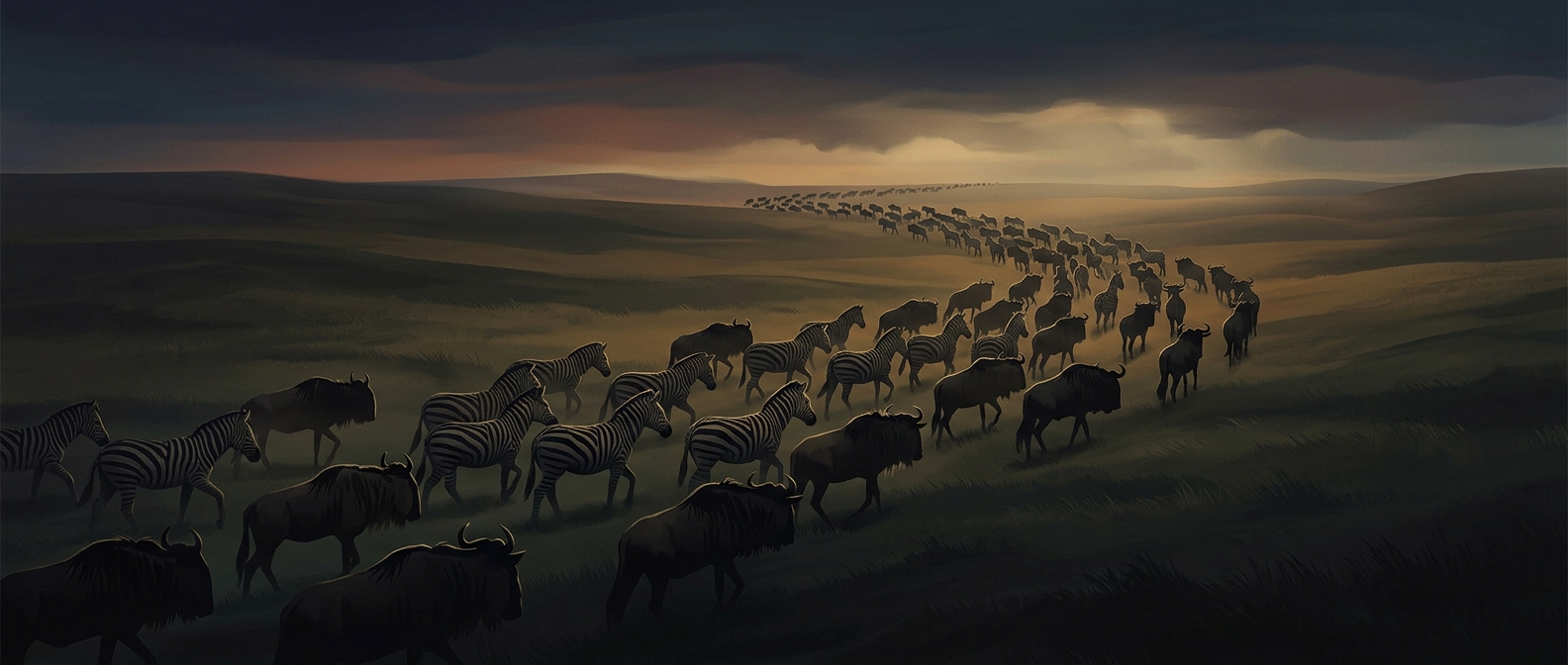
A hippo’s night journey is a feeding commute. It leaves the aquatic habitat where it spends much of the day and searches for short grasses, cropping them with broad, mobile lips. Hippos are mainly grazers, not aquatic plant-eaters; a river or pool is their refuge, while the surrounding land supplies much of their food.
Grass is bulky and relatively low in nutrients, so a large animal must eat a substantial amount to meet its needs. When nearby lawns are sparse or have already been grazed, the useful feeding ground may lie well beyond the water’s edge. Hippos often follow familiar routes between resting pools and feeding areas, sometimes crossing farms or other human-used land along the way.
Why the water remains the destination
The return trip is not simply a preference for swimming. Hippo skin is poorly suited to prolonged exposure to sun and drying conditions. During daylight, staying submerged or in deep shade limits that exposure; the animal’s skin also produces a reddish secretion that helps protect it, though it is not blood or a substitute for shelter.
That creates a daily tradeoff: forage on land, then retreat to water. It also explains why the route matters beyond the animal itself. Repeated paths can funnel hippos through the same narrow corridors—and bring a powerful, mostly nocturnal grazer into places people may not expect it.