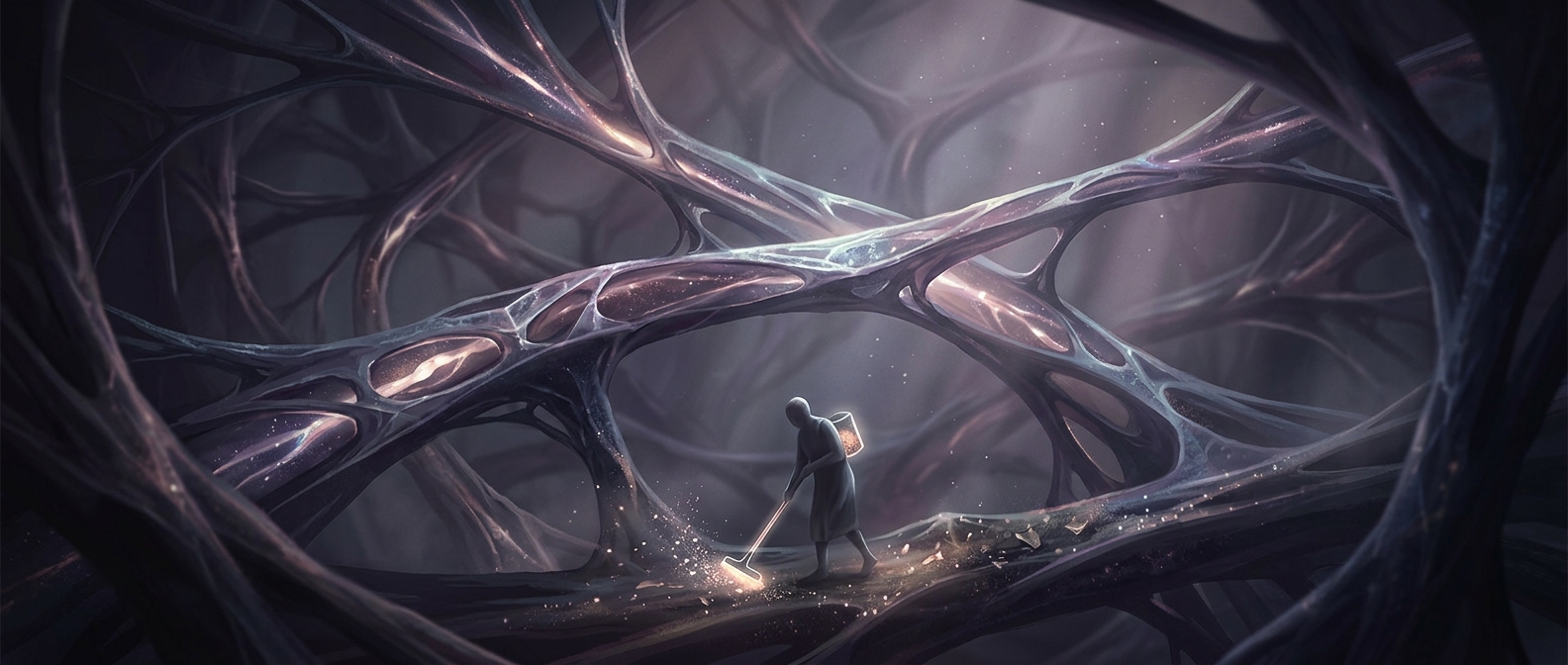
The brain’s support cells do more than fill the gaps
Neurons get much of the attention because they send the electrical and chemical signals involved in thought. But neurons work in a tightly controlled environment, and glial cells help maintain it. The name glia comes from an old idea that these cells were merely glue; in reality, they perform several kinds of active support.
Astrocytes, named for their star-like shape, help regulate the chemical surroundings of neurons. They take up excess signaling chemicals after messages are sent and help manage the supply of nutrients from nearby blood vessels. That cleanup matters: if the conditions around a neuron shift too far, its signaling can become unreliable.
Different cells handle different kinds of upkeep
Other glial cells have specialized jobs. Oligodendrocytes wrap many nerve fibers in myelin, an insulating layer that helps signals travel efficiently. Microglia act as immune defenders within the brain: they monitor for damage and can engulf cellular debris and invading microbes.
These roles overlap and change with circumstances. Glia also communicate with neurons and with one another, influencing how brain circuits function. They are not simply repair workers waiting for a neuron to break; their ongoing activity helps keep neural networks in working order.
Maintenance shapes what the brain can do
A useful comparison is a busy worksite: the visible action depends on supplies arriving, pathways staying usable, and waste being cleared. In the brain, those conditions are biological rather than mechanical. Glial cells help preserve the environment in which neurons can signal, while myelin helps signals move along their routes.
The consequence is easy to overlook: brain activity depends not only on neurons firing, but also on support cells continually regulating the conditions that make that firing possible.