Why a nail could be worth recovering
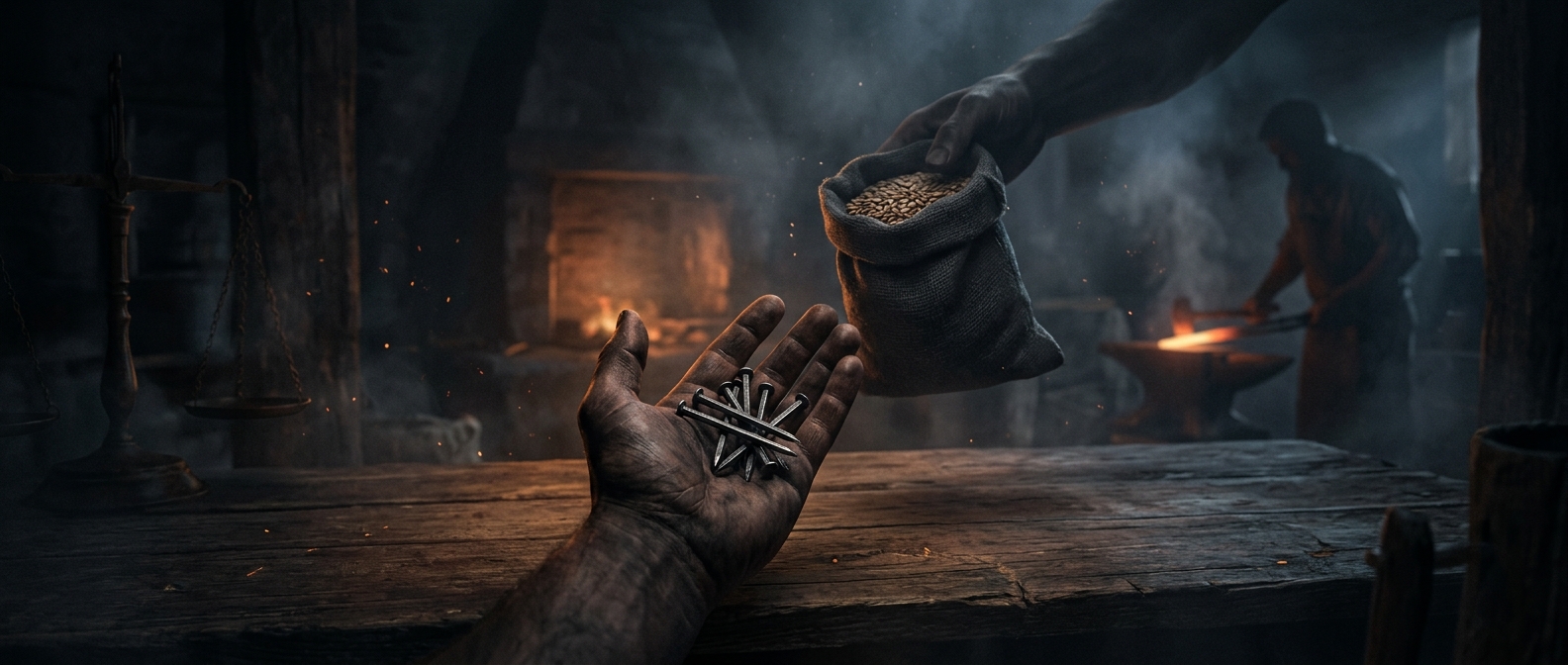
For much of early settlement history, iron nails were costly because making them took skilled labor. A blacksmith had to heat iron and shape it one nail at a time; before mechanized production, even ordinary building hardware represented substantial work. In places far from reliable supply, replacing a handful of nails could be harder than finding lumber.
That made nails unusually useful salvage. When a wooden house was dismantled—or burned so its timbers could be cleared—people could sift the ashes and collect iron fasteners for reuse. The fire destroyed the building but did not destroy the nails. Their sharp, sturdy forms could be straightened or used again, turning debris into a supply of valuable material.
Useful goods could act like money
On a frontier where coins were scarce and trade routes unreliable, people often exchanged goods directly. Nails suited that role: they were portable, recognizable, and useful to nearly anyone building or repairing a structure. Their value came not from being precious in themselves but from the labor and difficulty required to replace them.
A bucket of salvaged nails could therefore command more in a particular exchange than a small amount of gold, especially if the buyer urgently needed building supplies and had little access to them. That was a local comparison, not a fixed price: gold held broader value, while nails could be more immediately useful in a place short on hardware. The striking lesson is that, in a cash-poor settlement, a handful of iron could be worth more for what it let someone build than for what it was made of.