A Painted Fabric Below the Famous Frescoes
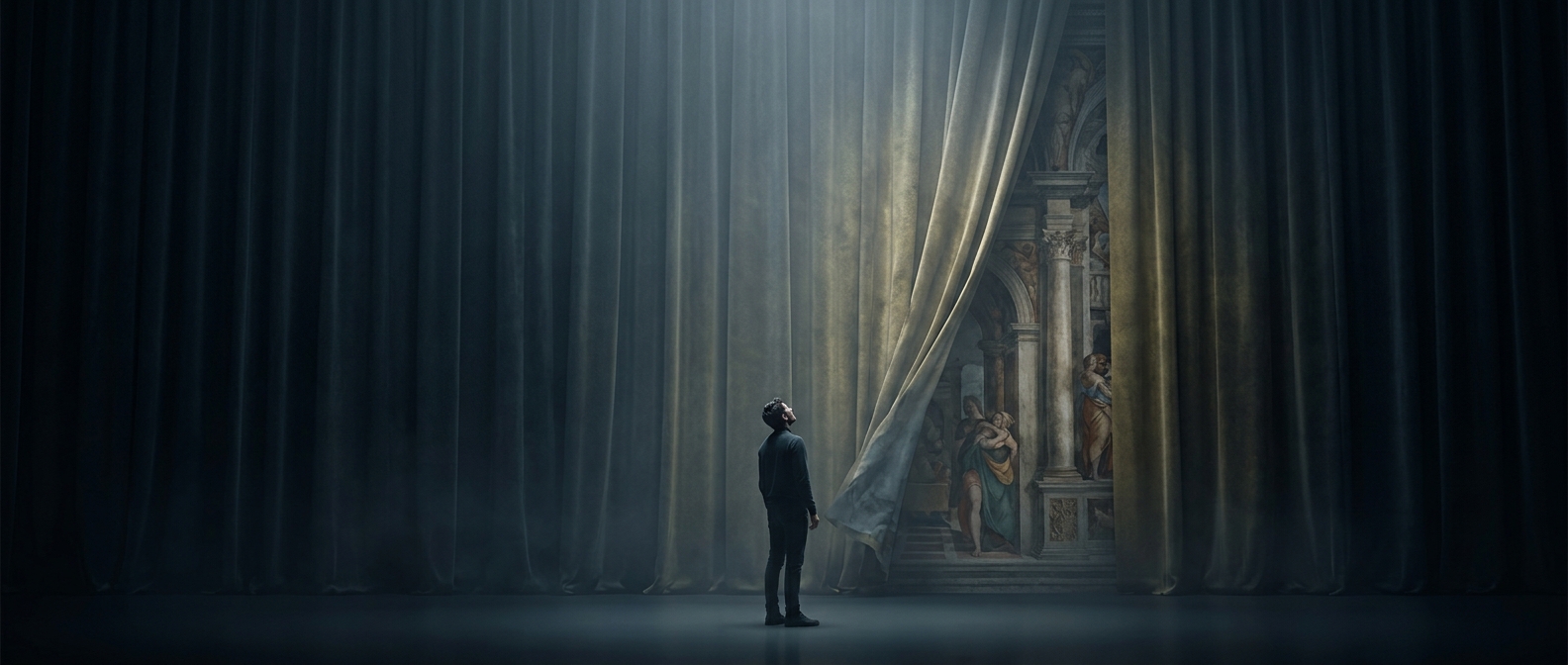
The Sistine Chapel’s walls do not end in bare stone. In their lower decorative zone, painted drapery creates the impression of curtains hanging across the room. The effect is trompe-l’œil—French for “deceive the eye”—a technique that uses painted shapes, color, and shading to make a flat surface seem three-dimensional.
How Plaster Seems to Fold
A curtain looks soft because its folds alternate between light and shadow. The painted version uses the same visual clues: bright bands suggest fabric catching the light, while darker areas imply deep creases. Edges and gathered sections make the surface appear to hang rather than sit flat against the wall. The eye supplies the missing depth, turning painted plaster into an apparent textile.
This decorative illusion gives the lower walls a different character from the chapel’s celebrated biblical scenes above. Instead of asking viewers to follow a story, the painted curtains make the architecture feel dressed and enclosed—like a room hung with sumptuous fabric. What looks at first like velvet is part of the wall itself, a reminder that the chapel’s visual richness extends below its best-known ceiling.