Why the ceiling required a moving worksite
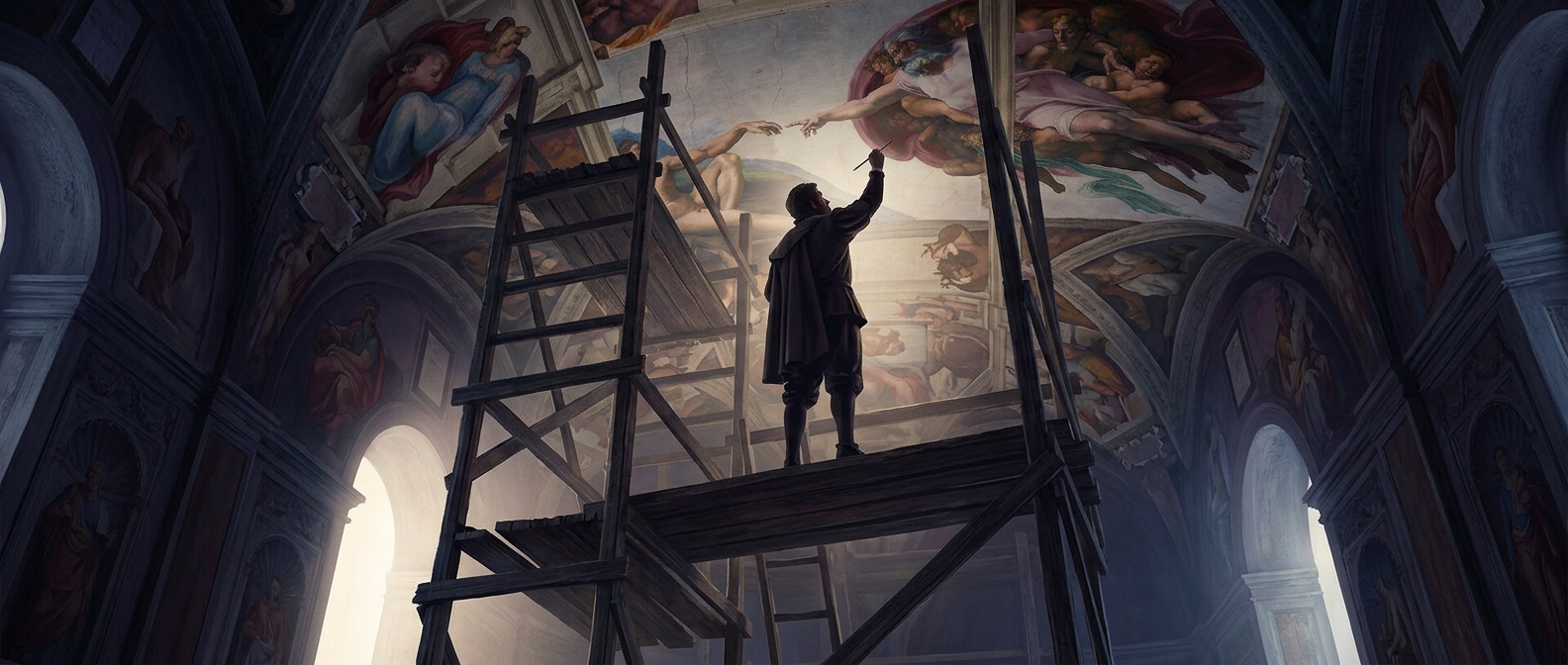
The Sistine Chapel’s curved ceiling was not a single flat surface a painter could cover at once. Michelangelo had to work close to each area, moving along a scaffold as the painted surface advanced. That elevated platform turned the chapel into a temporary workshop: it brought him within reach of the plaster while leaving the floor available below.
Fresco made the schedule unforgiving
Much of the ceiling was painted in fresco, a method in which pigment is brushed onto fresh, damp plaster. As the plaster dries, the color becomes part of the wall, so a section has to be painted while its surface is still workable. Michelangelo and his assistants therefore prepared the ceiling in manageable areas rather than coating the whole expanse first. The scaffold had to let them reach those areas in sequence without disrupting the work beneath.
That process helps explain the physical strain behind the finished room. The paintings were not applied to a canvas that could be lowered and turned; they were built directly onto the chapel’s architecture, one reachable patch at a time. Look up in the Sistine Chapel and the ceiling’s unity can obscure the practical fact: it was made through a series of close, difficult encounters with the plaster.