A torch meant to guide ships
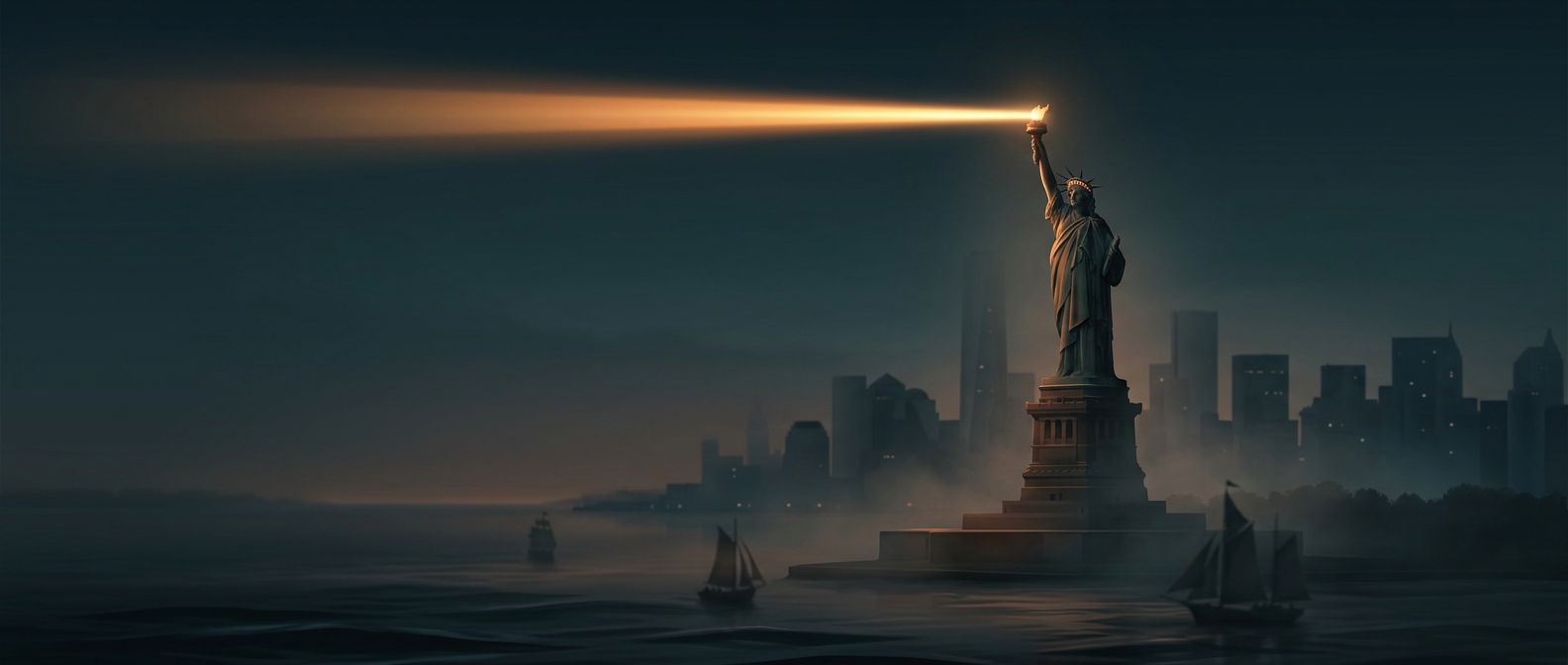
When the Statue of Liberty opened in 1886, its raised torch was more than a symbol: it was fitted with electric lights and placed under the U.S. Lighthouse Board, the federal agency responsible for aids to navigation. From the harbor, the idea had an obvious appeal. A beacon high above the water could be seen by ships approaching New York.
The reported 24-mile visibility described how far the light could be seen under suitable conditions. But being visible at a great distance is not the same as being a dependable navigational aid. Sailors need a light they can identify and use consistently to judge where they are and how to approach safely—not simply a bright point on the horizon.
Why the experiment ended
The torch had been designed as part of a monumental sculpture, not as a purpose-built lighthouse. Keeping its lighting system operating required ongoing effort and expense, while the result did not justify treating the statue as an efficient beacon. After 16 years, responsibility passed out of the Lighthouse Board’s hands.
That brief chapter shows how different a landmark and a working aid to navigation are. The statue’s height and visibility made the torch seem suited to guide ships, but a lighthouse has to do more than shine far: its light must serve a practical, reliable purpose for vessels at sea.