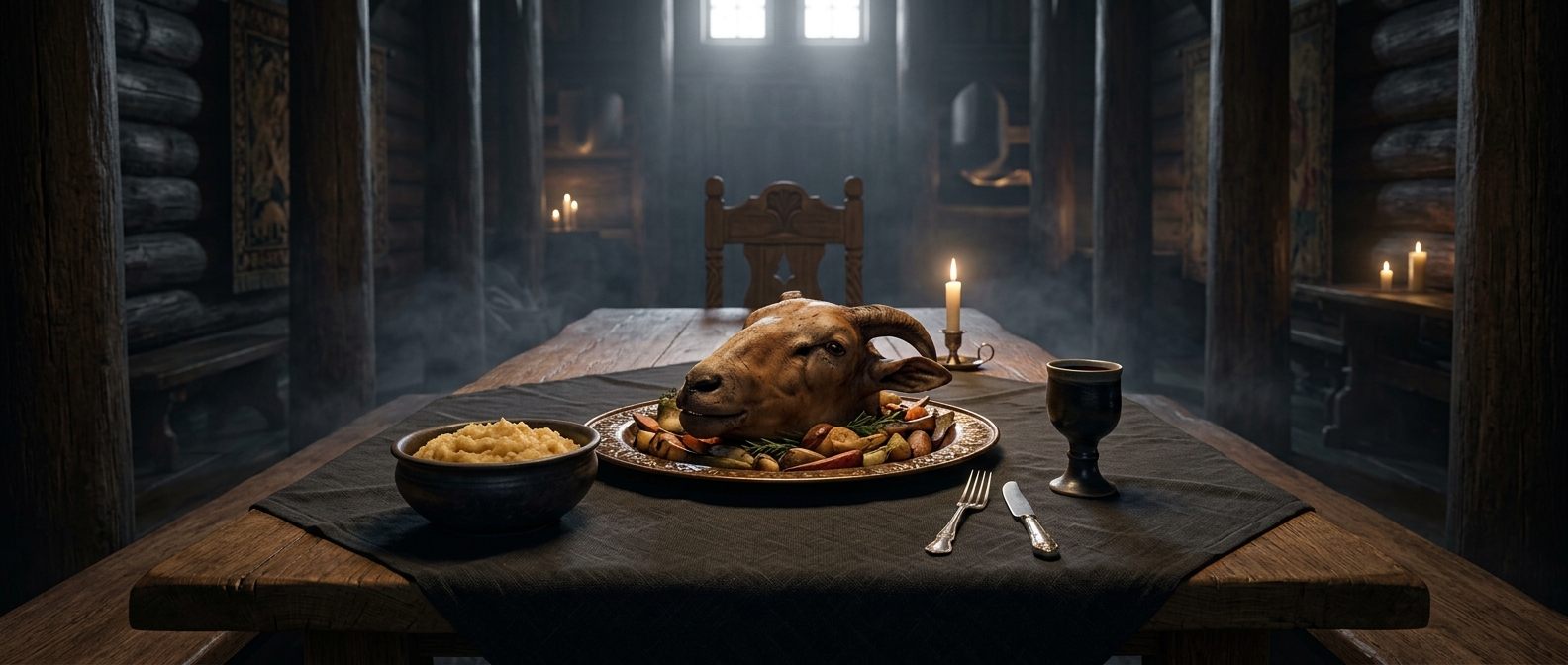
How a sheep’s head becomes smalahove
The western Norwegian dish is known as smalahove. Its preparation turns a part that is difficult to store and cook into a substantial meal. The head is cleaned and the wool is removed, traditionally by singeing; it is then salted and boiled until the meat softens. Salting draws moisture from food, slowing the growth of many spoilage microbes. In some preparations, the head is also dried or smoked before cooking, extending its keeping time.
Boiling does more than make the meat tender. A head contains several different textures close together: soft cheek meat, skin, and firmer parts around the jaw. The cook serves the head whole or split, leaving diners to work around the bones and choose what to eat.
A meal built around using the whole animal
Smalahove belongs to a nose-to-tail tradition: making use of edible parts rather than treating the familiar cuts as the whole animal. In a sheep-raising region, preserving and cooking the head made practical use of a slaughtered animal and produced a dish distinctive enough for a festive table.
That hands-on format is part of the meal’s character. Each person encounters the anatomy directly, deciding where to begin and how to separate meat from bone. The result is not just an unusual centerpiece but a way of turning thrift, preservation, and shared eating into a memorable holiday ritual.