How a Sheep’s Stomach Holds Haggis Together
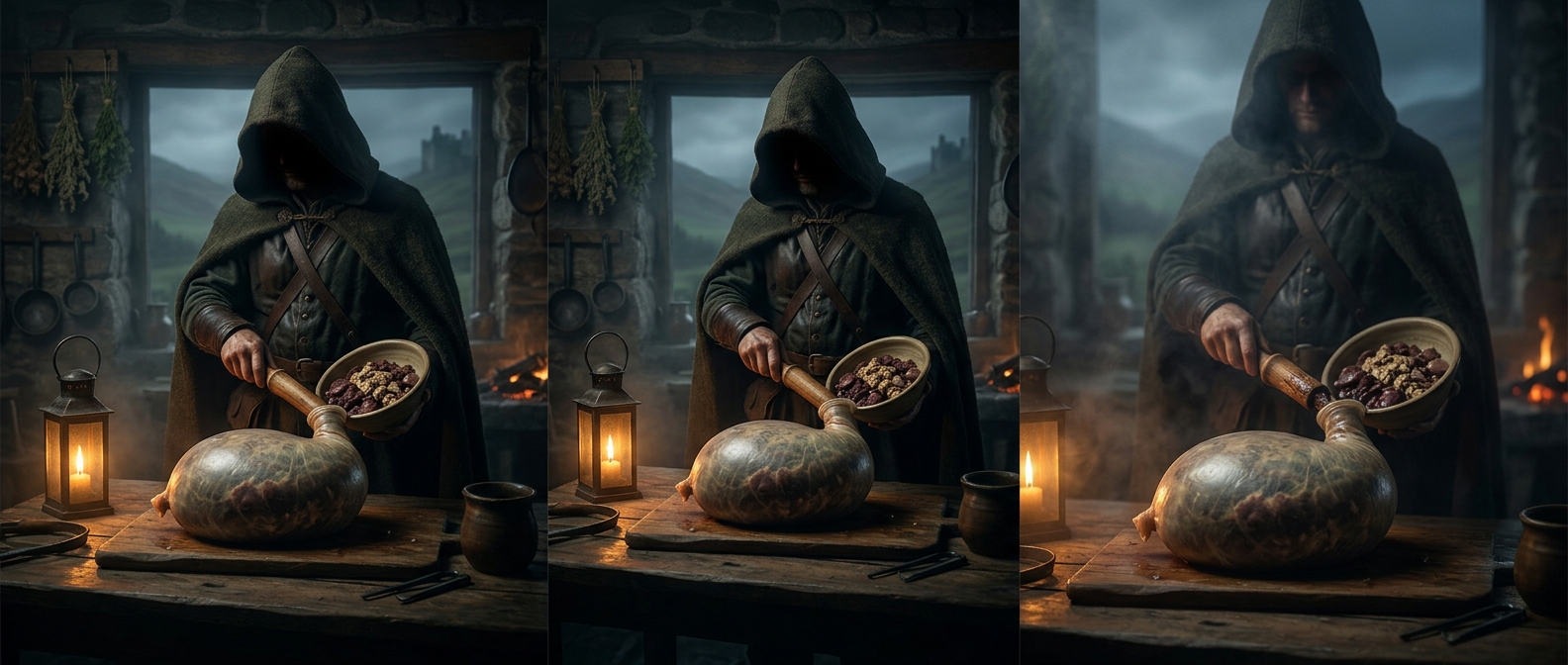
The stomach casing gives the chopped filling a flexible container that can withstand a long, gentle cook. Inside, minced organs are mixed with oatmeal, fat, and seasonings. As the haggis simmers, the oatmeal absorbs liquid and swells, thickening the mixture; the fat helps keep it moist. The casing holds these ingredients in one compact bundle instead of letting them disperse into the cooking water.
A casing also changes how the filling cooks. Heat reaches the mixture from the outside, while moisture stays largely enclosed, so the contents cook together rather than drying out like loose stuffing. The stomach can stretch as the filling expands, though it must be prepared and tied securely to contain it.
Why Modern Haggis May Look Different
An artificial casing can perform the same basic job: keep the filling together during cooking and give it a firm shape for slicing. That makes it a practical substitute, but it changes the traditional arrangement in which the container is itself part of the dish. In either version, the casing is more than packaging: it helps turn a coarse mixture of ingredients into a cohesive loaf.