How tongue becomes a distinct part of Zungenwurst
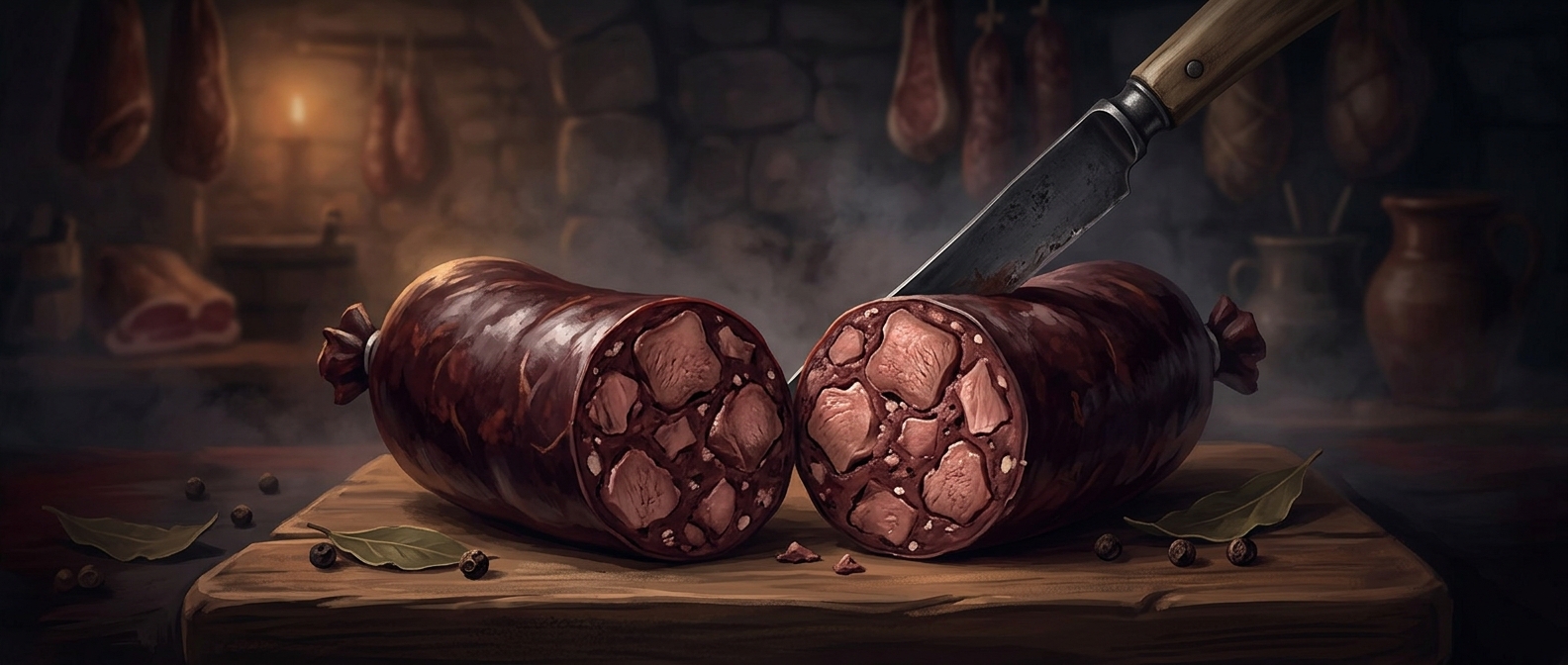
Zungenwurst is built around a contrast: a seasoned blood-sausage mixture holds together the softer parts, while pieces of cooked pig tongue remain visible as separate chunks. The tongue is prepared before it is mixed in, so it can be cut into pieces rather than ground into the sausage base. That choice preserves its identity in the finished slice.
Blood sausage gets its structure from a mixture of ingredients that firms as it cooks and cools. Depending on the recipe, the mixture may also contain fat, meat, or other additions. In Zungenwurst, the tongue is folded through that mixture and enclosed in a casing. Once the sausage is set, slicing cuts through both the smooth base and the larger pieces suspended inside it.
Why the texture changes from bite to bite
Pig tongue is muscle, so even when cooked tender it has more substance than the surrounding sausage mixture. A slice therefore offers two textures: the softer, more uniform base and a denser, chewier piece of tongue. The tongue is not merely flavoring the sausage; its size and placement change how the sausage feels to eat.
That visible chunk is also a practical clue to the recipe. If the tongue were finely ground, it would blend into the base and the slice would look more uniform. Keeping it in pieces makes the ingredient easy to recognize—and gives the sausage its name.