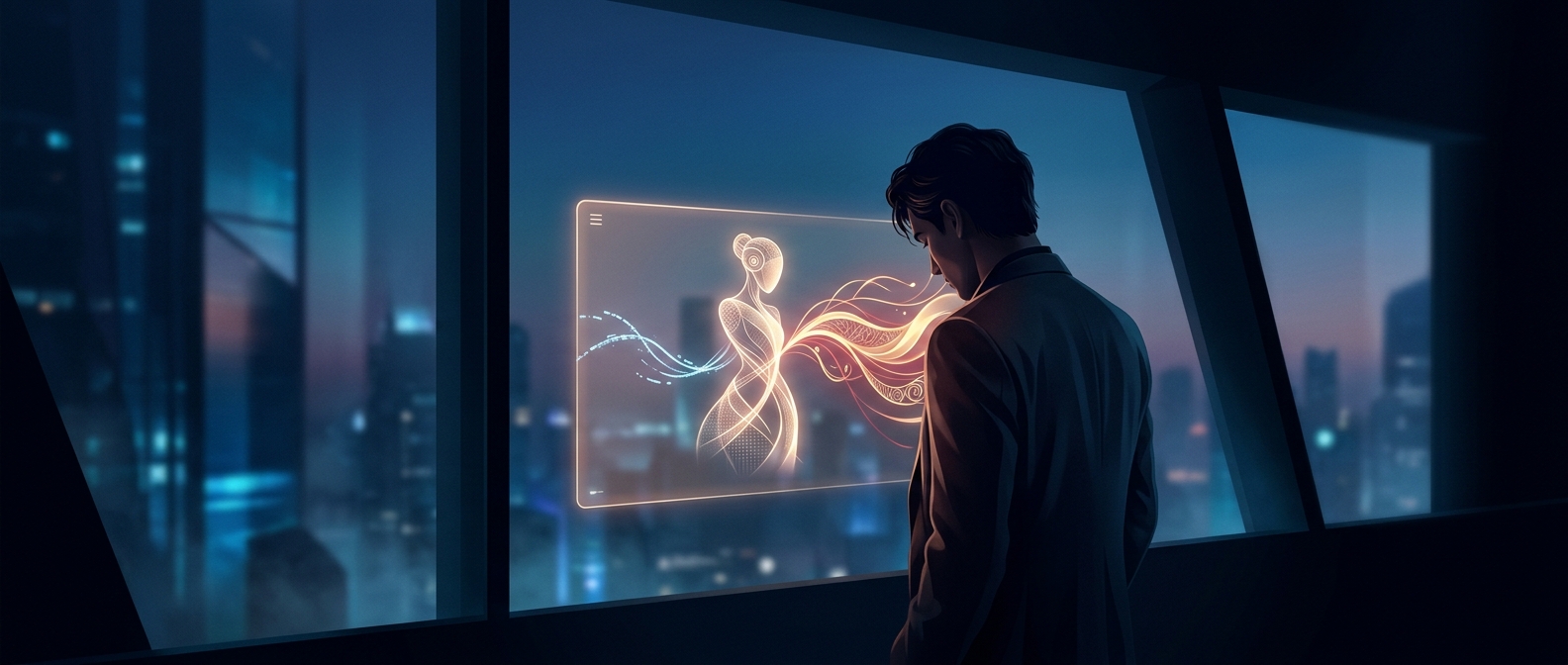
A workspace the user can rearrange by asking
A virtual-reality workspace is more than a picture of an office. The headset tracks the wearer’s head and hands, so windows and objects can appear to stay put as the person looks around or reaches toward them. That spatial setup gives an AI assistant somewhere to place useful material: notes can sit beside a virtual whiteboard, while a diagram can be positioned where it is easy to inspect.
The assistant adds a conversational layer. Instead of opening menus and moving every item manually, a user can ask for a summary, a sketch, or a different layout. The AI interprets the request and generates or organizes content; the VR software turns that content into objects the user can see and manipulate. The key change is that information becomes part of a room-like environment, not just another flat screen.
Personalization has practical limits
Changing the view—from a plain office to a beach or a spacecraft cockpit—can make the environment feel more comfortable or engaging, but the backdrop is separate from the work itself. A scenic setting does not automatically make someone more focused, and a complex virtual room can add visual clutter rather than remove it. The useful design question is whether each window, sound, or generated diagram helps with the task at hand.
There is also a difference between an AI that can explain material and one that can reliably place it in a workspace. The latter depends on the headset’s software supporting those actions, and the user still needs to check the assistant’s output. For work involving private notes or conversations, it matters what information the assistant receives and how the service handles it.
From screen arrangement to spatial workflow
This combination could be most useful when a task benefits from seeing several things at once: comparing documents, annotating a model, or building a diagram while discussing it. Rather than constantly switching tabs, a user can keep related materials in view and ask the assistant to reshape the space as the task changes. The room is virtual, but the design challenge is concrete: make the next useful piece of information easier to find without making the whole environment harder to use.