How a Traffic Island Became a Park
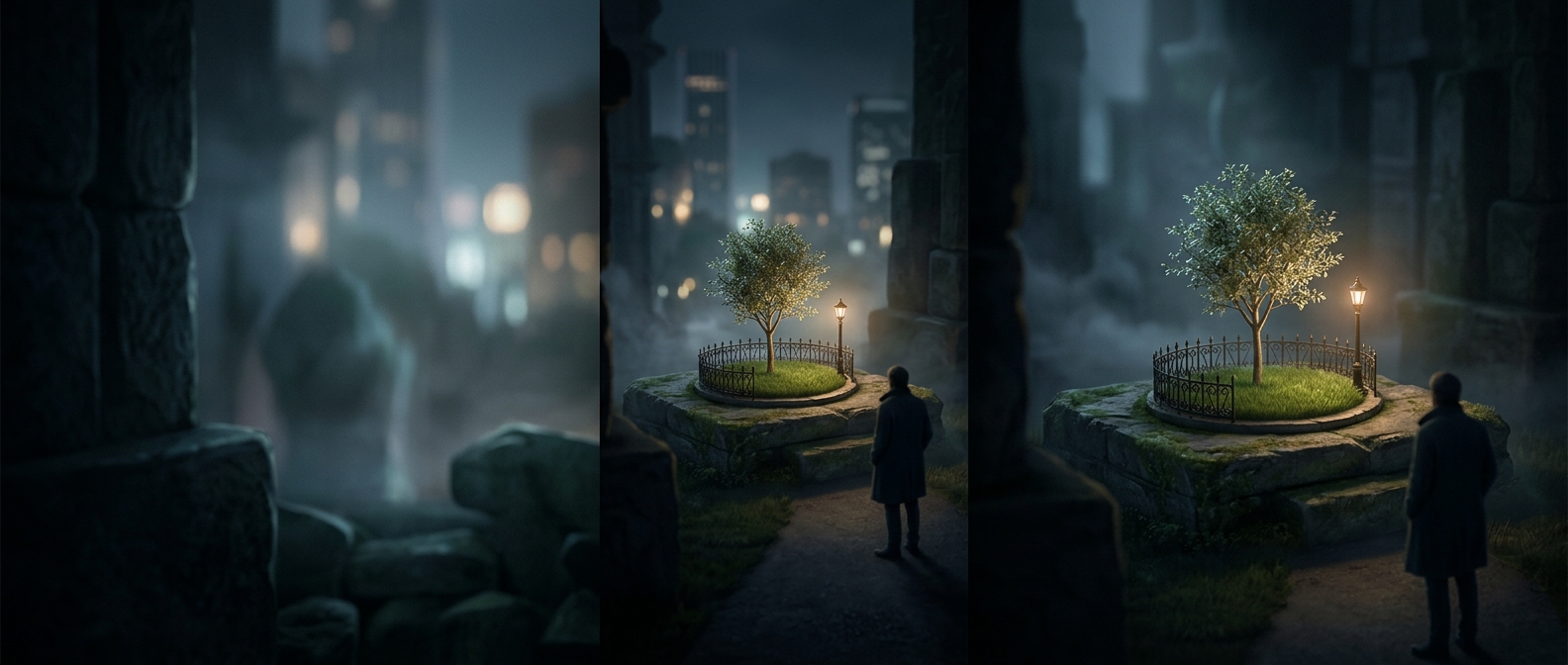
In Portland, Oregon, Mill Ends Park makes an unlikely use of leftover street space. A traffic median is built to separate moving lanes, not to welcome visitors, and this patch is too small for ordinary park features such as a path or bench. Its scale is the point: a tiny planted place sits amid the infrastructure that would usually make such a spot seem merely incidental.
A Story Gave the Plot an Identity
The park’s public life grew from a local writer’s recurring fantasy columns about leprechauns living in the median. Instead of treating the miniature plot as a civic oddity, the stories invited readers to imagine it as a world with its own residents and drama. The city council eventually recognized the site as a park.
That sequence matters: the writing did more than describe a small patch of ground. It gave the patch a character people could remember, and civic recognition made the joke part of the city’s landscape. A shrub alone might look like leftover landscaping; attached to a story, the same shrub becomes the center of a place.
The Appeal of an Impractical Park
Mill Ends cannot serve the usual purpose of a neighborhood park. Its appeal is instead the contrast between a formal civic label and a space almost comically too small to fulfill it. It turns a traffic median into a destination for curiosity—and shows how a city can make meaning from a fragment of land that would otherwise go unnoticed.