Why a banana gives off radiation
The grocery item is a banana. Like other foods that contain potassium, it carries a trace of potassium-40, a naturally occurring radioactive form of potassium. “Radioactive” here means that some of its atoms spontaneously change over time, releasing tiny amounts of radiation. Potassium-40 has been part of Earth—and of ordinary food—for as long as the element has existed.
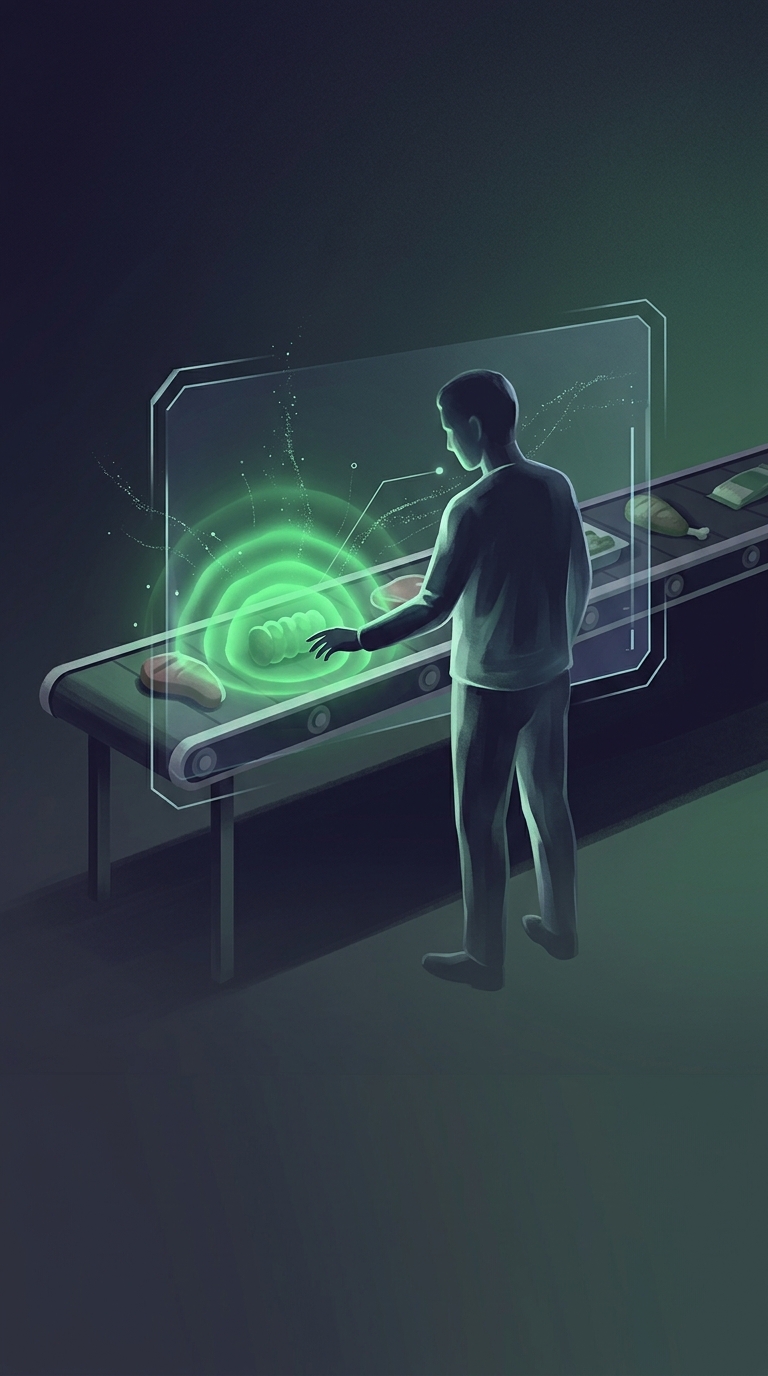
A sensitive radiation detector can register those emissions. The signal is small, and it can be hard to distinguish from the radiation naturally present in the surroundings, but with suitable equipment it is measurable.
The source is ordinary potassium
Most potassium atoms are stable. Only a very small fraction are potassium-40, so a banana’s emissions are correspondingly slight. The isotope is mixed throughout the fruit; it is not a coating or residue that could be washed off. Other potassium-rich foods, including potatoes and beans, contain it too.
That makes the banana a memorable example, not a special radioactive exception. The same natural process occurs in the potassium in our bodies and in many everyday materials.
Measurable does not mean hazardous
Radiation describes energy released by atoms; the word alone does not say how much exposure there is or whether it is harmful. A banana’s contribution is tiny compared with levels that would pose a health concern. Eating one does not make a person meaningfully radioactive: the body regulates its potassium, while the amount of potassium-40 in the fruit is very small.
The surprising part is not that bananas are dangerous, but that ordinary matter contains detectable traces of naturally radioactive atoms.