Why Honey Can Outlast Its Makers
Honey keeps unusually well because bees transform nectar into a food that is hostile to many microbes. Ripening honey contains very little water, and its concentrated sugars draw water away from bacteria and yeasts. Honey is also acidic, adding another obstacle to growth. In a tightly sealed vessel, those conditions can persist for centuries.
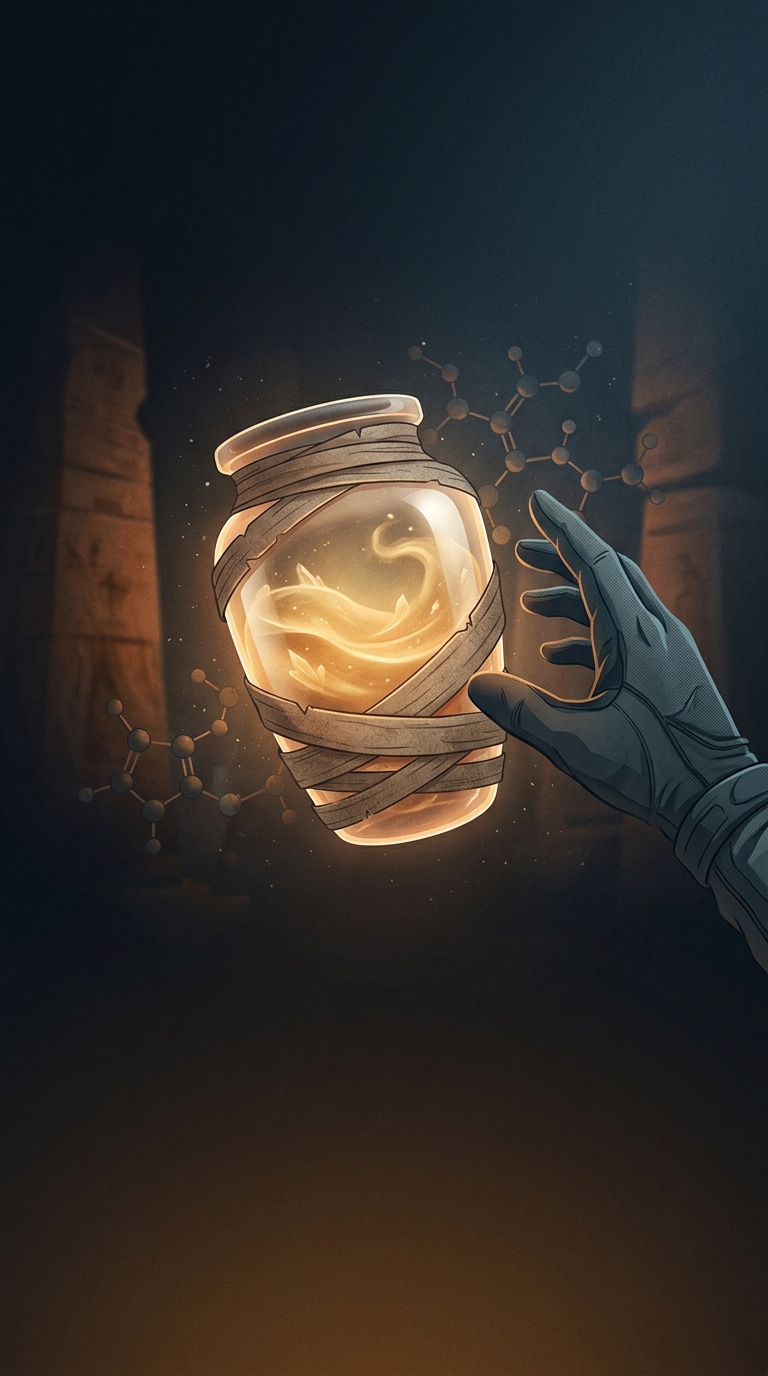
That combination helps explain why honey placed among Egyptian tomb goods could remain recognizable as food long after other provisions would have spoiled. The jar mattered as much as the honey: a sound seal limited exposure to moisture, which can dilute honey and allow fermentation.
Crystals Don’t Mean It Has Gone Bad
Over time, honey may darken or form crystals as some of its sugars solidify. Crystallization is a normal physical change, not evidence of spoilage; gentle warming can make the honey runny again. If moisture gets in, however, fermentation becomes possible, and a contaminated or damaged vessel is a different story from a sealed one.
So “still edible” describes honey’s remarkable potential, not a reason to taste an archaeological find. Its surprising longevity comes from a simple chain of protection: concentrated sugar, little available water, acidity, and a container that keeps dampness out. A jar could preserve the food for so long that the tomb’s offering outlasted the civilization that sealed it.