A theory built around what seemed to disappear
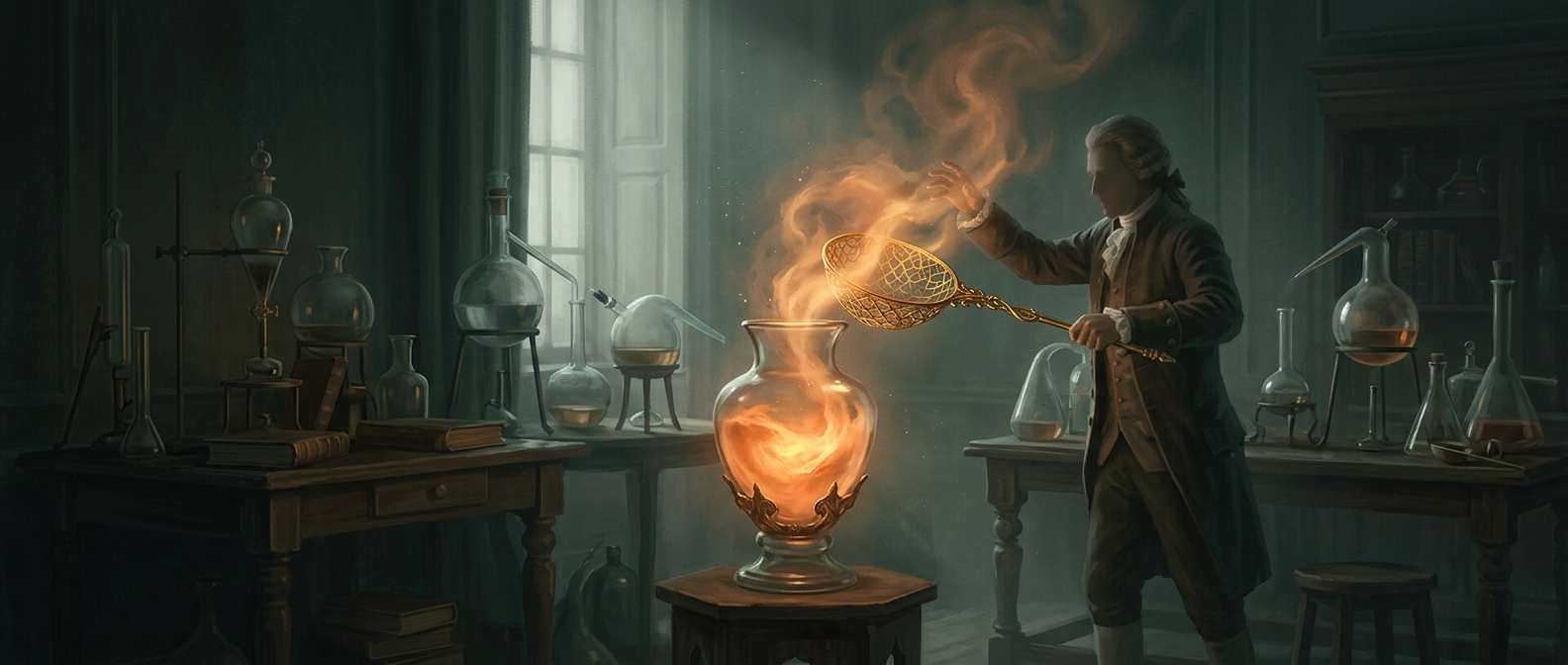
In the 17th and 18th centuries, phlogiston offered a way to explain why substances burned. The theory proposed that combustible materials contained an invisible principle that escaped during burning. Wood seemed to fit: it left ash and smoke, while much of the original material vanished. Metals, too, could be described as giving off phlogiston when heated, leaving behind a powdery substance called a calx.
The trouble was what happened on the scale. A metal calx often weighed more than the metal it came from. If heating drove material out, why did the residue grow heavier? Supporters proposed explanations for the mismatch, but the question became harder to avoid as experiments grew more precise.
The air was part of the reaction
The key was to treat air not as an empty stage but as a mixture containing a gas that could be used up. In what is now called oxidation, oxygen joins with another substance. When a metal is heated in air, oxygen atoms attach to the metal and form a metal oxide—the substance earlier experimenters called a calx. The added oxygen has weight, so the oxide can outweigh the original metal.
This also explains why a container matters. In a sealed vessel, the reaction cannot draw oxygen from the room indefinitely; the available air is consumed, and the vessel’s total mass remains accounted for. Weighing both the vessel and its contents helps reveal that matter has shifted between the air and the metal rather than simply vanished.
Why the scale changed chemistry
Antoine Lavoisier’s careful measurements helped replace phlogiston with an account centered on oxygen and measurable mass changes. The shift was more than a new name for burning: it made the surrounding air an active ingredient. A seemingly small increase on a balance showed that a fire could leave a metal heavier because part of the “fuel” for the reaction had come from the air.