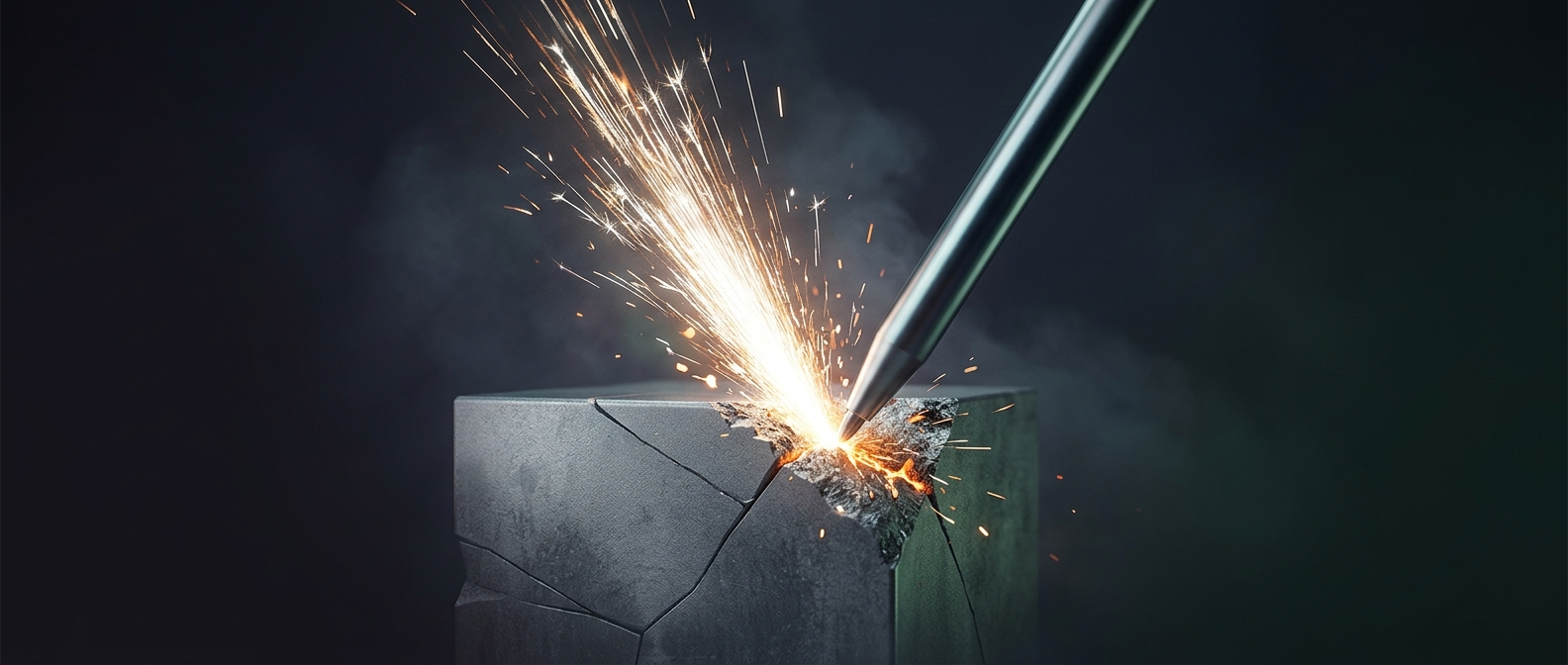
A surface film does the protective work
Zirconium’s resistance comes from passivation: a metal surface reacts with its surroundings to form a thin, adherent oxide. The film is not a thick coating laid on afterward. It develops at the metal’s surface and slows the movement of corrosive chemicals toward the material beneath it.
That barrier can also repair minor damage. If a scratch exposes fresh zirconium, the newly exposed area can oxidize again when oxygen or water is available. The result is a surface that does not remain defenseless after every small abrasion.
Why the protection has limits
Basic, or alkaline, solutions vary widely. Their strength, temperature, and other ingredients affect whether the oxide stays intact; under sufficiently harsh conditions, the film can be attacked and the underlying metal exposed. So “resists alkalis” is not a guarantee against every caustic mixture.
For engineers choosing materials for chemical equipment, the practical question is not simply whether a solution is alkaline. It is whether zirconium’s surface film remains stable in that particular process. The metal’s durability depends on the condition of its shield, not on the element being inherently immune to corrosion.