Gordon Freeman’s silence keeps the player inside the scene
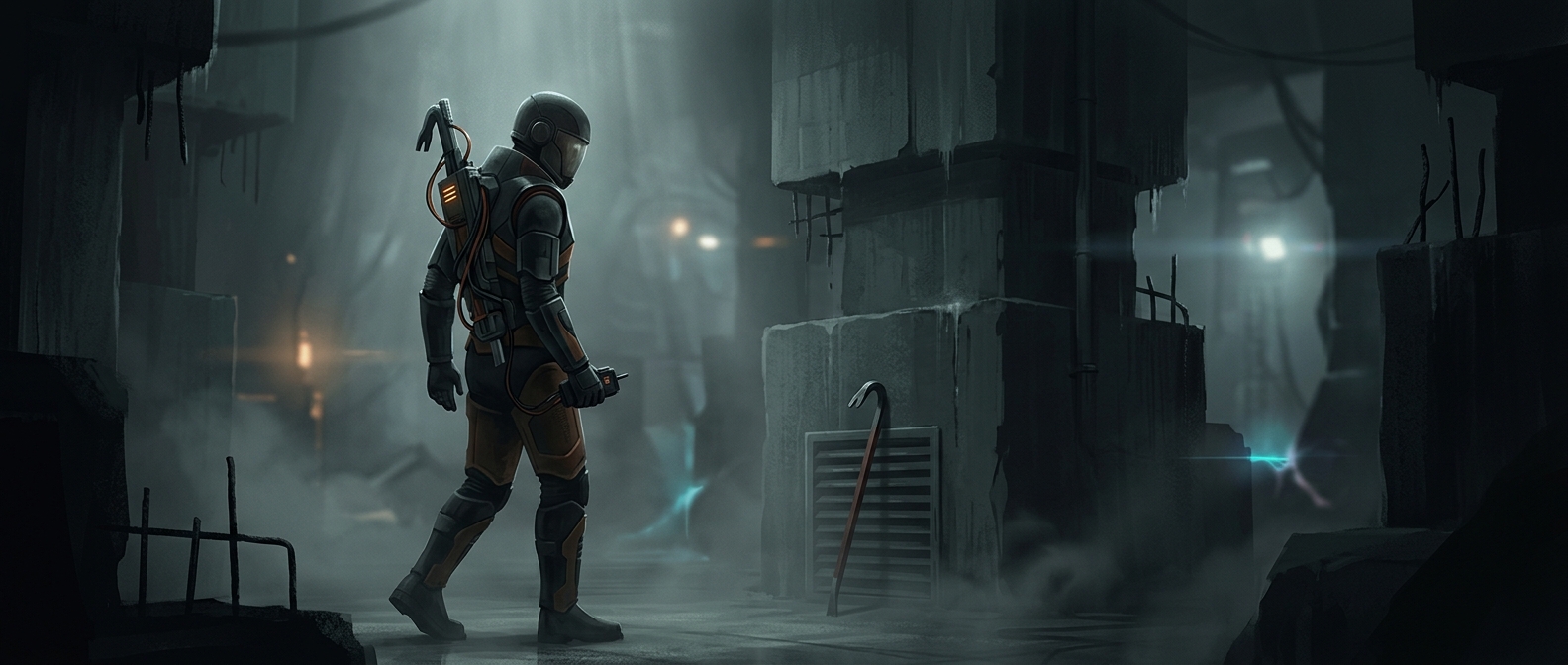
In Half-Life, Gordon Freeman never answers the people around him. He is a theoretical physicist caught in a disaster at the Black Mesa research facility, but the game gives him no spoken lines—not even when colleagues address him or the situation grows more extreme. Other characters provide the dialogue, while the player sees events through Gordon’s eyes.
That choice supports the game’s first-person design. Rather than cutting away to show Gordon talking or reacting, Half-Life generally lets events unfold in the spaces the player is moving through. A scientist can explain what has gone wrong as the player stands beside him; danger can arrive without pausing the action for a cinematic conversation. Gordon’s silence helps preserve the sense that the player is present in the scene, not watching a separate hero perform it.
The tradeoff: a hero who listens more than he responds
The same choice creates a conspicuous gap. Characters may plead with Gordon, give him instructions, or describe terrible events, but he offers no audible reaction. His face is also usually out of view, so the player has little direct evidence of what he thinks or feels. The story moves forward through what others say and what the player does.
That makes Gordon partly a role the player occupies rather than a fully voiced personality. It can strengthen immersion during exploration, but it also means the people around him carry much of the emotional and explanatory work. Even as the setting expands beyond Black Mesa, the silent protagonist remains a constant: the world can react to Gordon without the game deciding, in words, how Gordon reacts back.