When a wreck became a claim on the shore
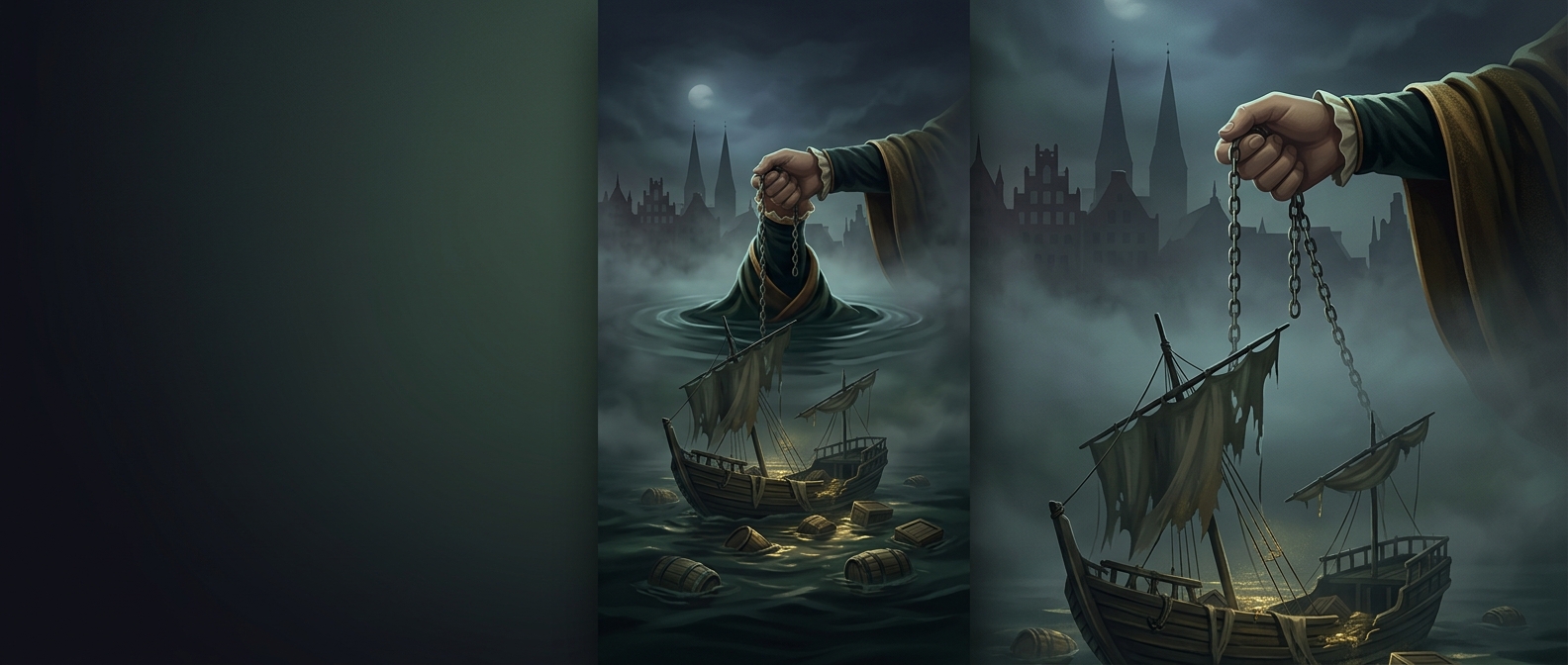
In medieval Baltic trade, a shipwreck did not automatically leave its cargo in the hands of its owner. Under strand laws—rules governing goods cast onto the coast—a local lord could claim cargo that washed ashore. A storm could therefore turn a merchant’s loss into someone else’s property, especially when no crew survived to identify the goods or press a claim.
For Lübeck merchants, paperwork mattered because ownership had to be made legible on land. Records identifying a shipment and its owner could help distinguish a merchant’s cargo from goods treated as abandoned or unclaimed. The documents did not stop a ship from sinking; they gave survivors or representatives evidence to argue over what happened afterward.
The paperwork behind Baltic trade
That made a wreck a legal and commercial event as well as a maritime disaster. The value at stake was not only the cargo itself, but whether it could be recovered, claimed, or absorbed under local custom. Lords had an incentive to enforce their rights over shore-cast goods; merchants had an incentive to carry proof that those goods belonged to someone still able to demand them.
Lübeck’s merchants built wealth through Baltic commerce, where ships carried valuable goods between ports and every voyage exposed cargo to weather and uncertain jurisdiction. The strand laws made that risk unusually concrete: a shipment could change hands not through a sale, but because the sea delivered it to the wrong stretch of coast. A merchant’s papers could be the difference between a recoverable loss and a windfall for the local lord.