A shipwreck leaves a moving field of hazards
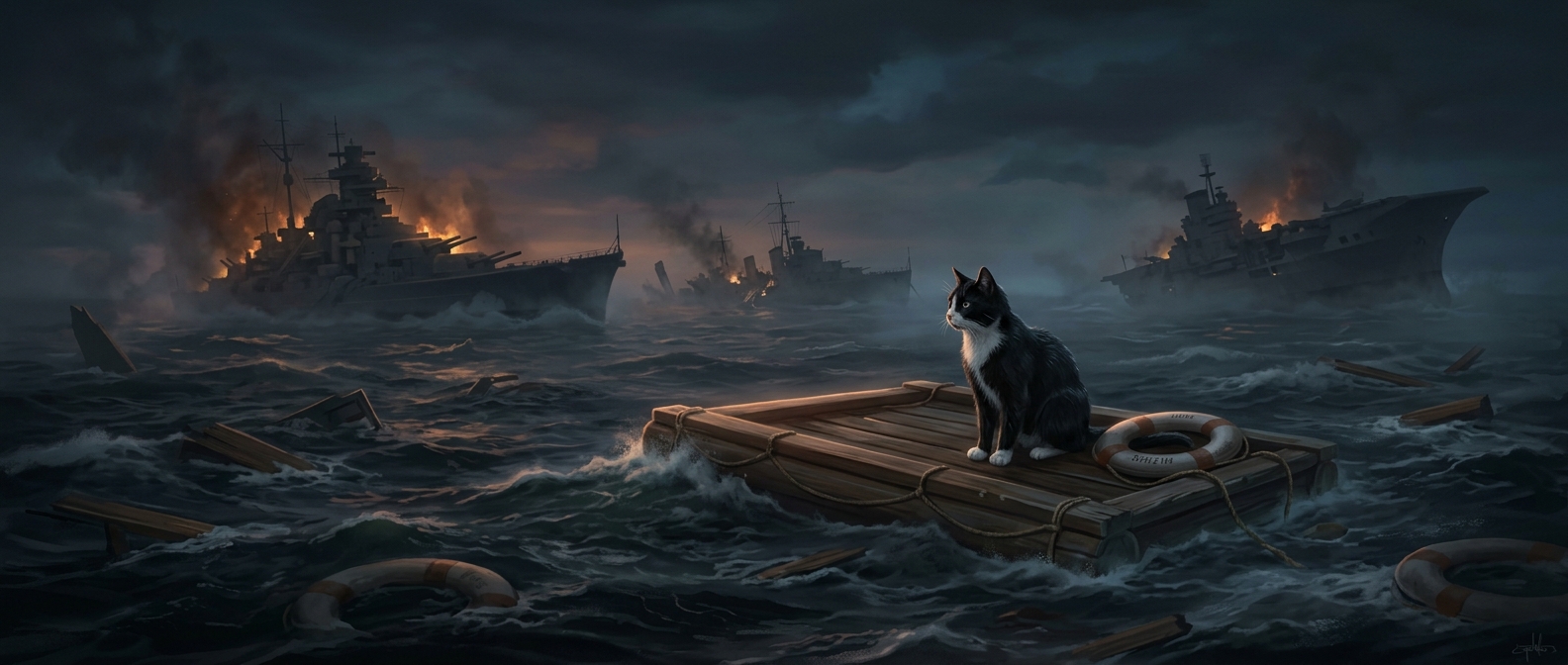
When a ship goes down, it does not vanish all at once. Pieces of wood, fittings, and other buoyant wreckage can remain on the surface, even as the vessel itself sinks. For a small animal thrown into the water, reaching one of those pieces could mean the difference between being submerged and staying afloat long enough to be found.
Clinging to debris would not make the crossing safe: waves, cold, and distance from rescuers would still threaten a survivor. But wreckage can act as a rough, temporary raft, keeping a body above water without requiring it to swim continuously.
Cats had a place aboard ships
Cats were familiar companions on working vessels, where they could help control mice and rats and serve as mascots for the crew. A cat aboard a warship would be exposed to the same sudden danger as the sailors when a vessel was struck or abandoned. In a sinking, familiar routines would give way to noise, water, and scattered objects—and any floating surface could become a chance to escape.
Surviving one wreck would be extraordinary. Surviving three suggests not a reliable trick, but repeated luck at the narrow moment when a cat could get clear of a sinking ship and onto something that stayed afloat. The story’s striking detail is how small that margin was: a scrap of wreckage could become, briefly, the difference between a ship’s fate and its cat’s.