A Working Cut for a Water Retriever
The poodle’s familiar silhouette grew out of a practical problem: a water dog needed to swim freely, then stay warm while working in cold water. Its thick, curly coat offered insulation, but a long coat over the whole body could become cumbersome in the water and snag on reeds or brush along the bank.
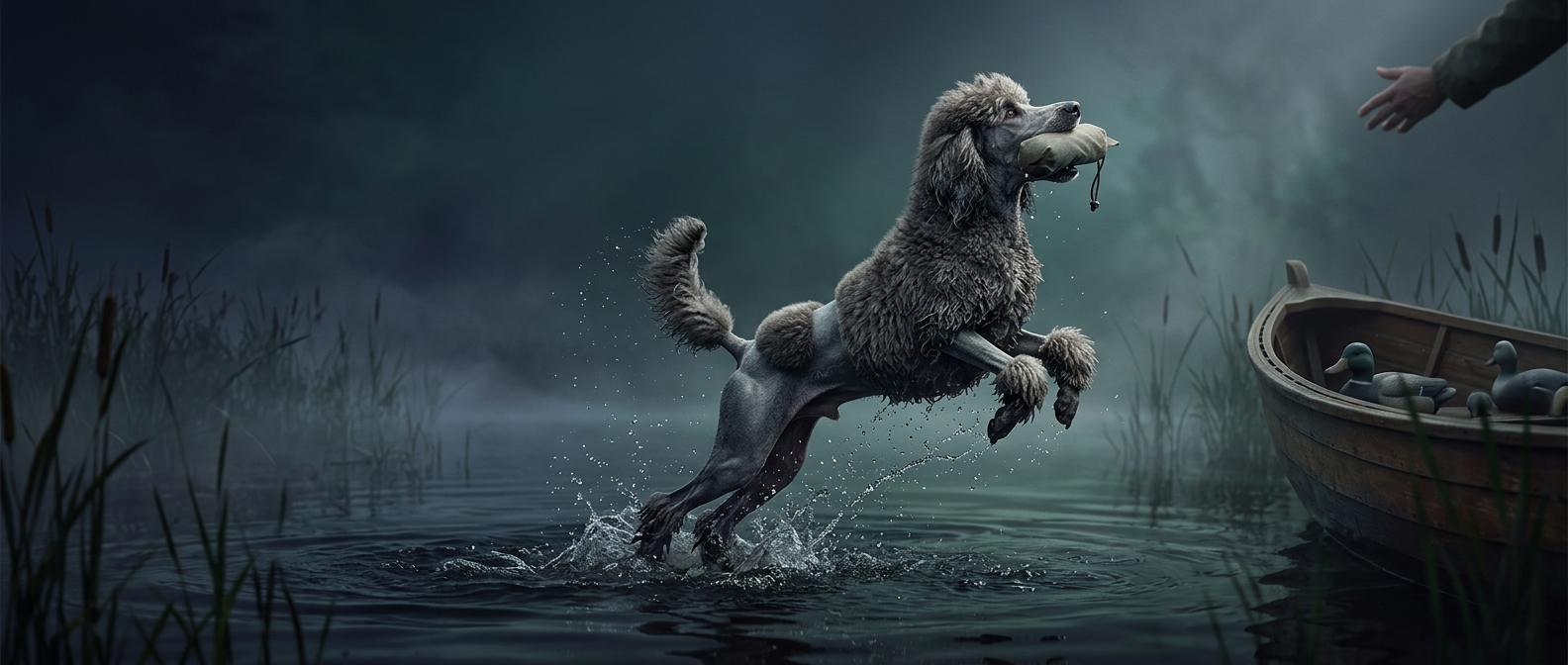
Handlers therefore clipped away much of the coat, especially over the hindquarters, where less hair meant less material dragging through the water. They left thicker patches around places such as the chest and joints. Those areas could help protect the dog and preserve warmth without burdening its entire body with a heavy coat.
Why the Shape Survived
The result was a compromise, not a purely decorative design: reduce bulk where it interfered with swimming, keep coverage where it could be useful. The exact outlines of working clips varied, but the contrast between shaved sections and rounded tufts became a recognizable poodle look.
As poodles moved from hunting and retrieving into show rings and homes, the trim became more elaborate. Its original logic is still visible in the haircut: what looks like ornamental puffing began as selective grooming for a dog expected to plunge into water and come back with game.