A dog bred for the road
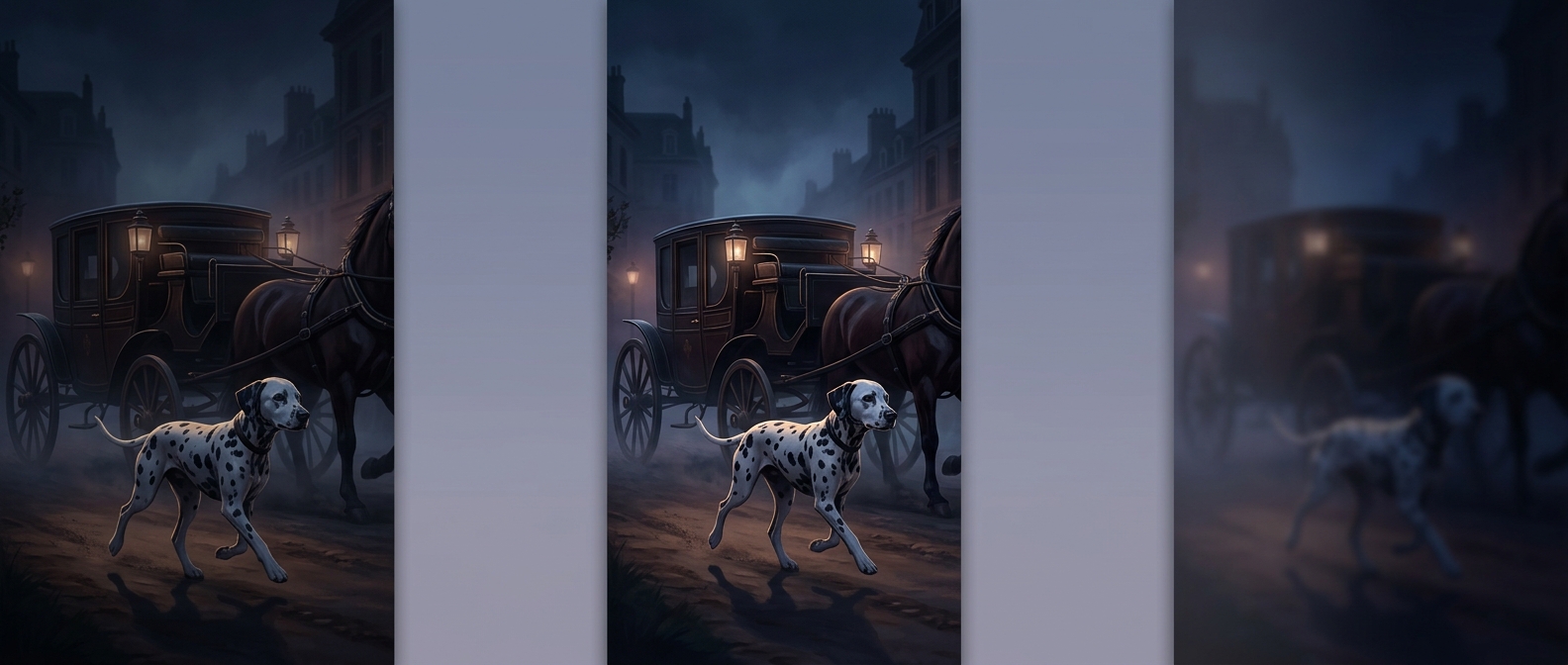
Before fire engines had motors, horse-drawn carriages were working vehicles—and their horses needed protection and control on the move. Dalmatians became associated with carriages because they could travel alongside them over long distances. Their endurance made them useful companions on journeys that might leave a less athletic dog behind.
More than keeping pace
A dog running beside a carriage could help manage the space around it. Barking drew attention and encouraged people or other animals to move out of the way. The dogs also stayed close to the horses, acting as a visible guard against threats and disturbances. That mattered especially when horses were stopped or stabled: a carriage horse was valuable, and a strange animal approaching it could cause injury or panic.
The arrangement suited both sides. The carriage provided the dog with a moving territory to patrol, while the dog’s presence helped alert drivers and protect the team. Dalmatians were not simply decorative riders; their speed and alertness made them practical partners in a horse-powered world.
A working role that outlasted the carriage
As horse-drawn transport gave way to motor vehicles, the need for a dog to run alongside a carriage faded. The Dalmatian’s distinctive connection to fire engines and other horse-drawn vehicles endured in public memory, even after the work itself largely disappeared. The striking image of the spotted dog beside a carriage began as a functional partnership: the dog was on the road because the horses and people needed an alert companion there.